
Book direct
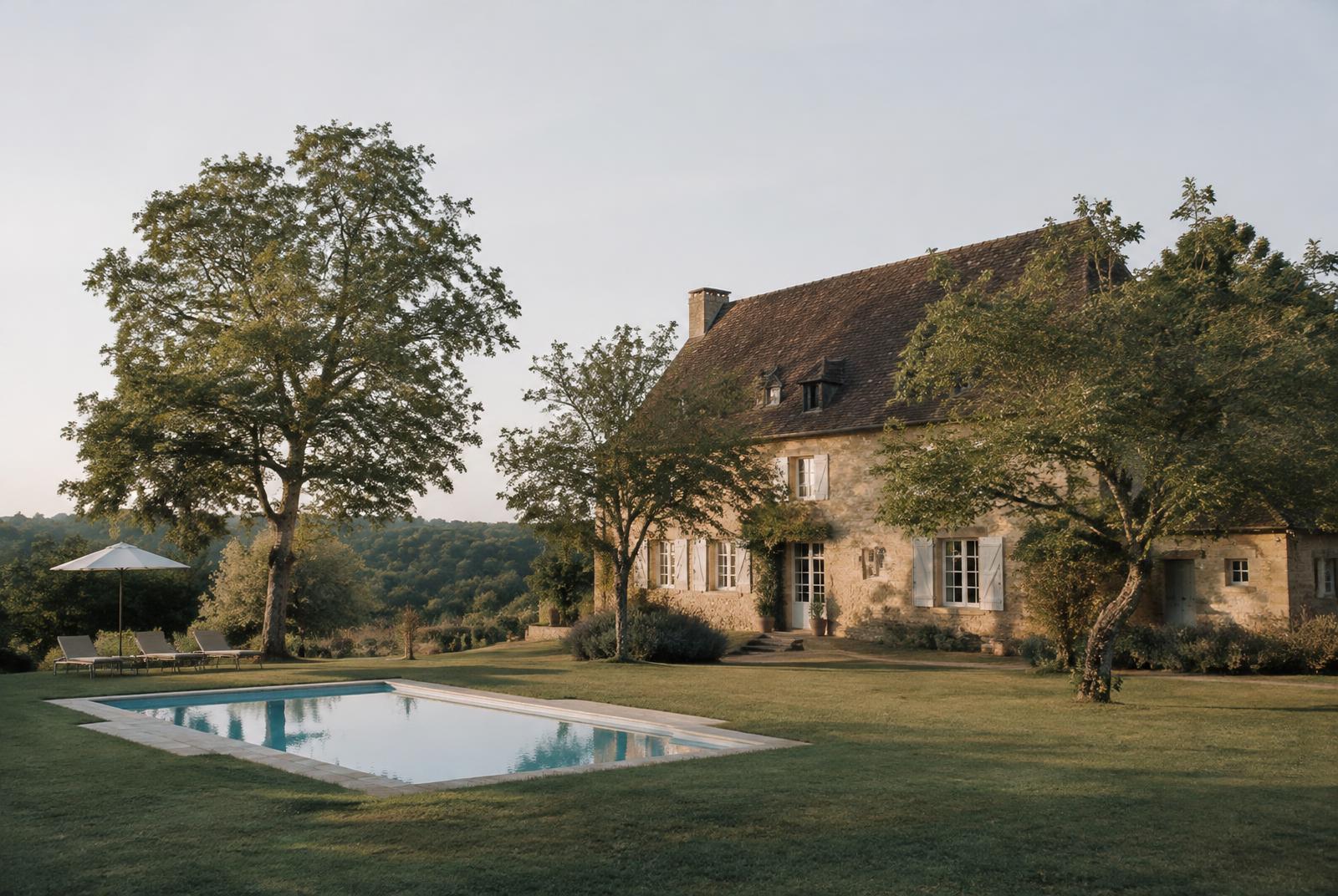
Villa Périgord
Saint-Vincent-de-Cosse · 25 km drive
A great base for river days, castles and Sarlat.
View propertytown · Périgord Pourpre
Le Buisson-de-Cadouin is a practical Dordogne base with a railway station, everyday shops and a Friday market. Its wider commune includes Cadouin and its medieval abbey, alongside caves, gardens and quieter settlements near the river.
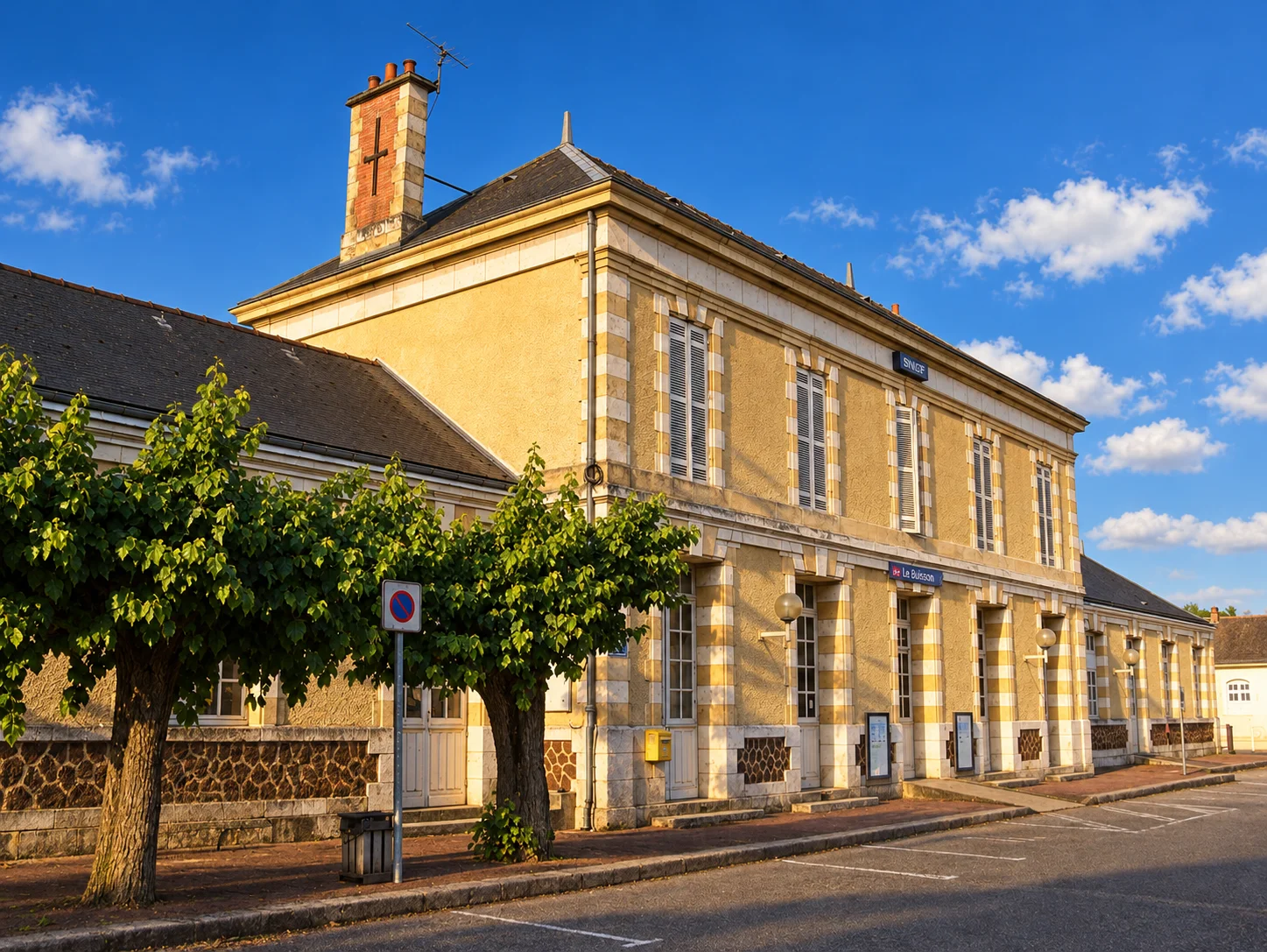
Le Buisson-de-Cadouin is not a single compact historic town. It is a commune with several distinct centres, bringing together the railway town of Le Buisson, the abbey village of Cadouin and smaller settlements including Cabans and Paleyrac. That distinction matters when you choose a base: the station and everyday shops are in Le Buisson, not beside the cloister at Cadouin.
Its appeal is practical as much as architectural. You are well placed between the Dordogne and Vézère valleys, with local visits that range from underground calcite formations to bamboo gardens and medieval stone carving. Le Buisson itself is a working small town rather than a continuous stretch of medieval streets, making it a useful place to organise a stay without treating every errand as a sightseeing trip.
Where to stayBook direct
Saint-Vincent-de-Cosse · 25 km drive
A great base for river days, castles and Sarlat.
View property
Sarlat-la-Canéda · 41 km drive
Watch the Sarlat market from your window.
View propertyOwners
List directly with Dordogne Direct and hear from guests yourself. No commission and no guest service fees.
List your propertyIn Le Buisson, the railway station and Avenue de la Gare are useful starting points for understanding the centre. The shops and services belong to a small transport town, with a more spread-out layout than the tightly packed hilltop villages nearby. The Dordogne lies north of the centre rather than running through its main shopping streets.
The Pont de Vic crosses the Dordogne towards Alles-sur-Dordogne. Treat the river crossing as a separate outing from a walk around the station quarter: Le Buisson is not a riverside promenade town, even though the river is an important part of its setting.
Cadouin has its own compact centre around the Place de l'Abbaye, with the abbey church, cloister and covered market hall close together. Visitors concentrating on that ensemble often miss Cabans, whose church recalls an older settlement pattern than the railway-led centre of Le Buisson.
The main sights are scattered across the commune, so it helps to choose two or three rather than expect one continuous walking circuit. Cadouin rewards an unhurried visit, while the garden and caves make good contrasts to its stone buildings.
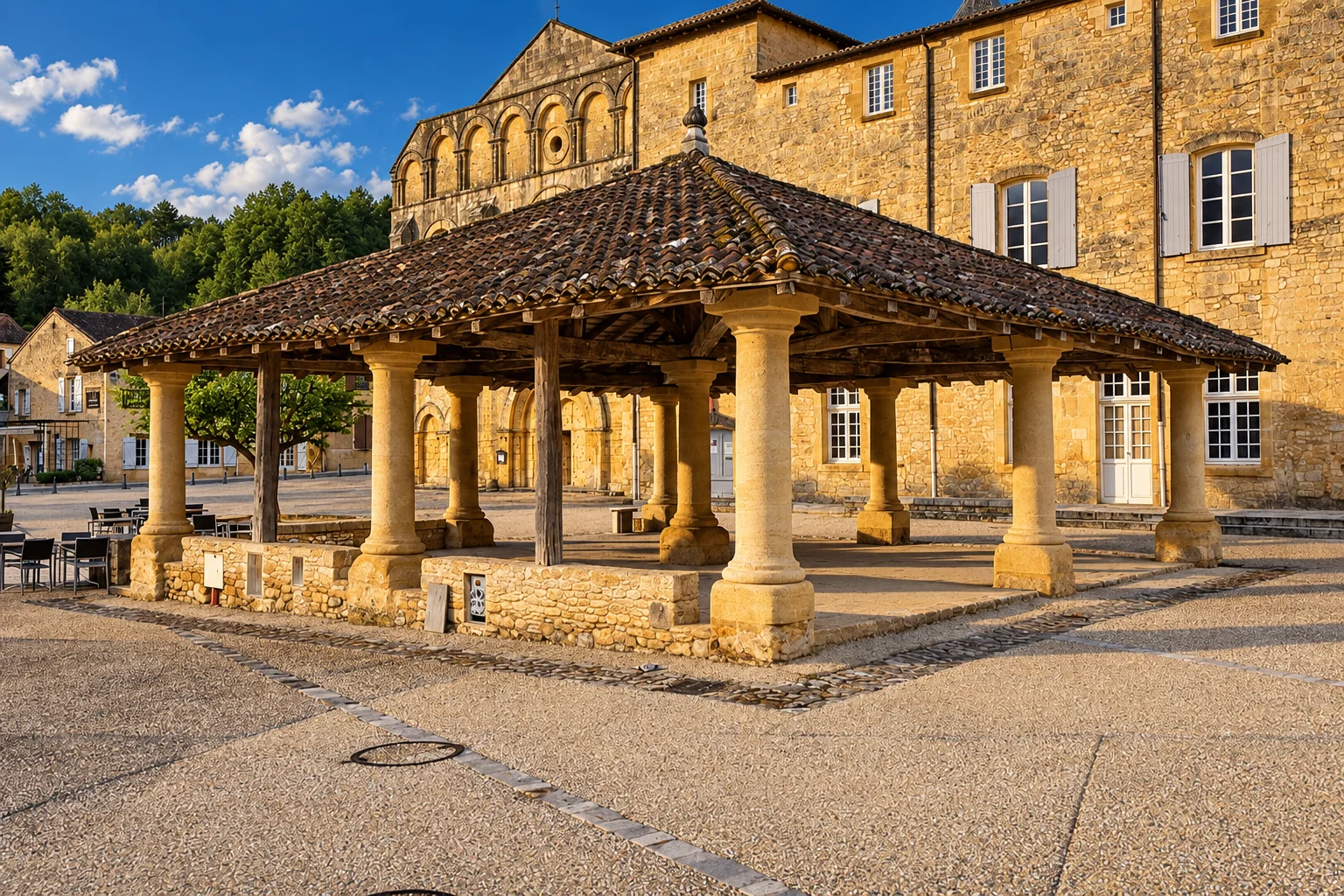
Cadouin grew around an abbey founded in 1115, which joined the Cistercian order soon afterwards. The Romanesque church and the later Gothic cloister explain why its architecture feels layered rather than uniform. The cloister's rich decoration belongs to a different phase of prosperity from the church's relatively austere beginnings.
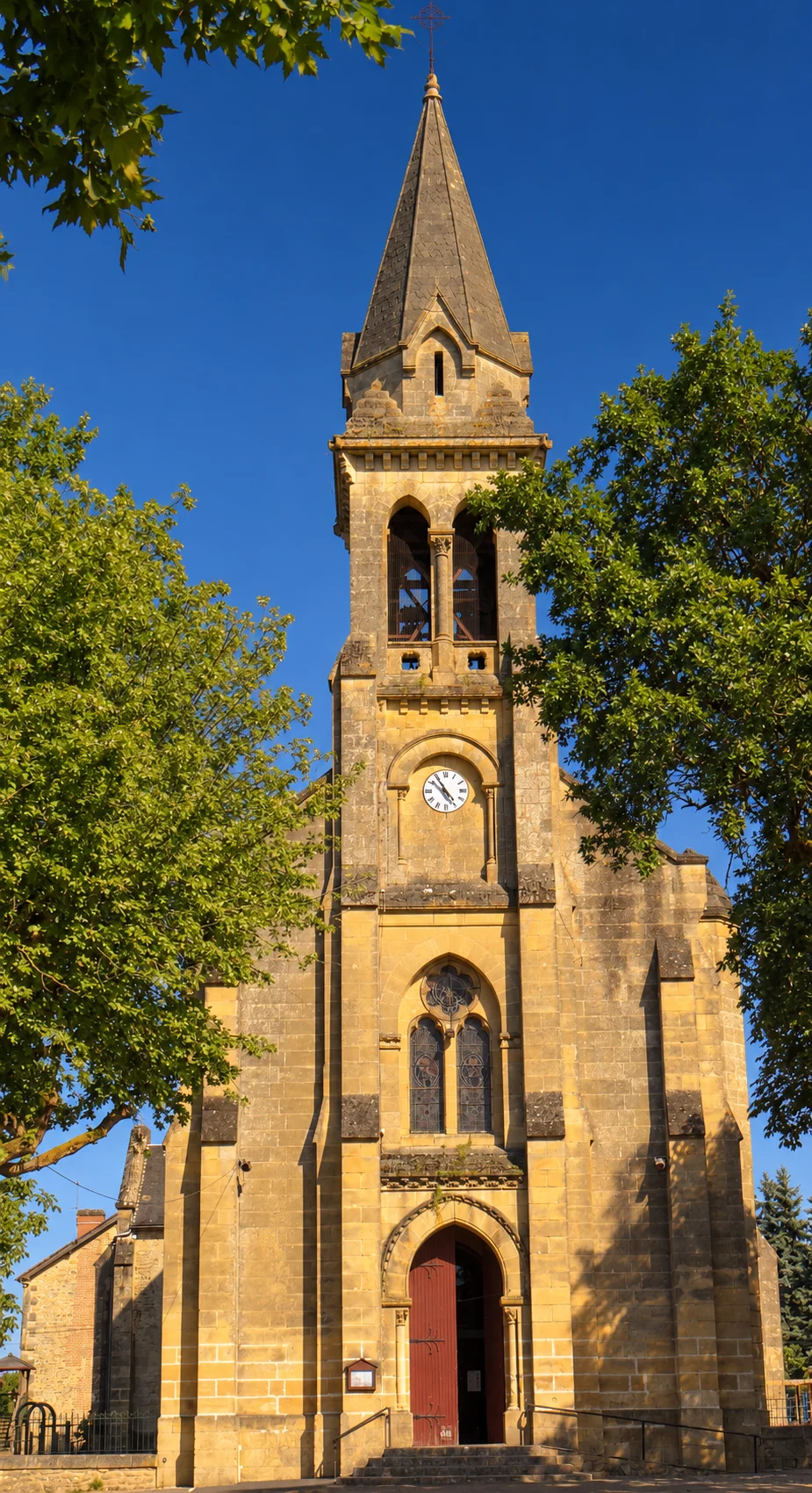
For centuries, pilgrims came to venerate a textile believed to be Christ's shroud. Examination in the twentieth century identified it as a medieval Islamic textile, ending that attribution. The pilgrimage remains central to understanding the scale and importance of the abbey, which forms part of the UNESCO-listed Routes of Santiago de Compostela in France.
Le Buisson developed around a different source of movement: the railway. Its junction station helped shift local activity towards the newer centre. The present commune brought several settlements together in 1974, explaining why one municipal name covers places with such different histories and appearances.
There is a modest choice of places to eat across Le Buisson and Cadouin, rather than a large restaurant district. Le Buisson is useful for a meal around errands or a train journey; Cadouin makes more sense if you want lunch as part of an abbey visit. Do not assume that the choices in the two centres are within walking distance of each other.
Regional menus commonly feature duck confit, magret, foie gras and potatoes cooked in duck fat. Walnuts, goat's cheese and strawberries in season are worth looking for, alongside Bergerac wines. For a longer stay, alternate meals out with market shopping rather than expecting a different style of restaurant every evening.
Morning market: Friday (year-round). Summer night market (July and August): Friday.
The morning market is the useful one for self-catering supplies and seeing the town going about its weekly routine. The summer night market serves a different purpose, with an evening out rather than a normal grocery shop in mind.
If Friday does not fit your itinerary, nearby established options include Lalinde on Thursday, Siorac-en-Périgord on Wednesday and Le Bugue on Tuesday and Saturday.
Le Buisson has everyday food shops, bakery provision and a supermarket, so you can manage normal self-catering shopping locally. It is the practical shopping centre for a stay elsewhere in the commune; Cadouin's smaller visitor-facing centre is not an equivalent place for a full grocery run.
For a wider range of shops, Le Bugue and Lalinde are useful larger centres. If you are staying outside Le Buisson itself, plan shopping around your outings rather than assuming every hamlet has somewhere to buy breakfast.
Le Buisson station is a genuine advantage if you want some days without driving. It sits on the rail routes linking the area with Bergerac, Sarlat and Périgueux. Not every journey is equally convenient, so build a rail outing around the actual return service rather than just the outward departure.
A car remains the simplest way to combine Cadouin, scattered rural properties and the commune's visitor attractions. Staying near the station can work for a rail-led break, but it does not put every place carrying the Le Buisson-de-Cadouin name within an easy walk.
Allow a full day if you want Cadouin plus the caves or garden, with time for lunch. The cloister and cave involve different access conditions from an ordinary town walk, which matters if you have limited mobility. Before setting out, check current opening times, rail services, accessibility information and seasonal market arrangements with the relevant official sources.
Belvès and Monpazier make a useful architectural pairing with Le Buisson-de-Cadouin. Belvès occupies a hilltop, while Monpazier's bastide streets follow a deliberate grid. Either shows a different kind of settlement from both railway-led Le Buisson and abbey-led Cadouin.
For the Vézère valley, head towards Les Eyzies and make that the focus of a separate day rather than an add-on after several local visits. Trémolat suits a gentler excursion towards the Dordogne river bends.
Bergerac is a sensible westward outing if you want a larger town and time beside the Dordogne. Keeping each day to one direction is more rewarding than repeatedly crossing between the Vézère valley, the bastides and the Bergerac area.
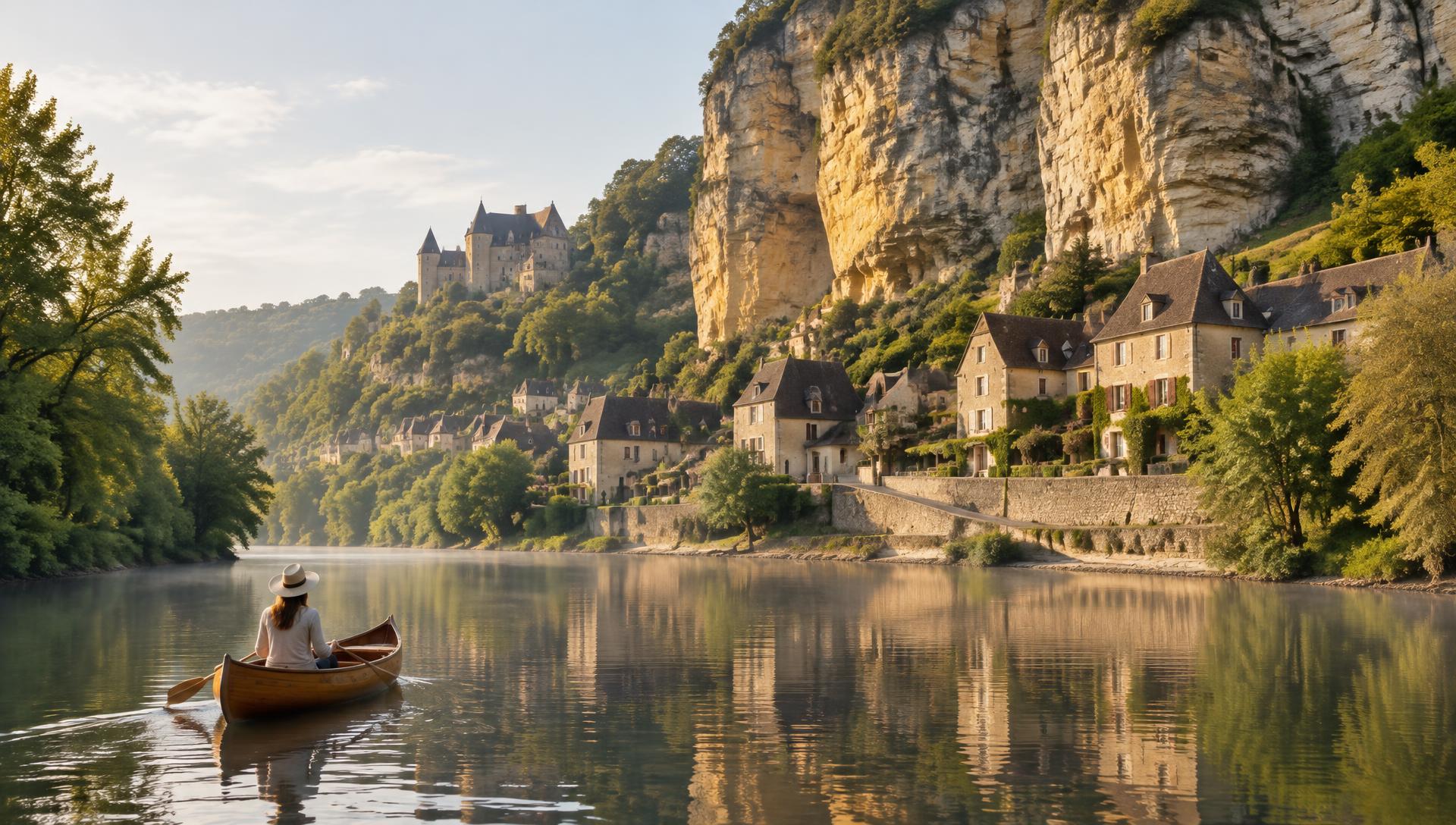
Abbey · Périgord Pourpre
A Romanesque abbey church and richly carved late Gothic cloister in the centre of Cadouin, with a pilgrimage history shaped by a cloth once believed to be Christ’s shroud.
village · Périgord Noir
Limeuil is a steep riverside village at the meeting of the Dordogne and Vézère, with an upper medieval centre, panoramic gardens and useful access to both valleys.
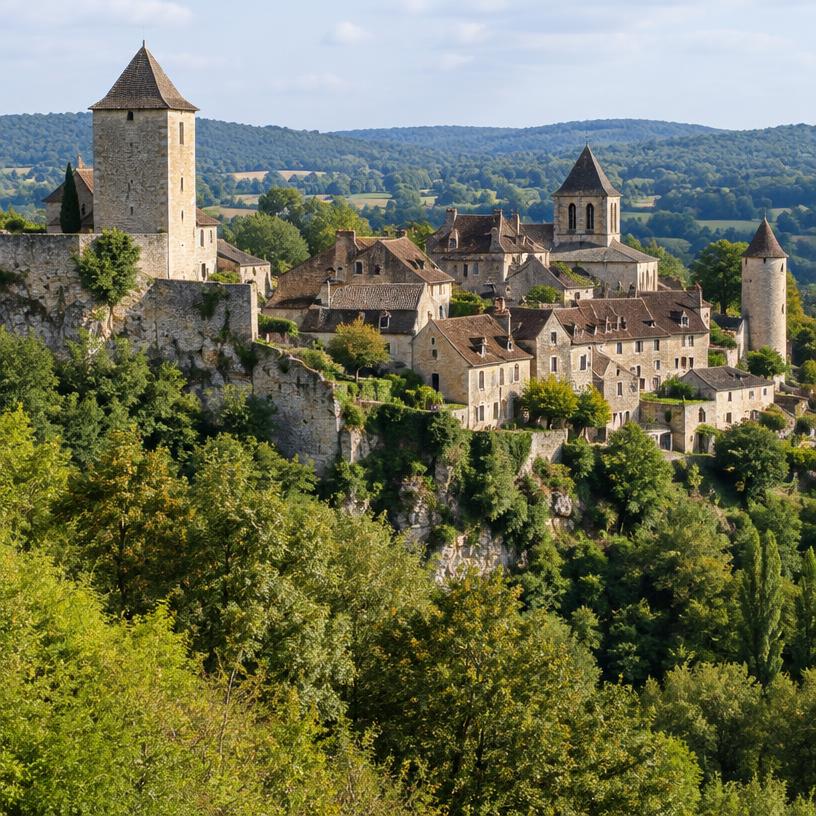
Hilltop village · Périgord Noir
A hilltop village of towers and medieval lanes, listed among the most beautiful villages of France.
Le Buisson is the main service and railway centre within the commune of Le Buisson-de-Cadouin. Cadouin is a separate abbey village within the same commune, which also includes settlements such as Cabans and Paleyrac.
Morning market: Friday (year-round). Summer night market (July and August): Friday.
Yes, particularly if you value everyday shops and access to both the Dordogne and Vézère valleys. For a direct-from-owner property, distinguish between Le Buisson near the station, Cadouin near the abbey and the surrounding countryside. Your exact location will determine how often you need the car.
Yes. Le Buisson has a railway station and you can organise a visit around the town centre. A car is more useful for Cadouin and scattered sights across the wider commune, which are not all within a convenient walk of the station.
Choose Cadouin's abbey church and cloister for architecture, the Grottes de Maxange for geology or the Jardin de Planbuisson for a garden visit. Two of these, with lunch and time in one of the centres, make a comfortable full day.
Opening times, prices and parking change. Check before you travel: Dordogne Périgord tourism, TER Nouvelle-Aquitaine.