
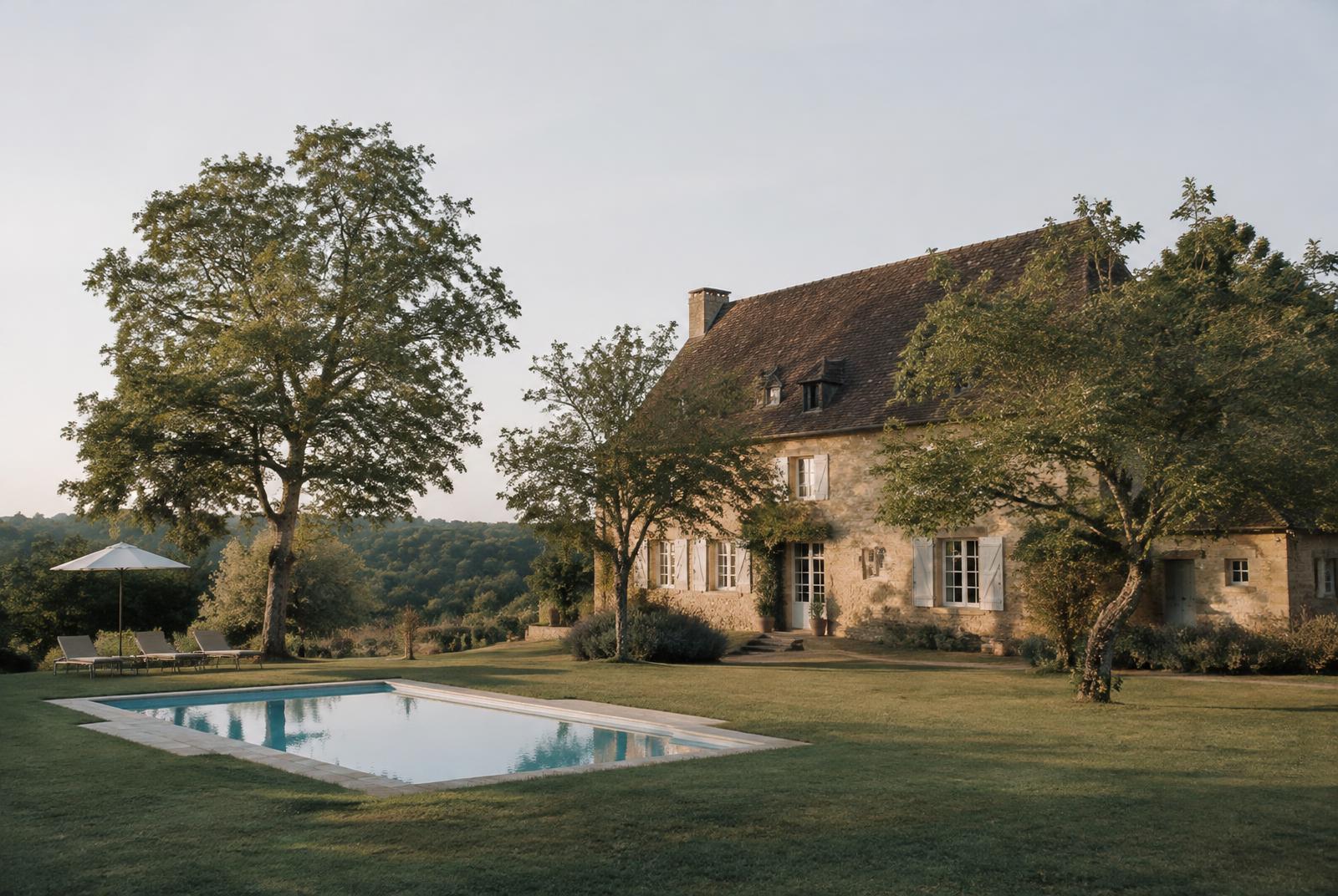
Book direct
Villa Périgord
Saint-Vincent-de-Cosse · 18 km away
A great base for river days, castles and Sarlat.
View propertytown · Périgord Noir
Le Bugue is a working town on the Vézère with year-round markets, useful shops and family attractions. It makes a practical base for exploring the lower Vézère valley and the western Périgord Noir.
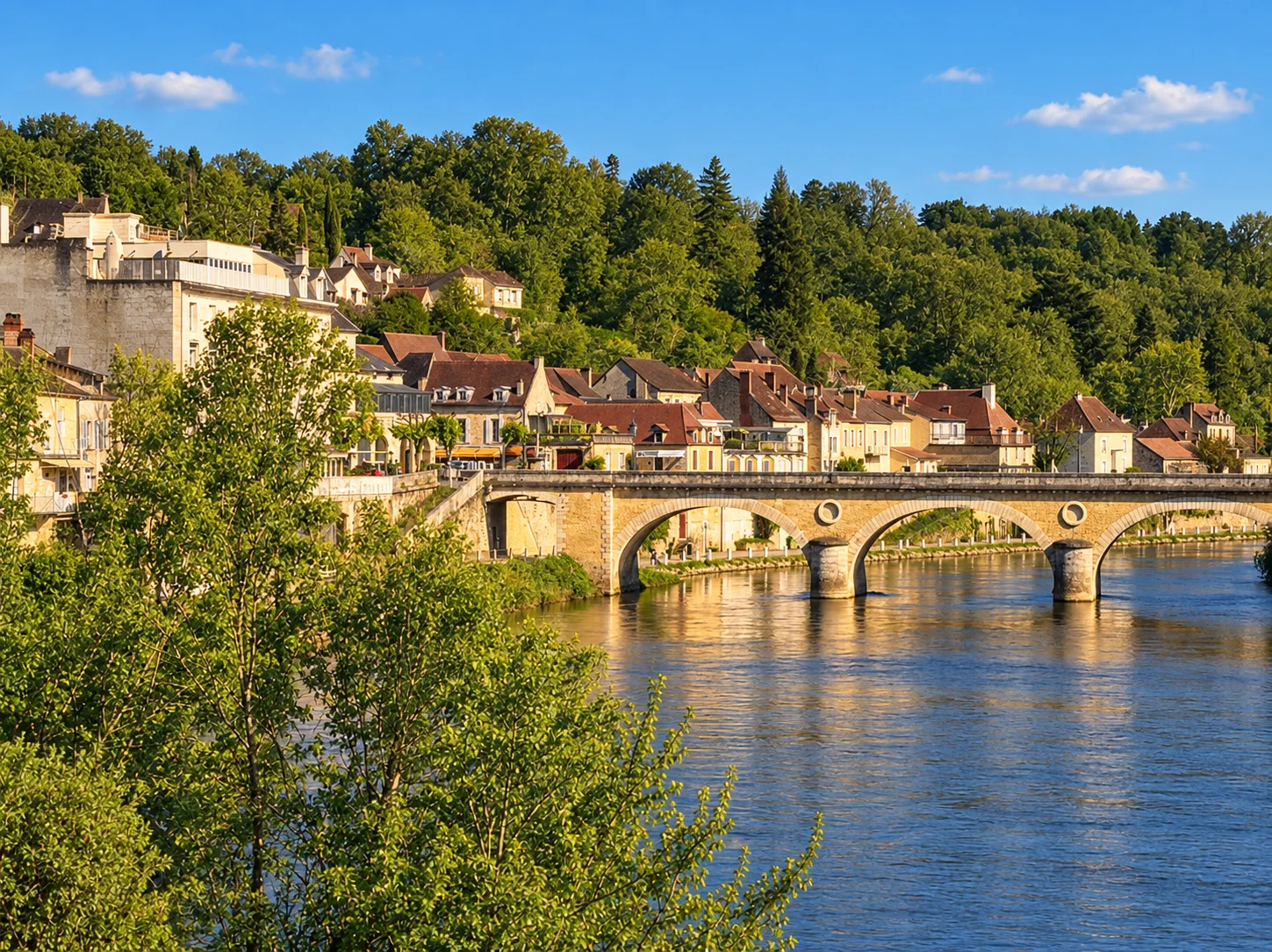
Le Bugue sits on a bend of the Vézère, with an older centre above one bank and a cluster of family attractions on the other. It is less about a single outstanding monument than the combination of river, market, shops and useful location. You can buy bread, do a proper grocery shop and spend the afternoon visiting a prehistoric site without making a major expedition of it.
That makes it a sensible base for the lower Vézère valley and the western part of the Périgord Noir. Les Eyzies is nearby, while Limeuil, Trémolat and the Dordogne valley give you a different direction to explore. Le Bugue itself is a working town, with through traffic and ordinary commercial streets as well as older lanes. Come for that practical balance rather than expecting an entirely pedestrian historic centre.
Where to stayBook direct
Saint-Vincent-de-Cosse · 18 km away
A great base for river days, castles and Sarlat.
View property
Sarlat-la-Canéda · 23 km away
Watch the Sarlat market from your window.
View propertyOwners
List directly with Dordogne Direct and hear from guests yourself. No commission and no guest service fees.
List your propertyUse the Vézère and the road bridge as your reference points. The old centre occupies the right bank, with Rue de Paris leading into the shopping streets around the town hall. Behind the main thoroughfares, the ground rises into narrower lanes and more residential corners. This upper part is easy to miss if you only stop for the market or drive through.
Cross the bridge and the layout changes. The left bank is flatter, with Avenue de la Libération leading towards the Aquarium du Périgord Noir and Le Bournat. These are separate attractions rather than extensions of the old town, so allow time for both sides of the river instead of treating the centre as a quick stop between them.
The railway station is outside the historic centre on the left-bank side. If you are arriving by train, consider the onward journey to your accommodation as well as the walk into town, especially with luggage.
The town walk is short enough to leave room for a longer visit elsewhere. Its main family attractions, however, need their own time: Le Bournat is an outdoor outing with demonstrations and rides, while the aquarium offers a largely indoor alternative.
Le Bugue developed around a Benedictine abbey founded in the tenth century. The religious community helped establish the settlement, while the river crossing and surrounding farmland supported its role as a trading centre. A royal act in 1319 formalised the market tradition that remains part of the town's identity.
Later rebuilding and commercial growth explain why Le Bugue does not look like a uniformly medieval village. Nineteenth-century buildings, including Saint-Sulpice, sit alongside older houses, and the main roads remain busy working streets. The contrast between the compact hillside centre and the broader left-bank development is part of that continuing growth.
The scientist Jean Rey, born in Le Bugue in the sixteenth century, is another important local figure. His work on the increase in weight of metals when heated helped anticipate later understanding of oxidation.
Le Bugue has a good choice of places to eat for a town of its size, including cafés, straightforward lunches and sit-down restaurants. You do not need to drive to Sarlat simply to find dinner, although the range is smaller and some visitor-oriented places operate seasonally.
Look for Périgord staples such as duck confit, magret, foie gras and potatoes cooked in duck fat. Walnuts appear in salads and desserts, with cèpes and strawberries featuring according to the season. For a lighter lunch, the town's bakeries provide a useful alternative to a full restaurant meal.
Morning market: Tuesday and Saturday (year-round). The central market is useful for a self-catering stay as well as a reason to visit, with fresh produce and regional food among the stalls.
Make the market part of a town morning rather than squeezing it in after a major attraction. You can shop, have a coffee and explore the lanes before crossing the river. Summer brings more visitors and more pressure on the roads around the centre.
Le Bugue is a useful place to stock up. There are boulangeries for daily bread and pastries, food shops in the centre and supermarkets for a full grocery shop. Pharmacies and fuel are available in town too, so you do not need to make a separate journey to a larger centre for routine essentials.
If your first priority is a boulangerie in Le Bugue, start with the central shopping streets around Rue de Paris. Combine the bread run with a walk through town rather than assuming the supermarkets are your only option. For a large self-catering shop, the supermarket areas are more convenient by car than the older streets.
Allow half a day for the market, central streets and a river crossing. Add a separate block of time for the aquarium or Le Bournat; trying to cover both attractions and the town in a short afternoon leaves little room to enjoy any of them.
A car is useful for exploring from Le Bugue. The railway offers another way to reach the town, but it does not connect all the caves, gardens and villages you are likely to want to visit. Staying centrally makes food shopping and meals on foot more realistic, while a countryside address suits visitors who are comfortable driving each day.
The riverside and main central streets offer easier walking than the lanes climbing behind them. Expect traffic at the crossing and on the approach roads, especially in summer. Before travelling, check current attraction opening times, train services and parking arrangements with the relevant official sources.
Les Eyzies, about 12 km away, is the natural pairing for prehistory, with the Musée national de Préhistoire and nearby archaeological sites. Farther up the Vézère valley, Saint-Léon-sur-Vézère gives you a smaller riverside village, while Lascaux IV suits a dedicated outing rather than a brief detour.
For a change of landscape, head to Limeuil at the meeting of the Vézère and Dordogne. Trémolat works well on the same general circuit, with its river meander viewpoint. Belvès offers a hilltop town walk south of the Dordogne, while Saint-Cyprien is another useful nearby centre.
Sarlat is worth a separate half or full day. You can also reach the château country around Beynac and Castelnaud from Le Bugue, but avoid combining every major valley sight into one drive. One substantial visit and one town or village usually make a better day.
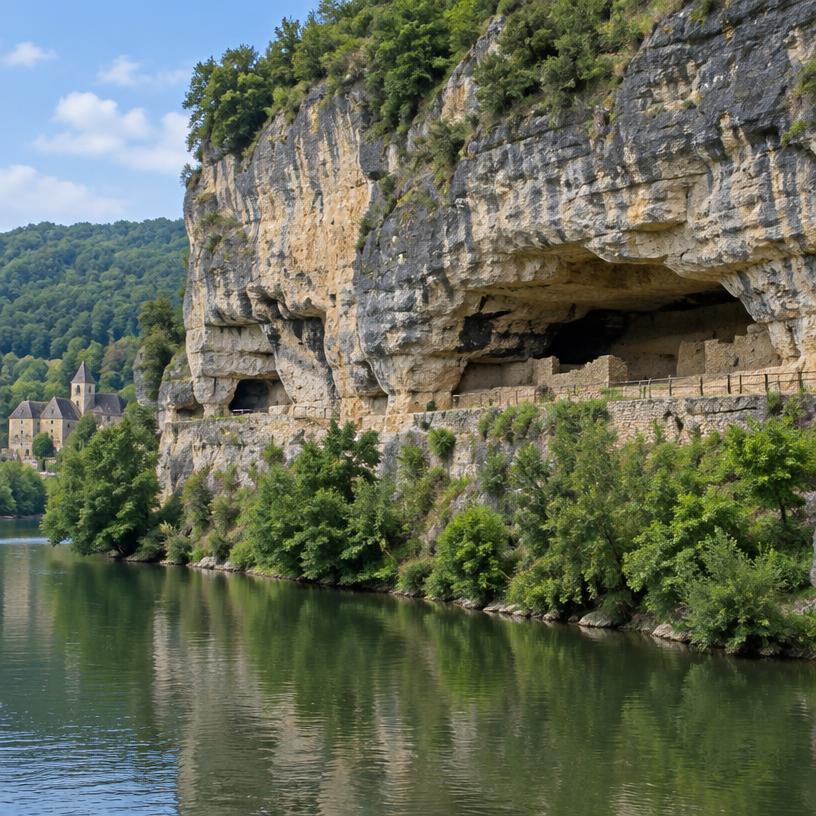
Prehistory village · Périgord Noir
A village beneath limestone cliffs on the Vézère, home to the National Museum of Prehistory and many nearby sites.
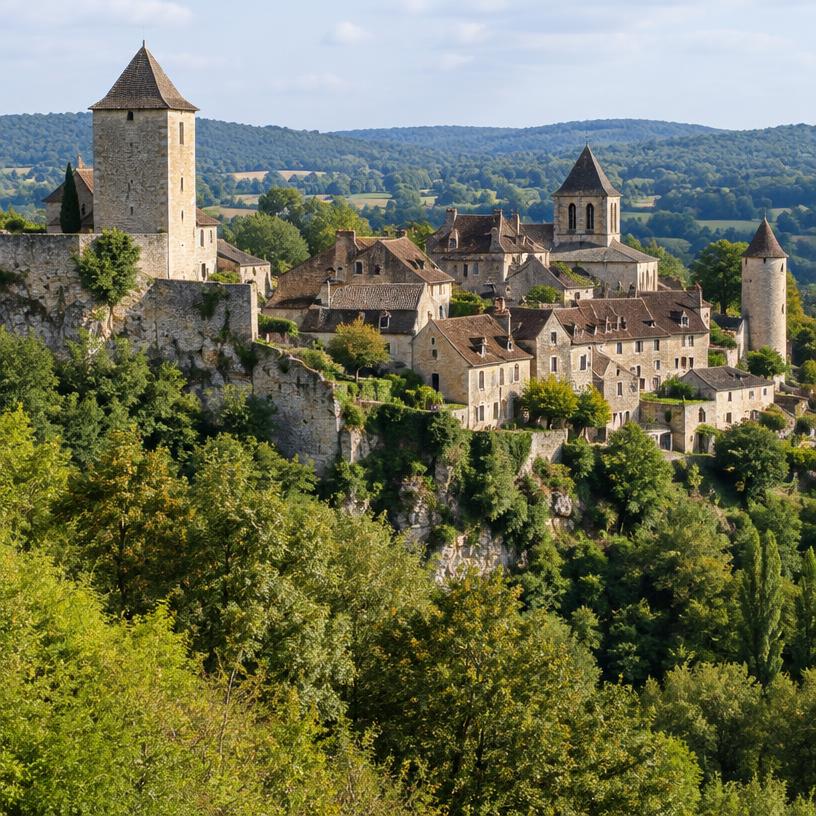
Hilltop village · Périgord Noir
A hilltop village of towers and medieval lanes, listed among the most beautiful villages of France.
Village · Périgord Noir
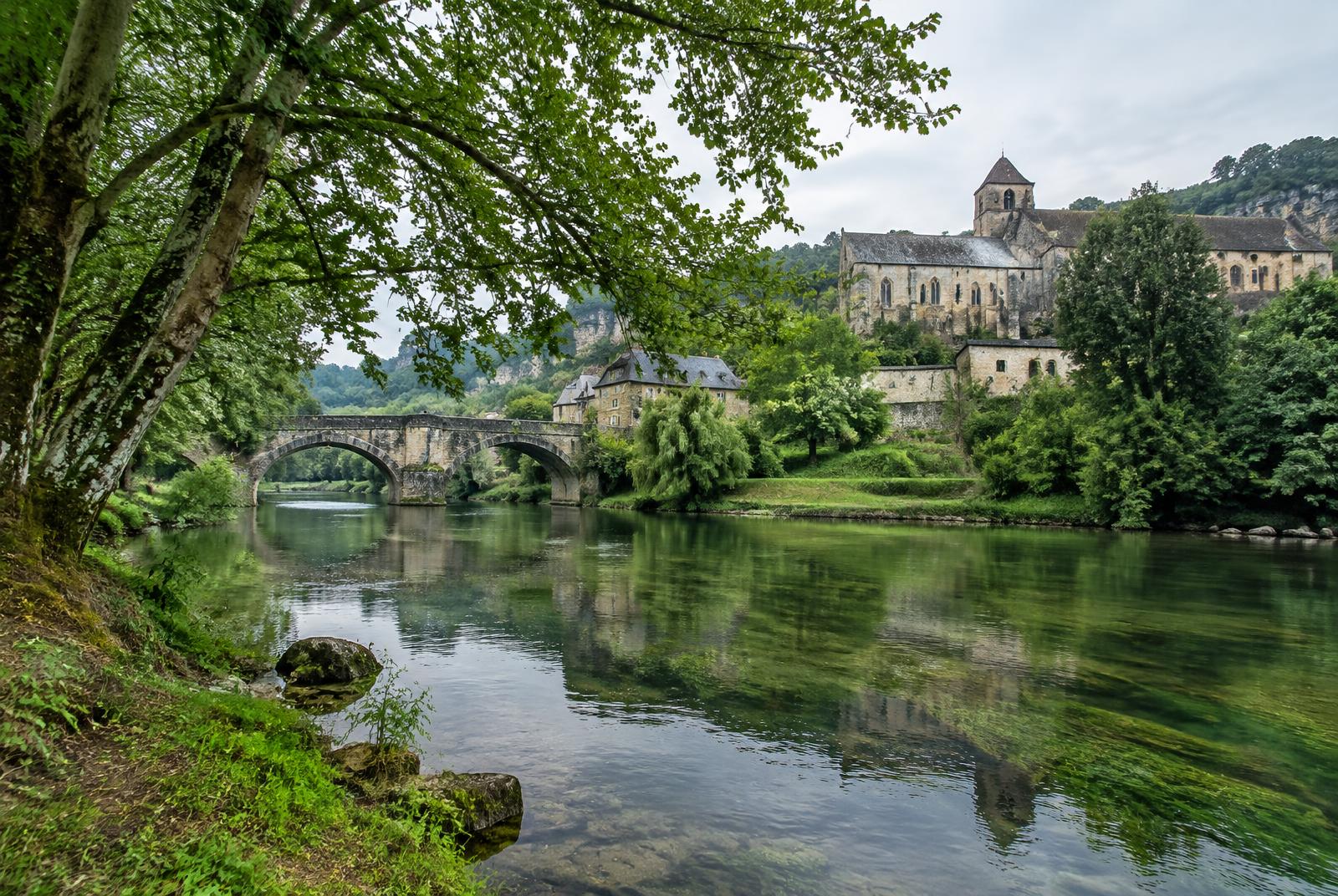
A quiet riverside village on a bend of the Vézère, with a Romanesque church and two châteaux.
Yes, particularly for the lower Vézère valley and western Périgord Noir. You have supermarkets, bakeries, restaurants and year-round markets in town, with Les Eyzies, Limeuil and the Dordogne valley nearby. A car is useful for reaching the scattered sights.
Morning market: Tuesday and Saturday (year-round).
The principal family attractions are the Aquarium du Périgord Noir and Le Bournat, a recreated village set in 1900 with crafts and period fairground rides. Allow substantial time for either rather than treating them as brief stops.
Yes. Le Bugue has bakeries for bread and pastries, central food shops and supermarkets for a full self-catering shop. It also has pharmacies and fuel.
Use the Where to stay block for direct-from-owner properties in and around Le Bugue. When comparing these with hotels or Airbnb-style rentals, focus on the location: the centre suits walking to shops and meals, while properties in the surrounding countryside generally require a car.
Opening times, prices and parking change. Check before you travel: Lascaux Dordogne Vallée Vézère tourist office, Le Bournat, Aquarium du Périgord Noir, Dordogne Périgord tourism.