
Book direct
Villa Périgord
Saint-Vincent-de-Cosse
A great base for river days, castles and Sarlat.
View propertyAbbey · Périgord Pourpre
A Romanesque abbey church and richly carved late Gothic cloister in the centre of Cadouin, with a pilgrimage history shaped by a cloth once believed to be Christ’s shroud.
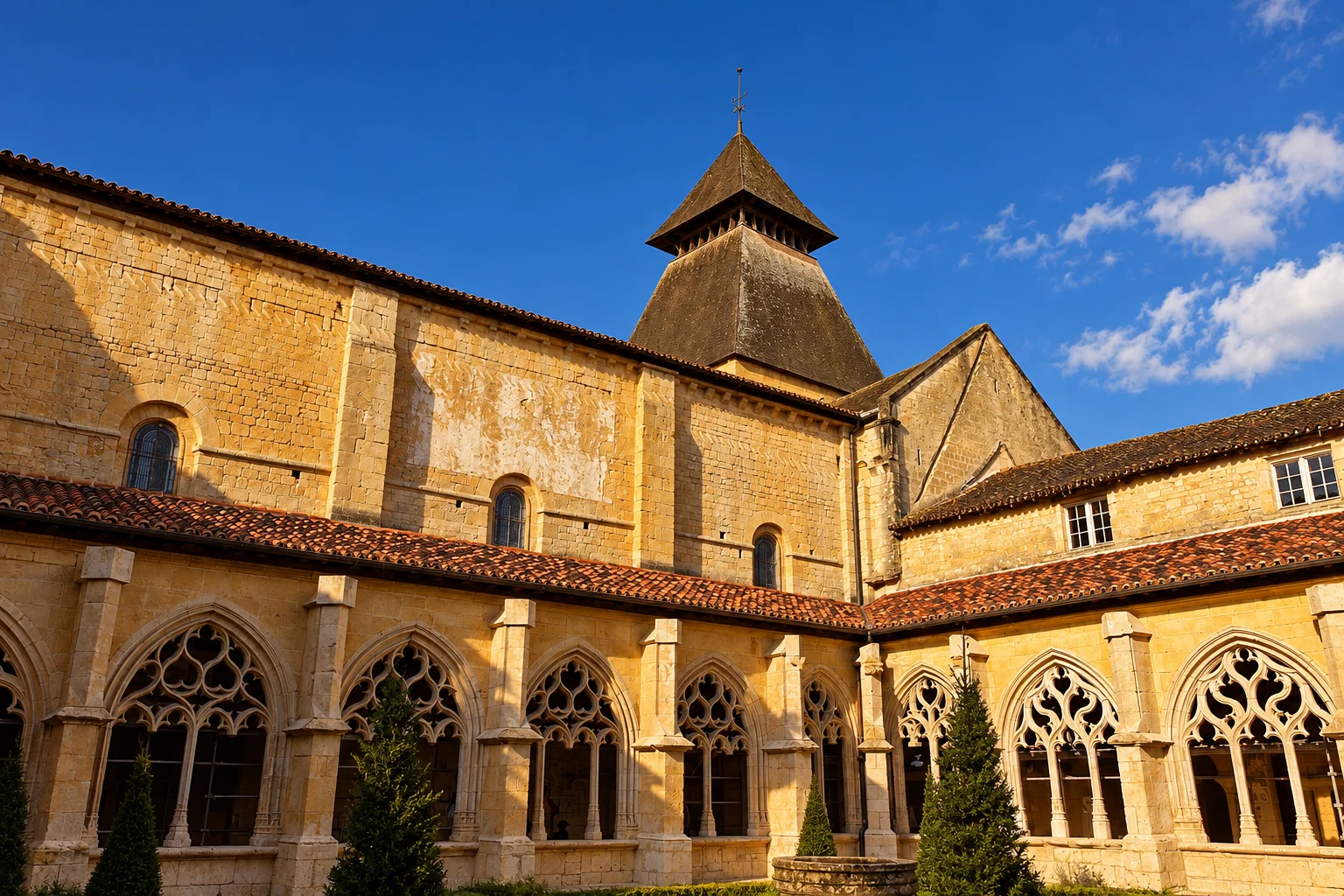
Abbaye de Cadouin has two quite different architectural personalities. The abbey church is Romanesque, with thick stone walls and a restrained interior. Beside it, the cloister is an elaborate late Gothic work, where carved figures and intricate vaulting reward a much closer look. Seeing both is the point of coming, rather than treating the church as an entrance to the cloister.
The abbey also has an unusually revealing pilgrimage story. For centuries, people travelled here to venerate a cloth believed to be the burial shroud of Christ. Its identification in 1934 as a medieval Islamic textile ended that claim. Today, the buildings tell the longer story of monastic life, religious devotion and the village that developed around them.
Where to stayBook direct
Saint-Vincent-de-Cosse
A great base for river days, castles and Sarlat.
View property
Sarlat-la-Canéda
Watch the Sarlat market from your window.
View propertyOwners
List directly with Dordogne Direct and hear from guests yourself. No commission and no guest service fees.
List your propertyThe Place de l’Abbaye is your reference point. The church faces the open village centre and its timber market hall, while the cloister lies against the south side of the church. Cadouin is part of the commune of Le Buisson-de-Cadouin, but the abbey is in Cadouin itself, not beside the railway station in Le Buisson.
This is not a riverside abbey visit. There is no Dordogne crossing within the village walk; the river lies to the north, towards Le Buisson. Once you reach the square, the church, cloister entrance and surrounding lanes are all within a compact area.
Visitors sometimes concentrate entirely on the cloister and leave without looking properly at the church or the hall. Give the square a few minutes too: the close arrangement of religious buildings, houses and trading space makes the abbey’s place in village life much easier to understand.
The strongest contrast is between the church’s broad architectural forms and the cloister’s small sculptural details. Start by looking at each space as a whole, then slow down for the carving. The cloister is a separate visitor attraction from the church, so do not assume that access to one means access to both.
Cadouin was founded in 1115 and became affiliated with the Cistercian order soon afterwards. Its twelfth-century church belongs to that early monastic phase. The cloister you see today is much later, rebuilt after the disruption of the Hundred Years War, which explains why the two adjoining buildings look so different.
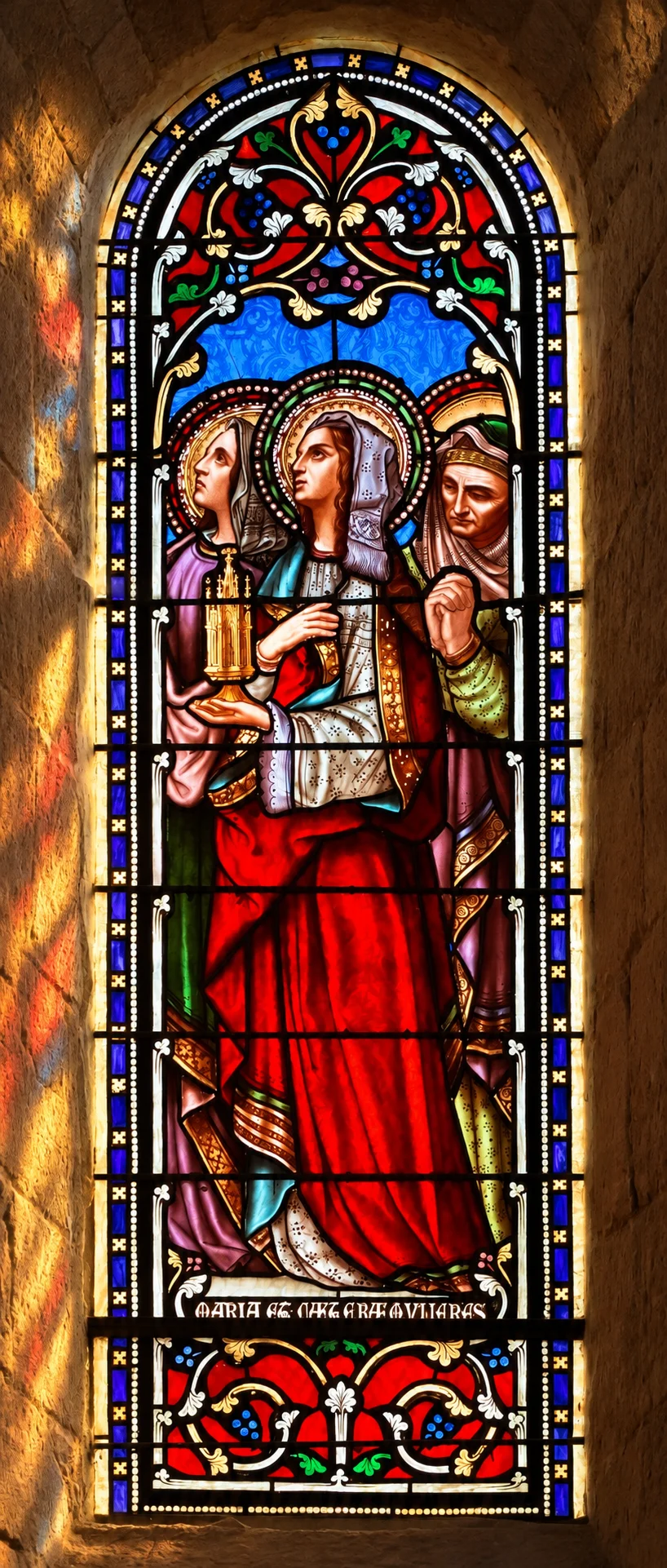
The abbey’s supposed Holy Shroud brought pilgrims and patronage over many centuries. In 1934, examination of the textile’s Arabic inscriptions established that it was a medieval fabric associated with Fatimid Egypt, not a burial cloth from first-century Jerusalem. The discovery brought the shroud pilgrimage to an end.
Monastic life had already ended during the French Revolution. The buildings survived through later changes of use and restoration, and the abbey is now a component of the UNESCO-listed Routes of Santiago de Compostela in France, inscribed in 1998. That designation concerns a network of pilgrimage monuments, rather than a standalone World Heritage listing for Cadouin.
Plan to eat in the village rather than relying on refreshments inside the abbey complex. Cadouin has a small choice of cafés and restaurants around the centre, close enough to combine with the visit without moving your car. Opening patterns are more limited outside the main visitor season.
Local menus commonly draw on the wider Périgord repertoire: duck confit, magret, foie gras, walnuts and mushrooms in season. For a quick stop, look around the square before entering the cloister rather than assuming food will be available during the visit.
Cadouin has some everyday food shopping, but Le Buisson-de-Cadouin, roughly 10 km away by road, is the more practical stop for a fuller choice of restaurants and essentials, including groceries, a bakery, pharmacy and cash access. It also has supermarket shopping if you need to stock up rather than buy a few picnic ingredients.
Allow around 1½ to 2 hours for the church, cloister and village centre. You can make a shorter stop, but the cloister loses much of its interest if you simply walk once around the courtyard without pausing at the sculpture.
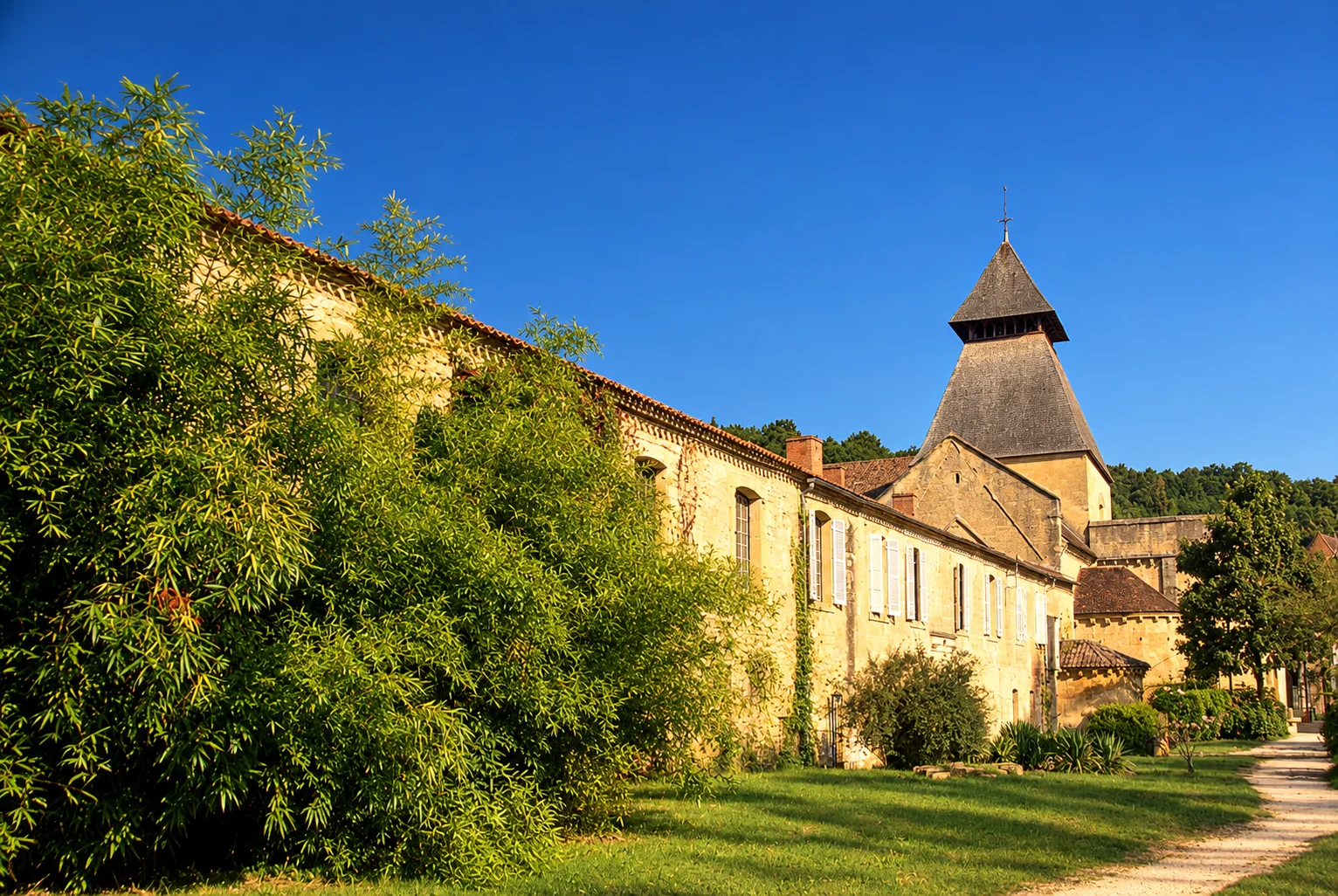
The church remains a religious space, so visits should give way to services. The cloister has its own opening calendar. In winter, confirm that it is open before making a special journey; in summer, an earlier visit gives you more room to look closely at the carvings.
Although the site is compact, historic thresholds and uneven surfaces matter if you use a wheelchair or have difficulty walking. Ask the site directly about the current accessible route rather than assuming the church and cloister have identical access. Le Buisson has a railway station, but it is not within the abbey village, so rail travel requires an onward connection.
Before setting out, check the official visitor information for current opening times, access arrangements and any temporary closures.
Monpazier makes a useful architectural contrast. Cadouin grew around a monastery, whereas Monpazier’s bastide is organised around a regular street grid and arcaded square. Visit the abbey in the morning, have lunch in Cadouin and leave the afternoon for walking the bastide.
Belvès is another good pairing if you prefer a hilltop town with sloping lanes and views over the surrounding countryside. Choose one of these rather than trying to fit both into the afternoon: Cadouin works best as an unhurried half-day stop, not a brief detour between towns.
town · Périgord Pourpre
Le Buisson-de-Cadouin is a practical Dordogne base with a railway station, everyday shops and a Friday market. Its wider commune includes Cadouin and its medieval abbey, alongside caves, gardens and quieter settlements near the river.
village · Périgord Noir
Limeuil is a steep riverside village at the meeting of the Dordogne and Vézère, with an upper medieval centre, panoramic gardens and useful access to both valleys.
town · Périgord Noir
Le Bugue is a working town on the Vézère with year-round markets, useful shops and family attractions. It makes a practical base for exploring the lower Vézère valley and the western Périgord Noir.
Allow around 1½ to 2 hours for the abbey church, cloister and a short walk around the village square. Add time for lunch if you want to make it a half-day outing.
The church is a twelfth-century Romanesque building with a restrained interior. The adjoining cloister was rebuilt in the late Gothic period and is known for its elaborate vaulting and sculpture. They have separate visiting arrangements.
No. In 1934, study of its Arabic inscriptions identified it as a medieval Islamic textile associated with Fatimid Egypt. That finding ended the pilgrimage based on its supposed connection with Christ’s burial.
The compact site suits a short family visit. Looking for faces, animals and other carved details in the cloister gives children something concrete to follow, although younger children may prefer a shorter visit to a detailed architectural tour.
The nearest useful railway stop is Le Buisson, outside Cadouin village. You need to arrange onward transport to the abbey; do not mistake the commune name Le Buisson-de-Cadouin for a station beside the site.
Opening times, prices and parking change. Check before you travel: Dordogne Périgord tourism, UNESCO Routes of Santiago de Compostela in France.