
Book direct
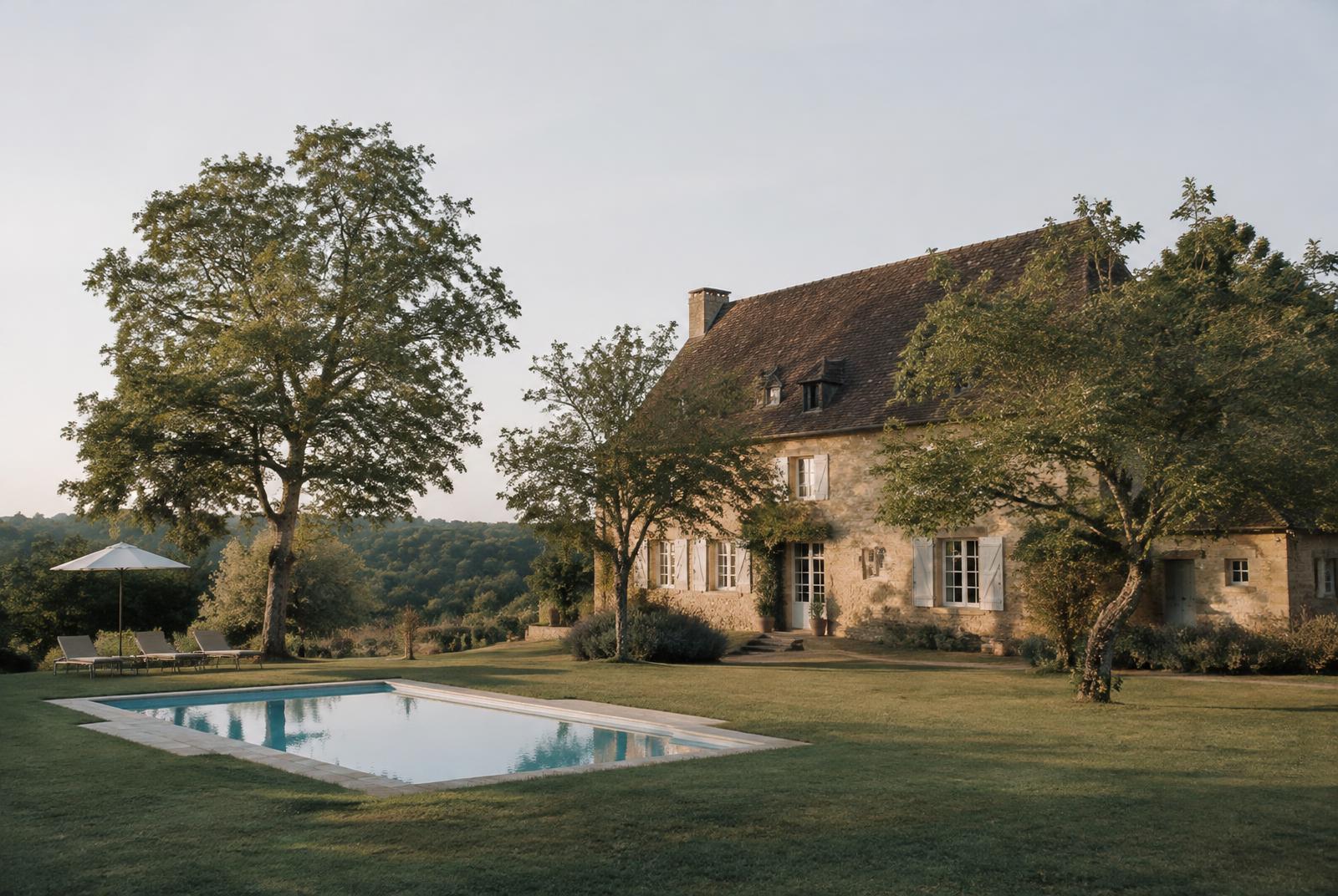
Villa Périgord
Saint-Vincent-de-Cosse · 3 km away
A great base for river days, castles and Sarlat.
View propertyChâteau · Périgord Noir
A medieval fortress above Castelnaud-la-Chapelle, with a museum of medieval warfare, full-size siege engines and wide views across the Dordogne valley.
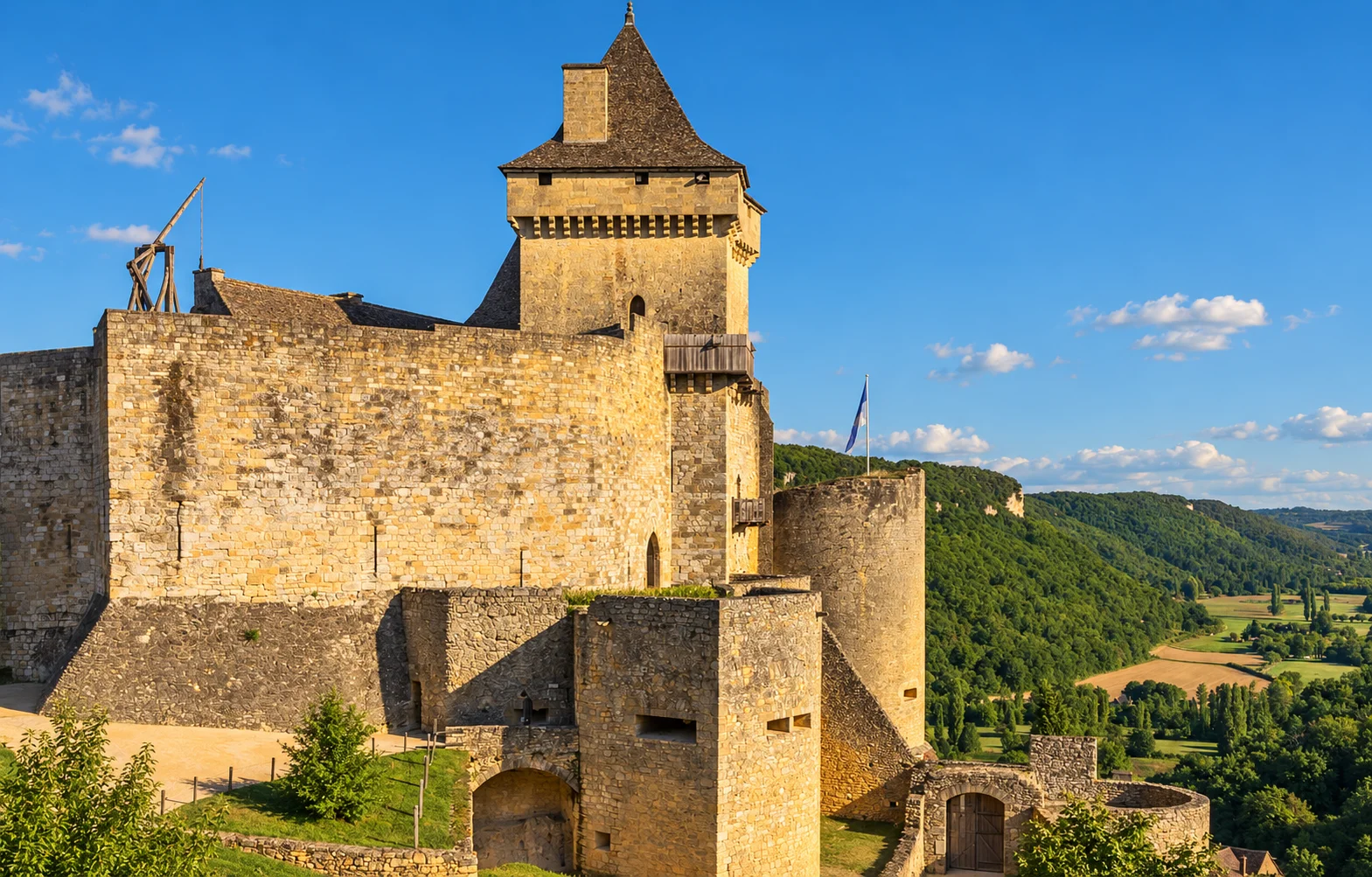
Château de Castelnaud is a fortress with a clear subject: how people fought, defended walls and conducted sieges in the Middle Ages. Above Castelnaud-la-Chapelle, its towers and curtain walls hold the Musée de la Guerre au Moyen Âge, while full-size reconstructed siege engines occupy the outdoor spaces. You come for the building, but the weapons and machinery give the visit its particular character.
The setting matters just as much. From the heights you can read the Dordogne valley below, with river crossings, cultivated land and the opposing stronghold of Beynac all helping explain why this position was contested. Allow two to three hours for the château rather than treating it as a quick viewpoint, and expect stairs, uneven surfaces and time outdoors.
Where to stayBook direct
Saint-Vincent-de-Cosse · 3 km away
A great base for river days, castles and Sarlat.
View property
Sarlat-la-Canéda · 10 km away
Watch the Sarlat market from your window.
View propertyOwners
List directly with Dordogne Direct and hear from guests yourself. No commission and no guest service fees.
List your propertyThe visit moves between enclosed rooms, defensive structures and open terraces. It is not a furnished country-house tour: the emphasis is on the fortress itself and the collection of arms, armour and artillery. Look at the shape of the defences as well as the objects inside them.
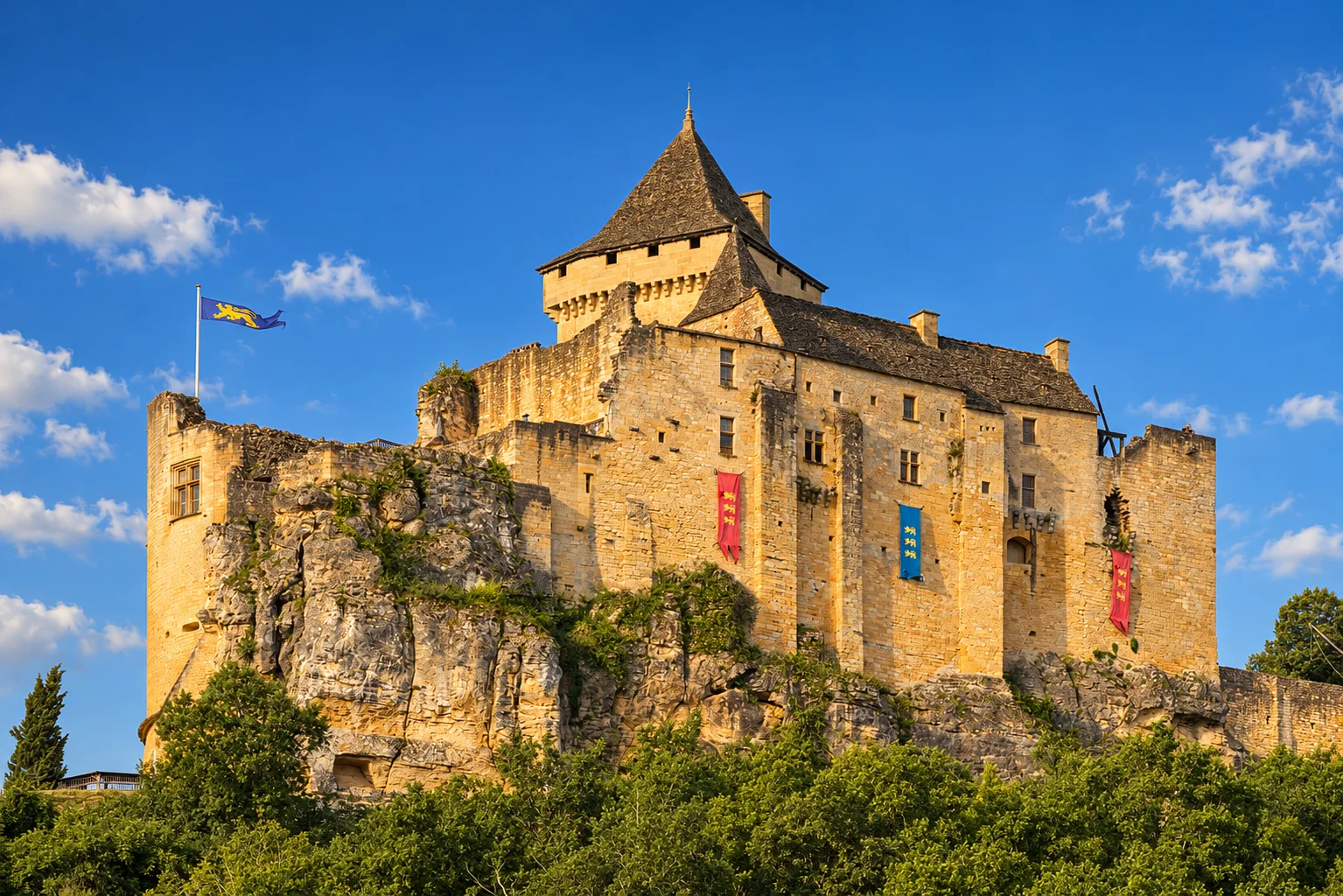
Outside, the reconstructed siege engines are a useful counterpoint to the smaller weapons in the museum. Their size makes clear how much timber, labour and space an attack demanded. The valley views also deserve a pause, particularly where you can pick out Château de Beynac across the Dordogne.
Castelnaud's documented history reaches back to the early thirteenth century, when it was taken during the Albigensian Crusade. Its position above the Dordogne made it valuable long afterwards: this was a place from which to watch movement along the valley and assert control over the surrounding territory.
During the Hundred Years War, Castelnaud was associated with the English side while Beynac was associated with the French. That opposition is a useful starting point, though the castle changed hands during the conflict. French forces took it in 1442, towards the end of the war in this region.
Later alterations accommodated artillery and more comfortable residential use. The château eventually fell into ruin and was used as a source of building stone before restoration began in the twentieth century. The museum opened in 1985. What you see today combines surviving historic fabric with extensive restoration, while the siege engines are modern reconstructions.
Treat the château as the sightseeing part of your day and arrange your main food stop in the village. On-site café and picnic facilities: To be confirmed. Bring drinking water for the climb and the exposed outdoor parts of the visit.
Castelnaud-la-Chapelle, immediately below the château, has restaurants and places for a drink or a light meal. The upper village is the convenient stop before or after the castle, while the lower village by the river has a bakery and food shopping. The walk between the two is steep, so they are not interchangeable stops if you have left supplies in the car.
For a fuller choice of restaurants, groceries, a bakery, pharmacy and cash facilities, use Cénac-et-Saint-Julien, about 9 km away by road. It also has a supermarket for a larger shop. Local menus commonly feature duck confit, walnut-based dishes and potatoes cooked in duck fat.
Castelnaud-la-Chapelle holds a morning market every Tuesday from mid-June to late September, on Place du Gabarier in the lower village by the river. It makes an easy stop before or after the climb to the château. In July and August the village also runs a Monday night market.
On other days the nearest alternatives are Beynac-et-Cazenac on Monday in peak season only, about 8 km away, and La Roque-Gageac on Friday in peak season only, also about 8 km away. Cénac-et-Saint-Julien has a year-round Tuesday market about 9 km away.
The château is above the village, not beside the river. If you are arriving from the north bank, the road bridge at Castelnaud-la-Chapelle brings you across the Dordogne near the lower village. Follow signs for the château parking rather than assuming that a riverside space leaves only a short, level walk.
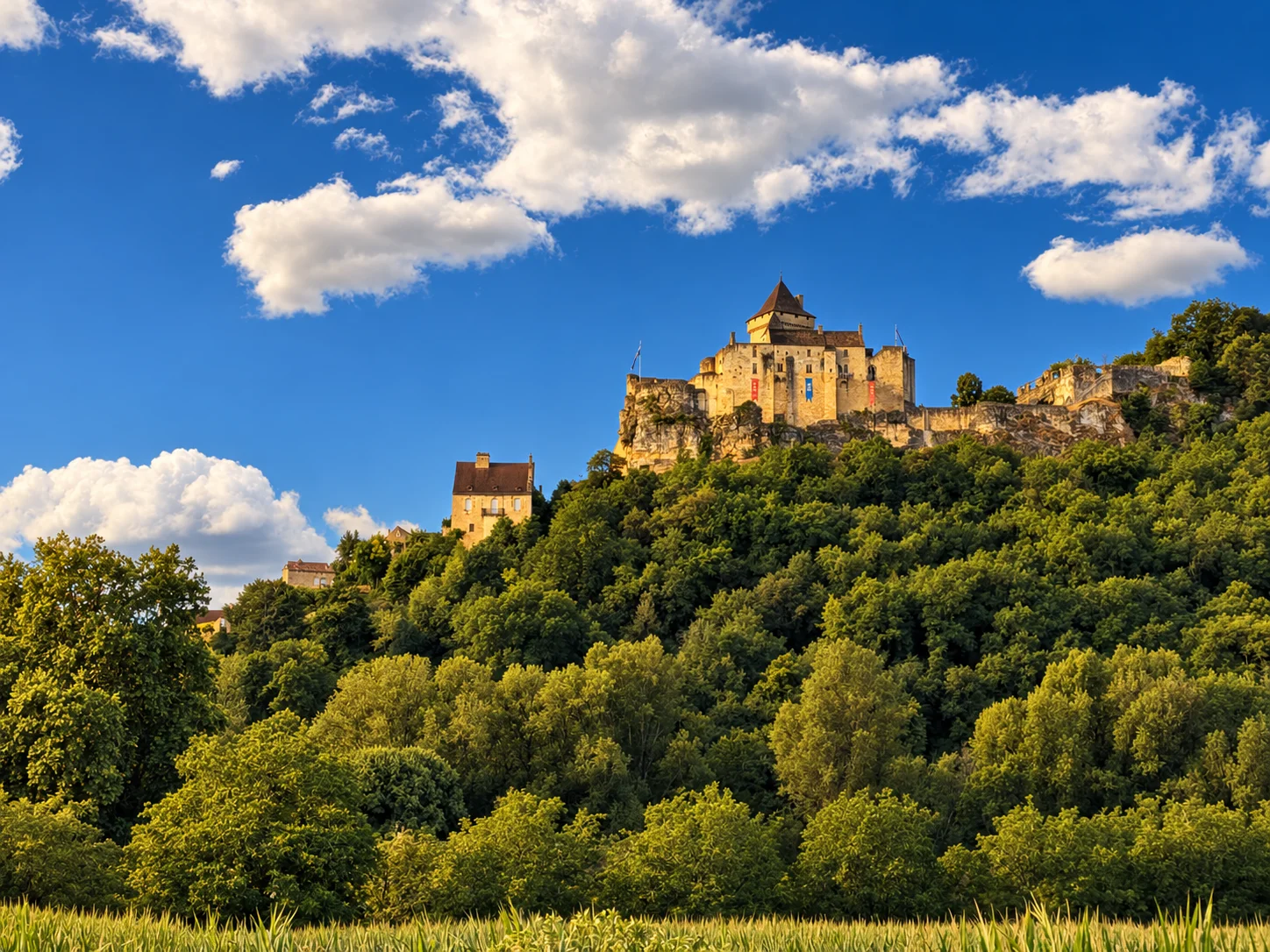
Allow two to three hours to see the collections, outdoor machinery and views without rushing. A visit from the lower village adds a substantial uphill walk. Within the château, narrow passages, stairs and uneven stone make the full circuit unsuitable for a pushchair and difficult for anyone who cannot manage steps.
Some of the visit is indoors, but the terraces and routes between defensive structures leave you exposed to sun or rain. Demonstrations and family activities can add to the visit when scheduled, but the permanent displays provide plenty to see on their own. Before travelling, check the official château website for current opening times, access guidance and the activity programme.
Beynac-et-Cazenac makes the most direct historical pairing. Seeing Château de Beynac after Castelnaud lets you compare two fortified positions overlooking the same valley. Both involve climbing and steps, so a two-castle day is best kept free of several other major stops.
For more variety, combine the château with the Jardins de Marqueyssac. The gardens offer a change from interiors and military history, with paths and viewpoints above the Dordogne, though this is still a walking-heavy day.
Château des Milandes offers a different subject again, with its association with Joséphine Baker. Alternatively, keep the afternoon simple with lunch in Castelnaud-la-Chapelle and a riverside walk, or continue to La Roque-Gageac for a village stop.
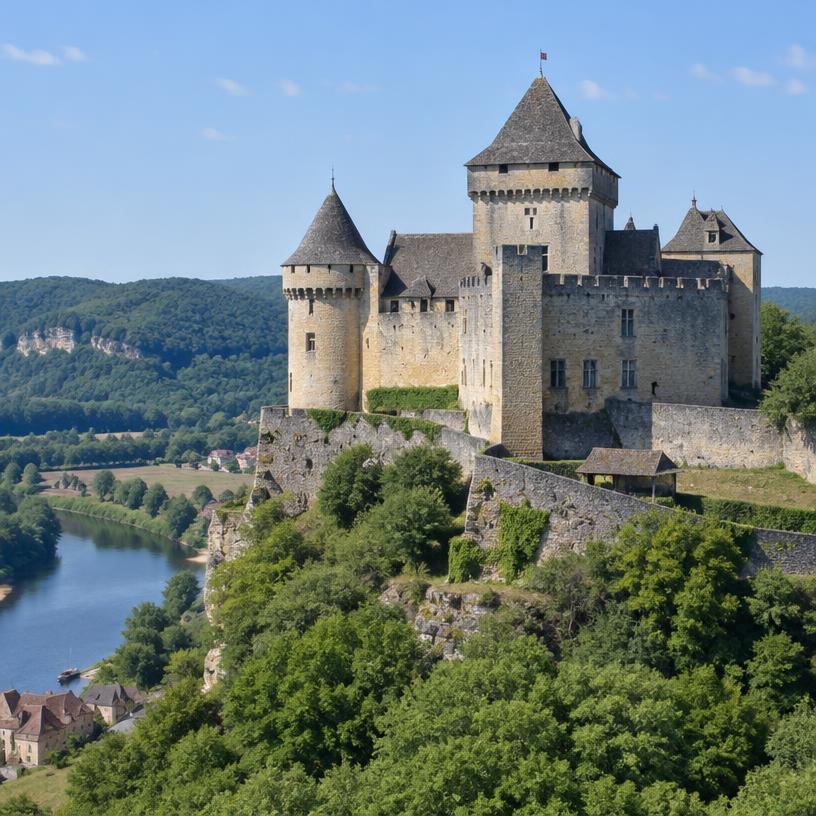
Château and museum · Dordogne Valley
A medieval fortress on the south bank of the Dordogne, home to a museum of medieval warfare.
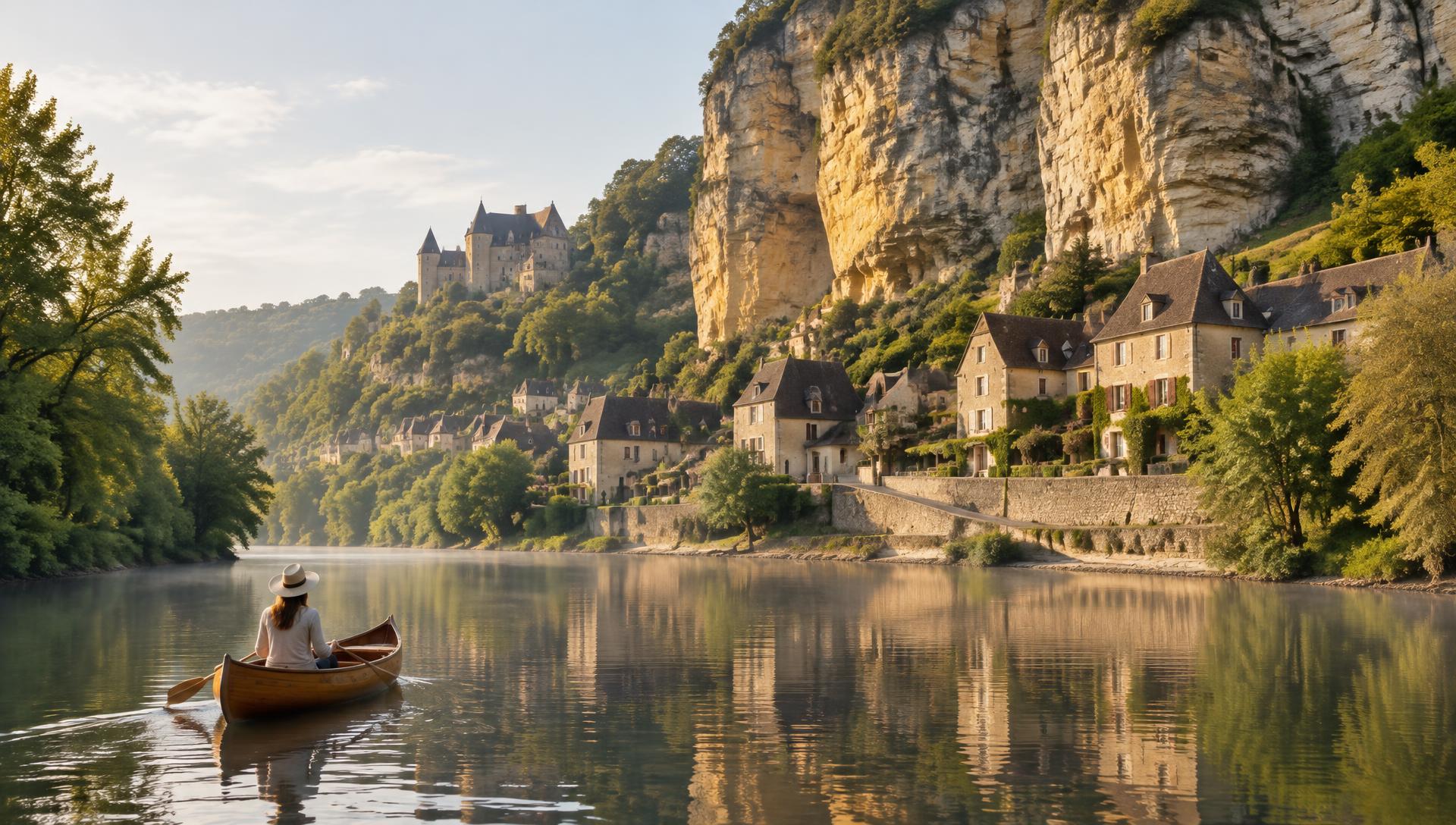
Village · Dordogne Valley
A riverside village climbing steeply to a castle on the cliff above the Dordogne.
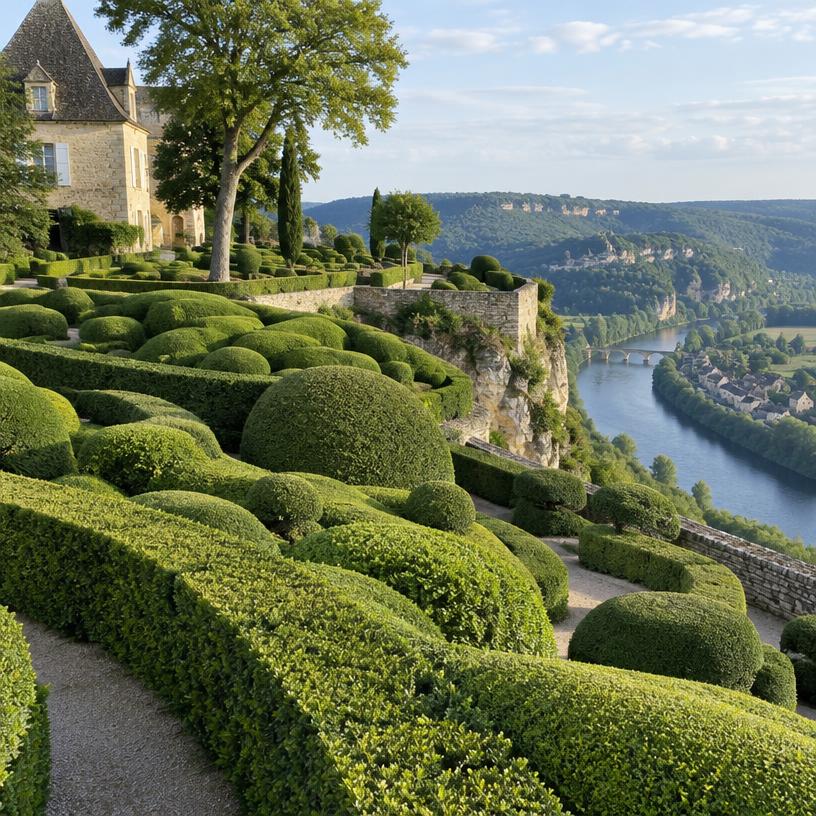
Gardens and viewpoint · Dordogne Valley
Hanging gardens of clipped box on a ridge high above the Dordogne, with paths out to a clifftop belvedere.
It is known for its medieval fortress, the Musée de la Guerre au Moyen Âge and full-size reconstructed siege engines. Its elevated position also gives wide views across the Dordogne valley towards Beynac.
Allow two to three hours for the museum, defensive structures and outdoor displays. Add time if you walk up from the riverside village, stop for lunch or attend a scheduled demonstration.
The weapons, armour and large siege engines give children concrete things to look at and discuss. Expect stairs and uneven ground, supervise young children on the outdoor routes and do not plan to use a pushchair throughout the castle.
Follow the château parking signs rather than parking beside the river. This avoids the full ascent from the lower village, but it does not make the castle itself step-free: the visit still includes slopes, stairs and uneven surfaces.
Choose Castelnaud if medieval weapons, siege engines and explanatory displays are your priority. Château de Beynac puts more emphasis on the fortress and its historic rooms. They complement one another, but visiting both means a day with plenty of climbing.
Opening times, prices and parking change. Check before you travel: Château de Castelnaud official website, Dordogne Périgord tourism.