
Book direct
Villa Périgord
Saint-Vincent-de-Cosse · 4 km away
A great base for river days, castles and Sarlat.
View propertyChâteau and museum · Dordogne Valley
A medieval fortress on the south bank of the Dordogne, home to a museum of medieval warfare.
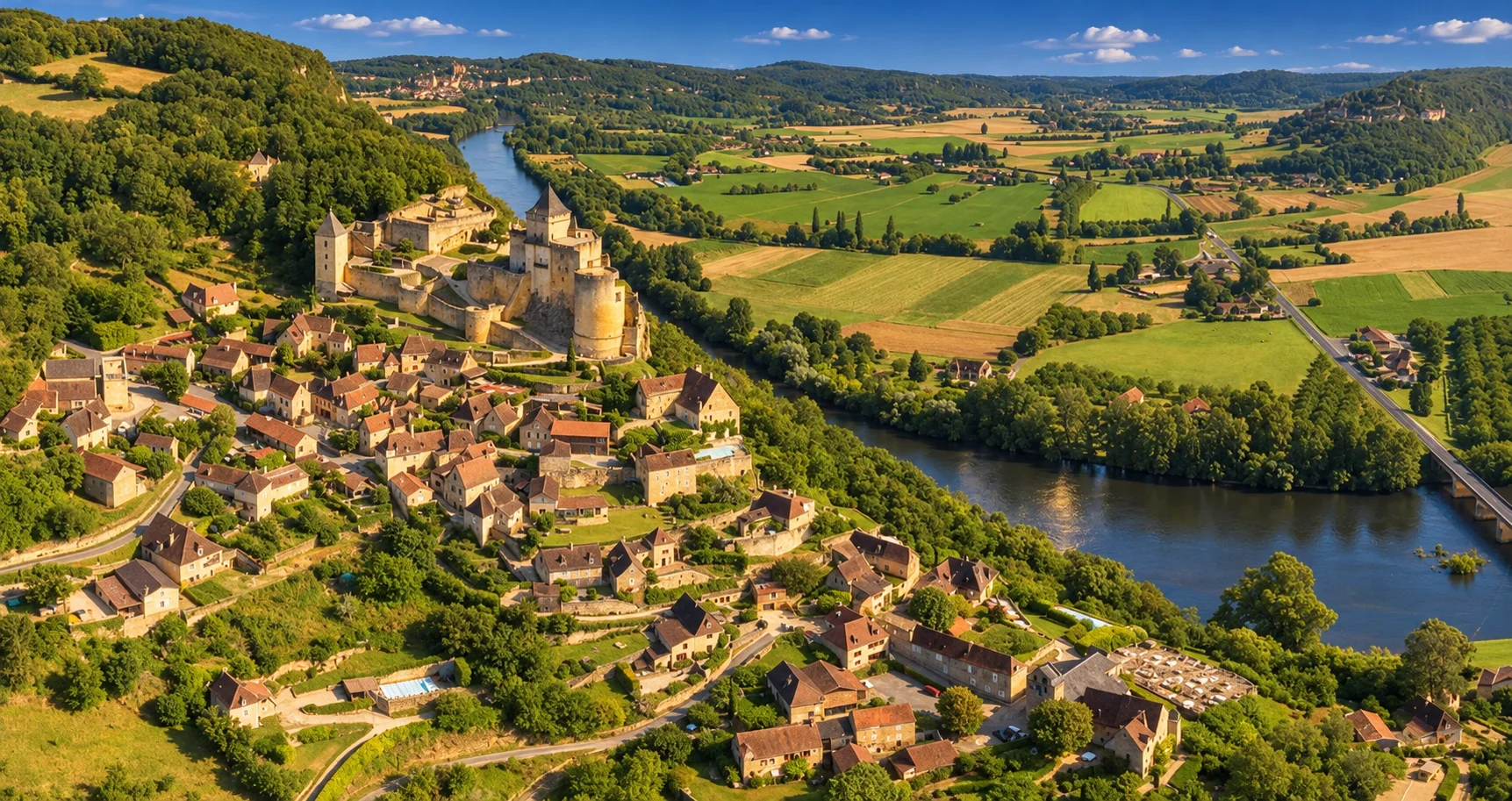
The Château de Castelnaud stands on a rocky spur above the south bank of the Dordogne, looking straight across the river at Beynac. It is one of the most visited castles in the region and houses a museum dedicated to medieval warfare.
Where many châteaux are about fine rooms and furniture, Castelnaud is about how castles were attacked and defended. That makes it one of the most engaging visits in the valley for children, and a useful key to understanding every other fortress you see on the river.
Where to stayBook direct
Saint-Vincent-de-Cosse · 4 km away
A great base for river days, castles and Sarlat.
View property
Sarlat-la-Canéda · 10 km away
Watch the Sarlat market from your window.
View propertyOwners
List directly with Dordogne Direct and hear from guests yourself. No commission and no guest service fees.
List your propertyThe castle's rooms hold a large collection of weapons and armour from the Middle Ages, displayed in a way that explains how they were used rather than simply laid out in cases. Swords, crossbows, helmets and plate armour sit alongside models and short films.
The visit follows the castle's development over several centuries, from the early keep to later towers and the artillery defences added towards the end of the Middle Ages. Stairs are narrow and there are many of them, which is part of the experience.
From the ramparts you look straight across at Beynac and along the valley towards Marqueyssac and La Roque-Gageac. It is the clearest place to see how closely the rival castles watched one another.
Castelnaud was taken by Simon de Montfort in the early thirteenth century during the crusade against the Cathars. Its later history is shaped by the Hundred Years War, when it was held for long periods by lords allied to the English, while Beynac opposite stood for the French crown.
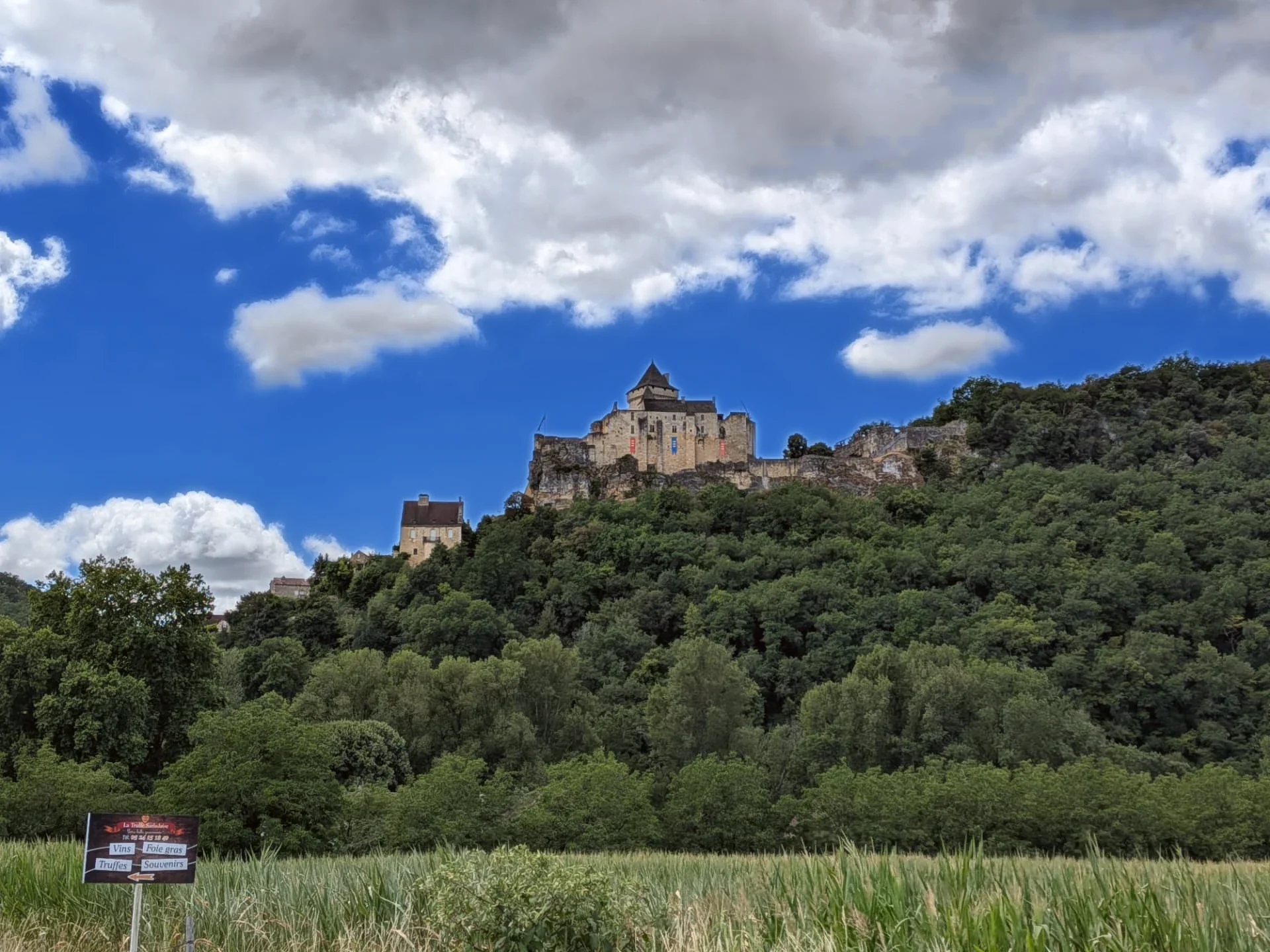
After centuries of decline the castle was in ruins by the twentieth century. It was bought in the 1960s and restored over many years, and the museum opened in the 1980s. Today it is run by the same private company that manages Les Milandes and Marqueyssac nearby.
The château is reached through the small village of Castelnaud-la-Chapelle, whose stone houses climb the slope below the walls. The walk up from the car parks is short but steep.
Down by the river, the low ground below the village is a common spot for canoe landings and riverside picnics, with the castle above and Beynac in view on the far bank.
Parking is in paid car parks below the village, followed by a short steep walk up to the castle. Check current parking arrangements before you go.
Opening times, ticket prices and the programme of demonstrations change by season. Check the official site before you travel, particularly outside July and August.
The visit involves a lot of stone stairs and some uneven ground. It is not well suited to pushchairs, and access is limited for visitors with reduced mobility.
Beynac is the natural partner, a few kilometres away across the river, and the two together tell the story of the valley in the Middle Ages. Marqueyssac is a very short drive east and offers a complete change of pace with its gardens and views.
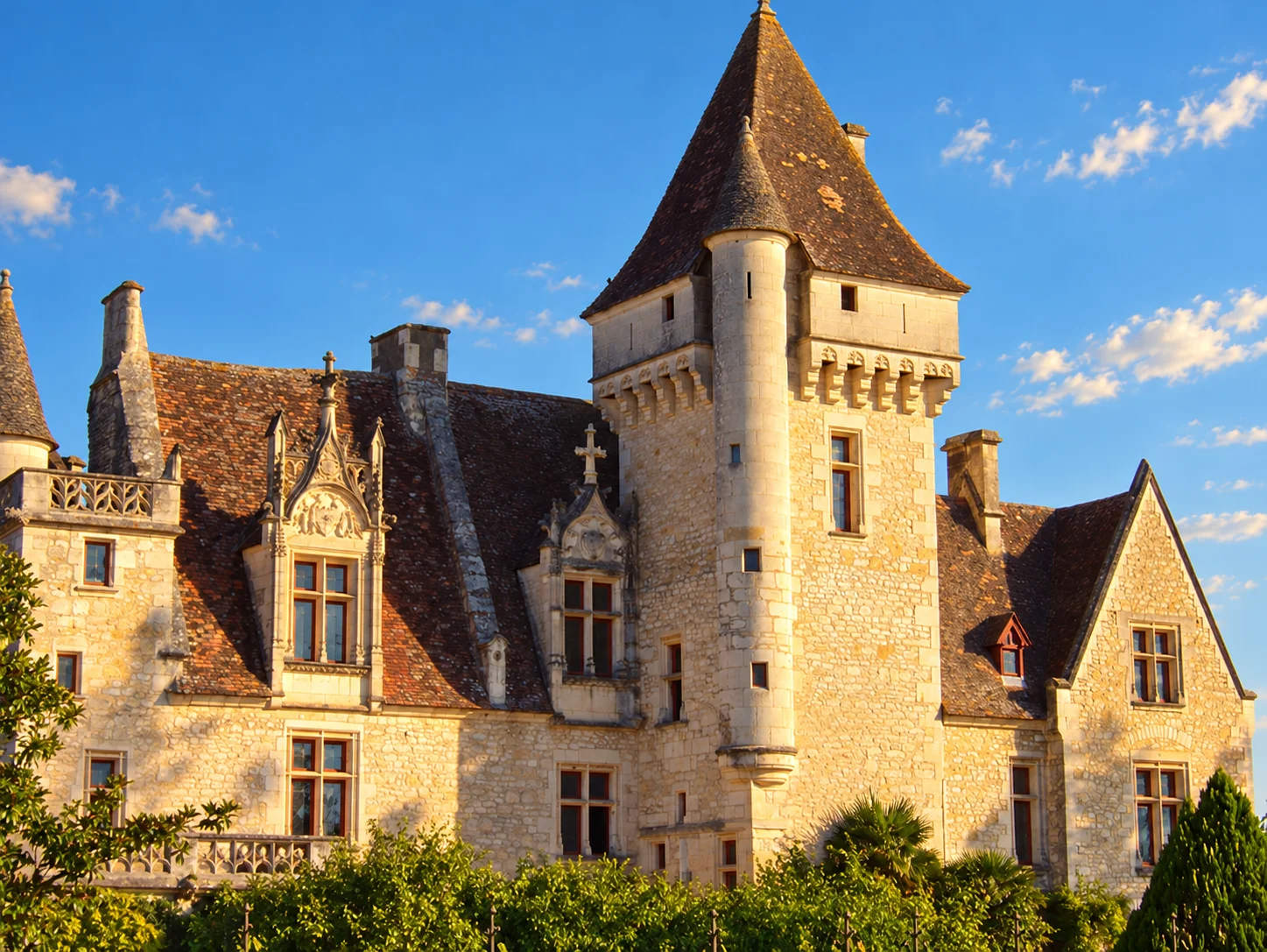
To the west, the Château des Milandes, once home to Joséphine Baker, adds a Renaissance château and a twentieth-century story to the day. La Roque-Gageac is close by for an evening stroll along the river.
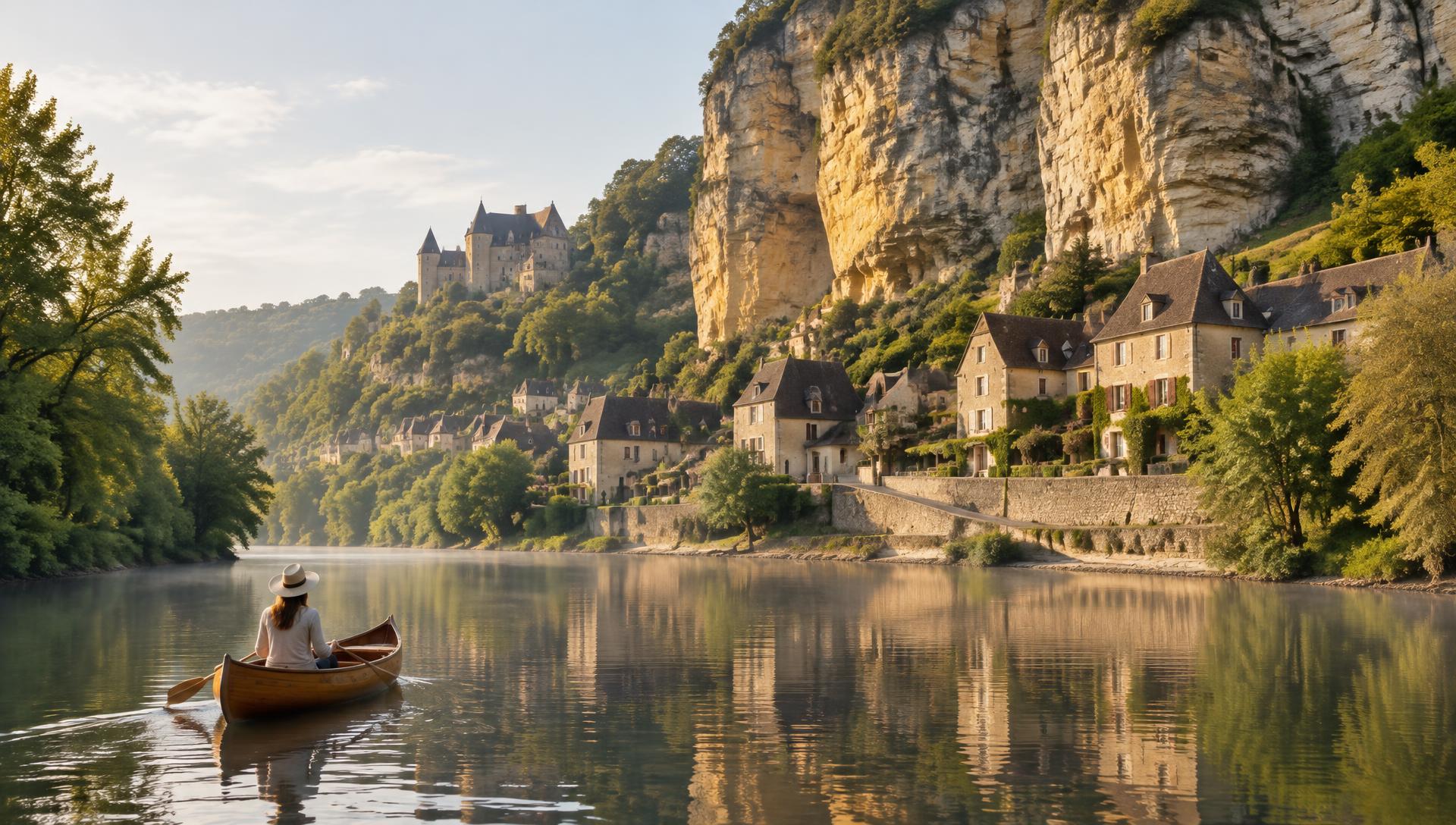
Village · Dordogne Valley
A riverside village climbing steeply to a castle on the cliff above the Dordogne.
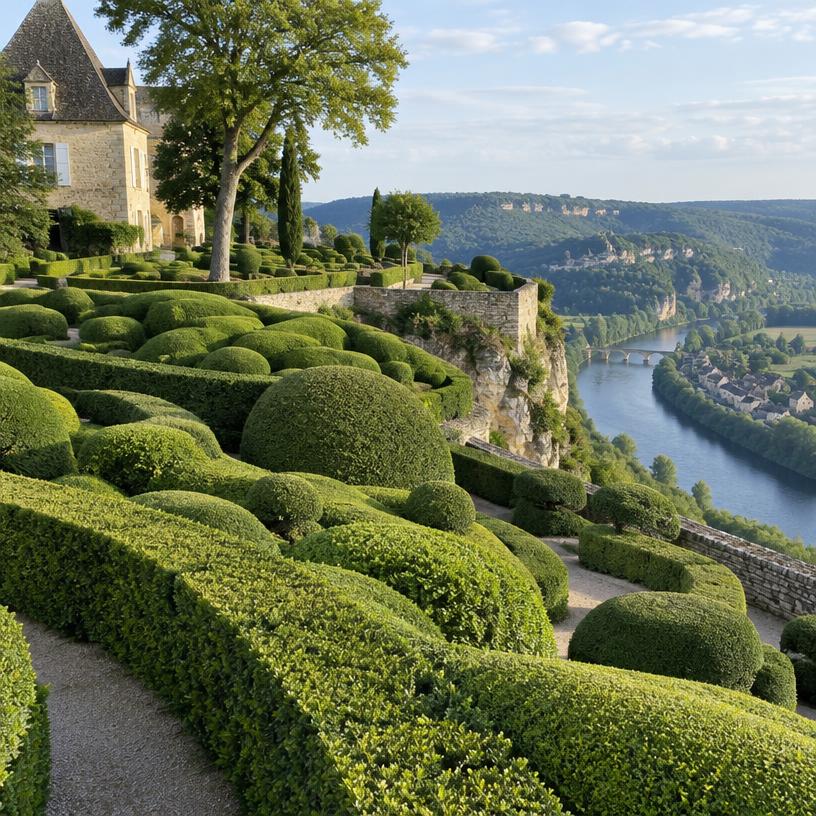
Gardens and viewpoint · Dordogne Valley
Hanging gardens of clipped box on a ridge high above the Dordogne, with paths out to a clifftop belvedere.
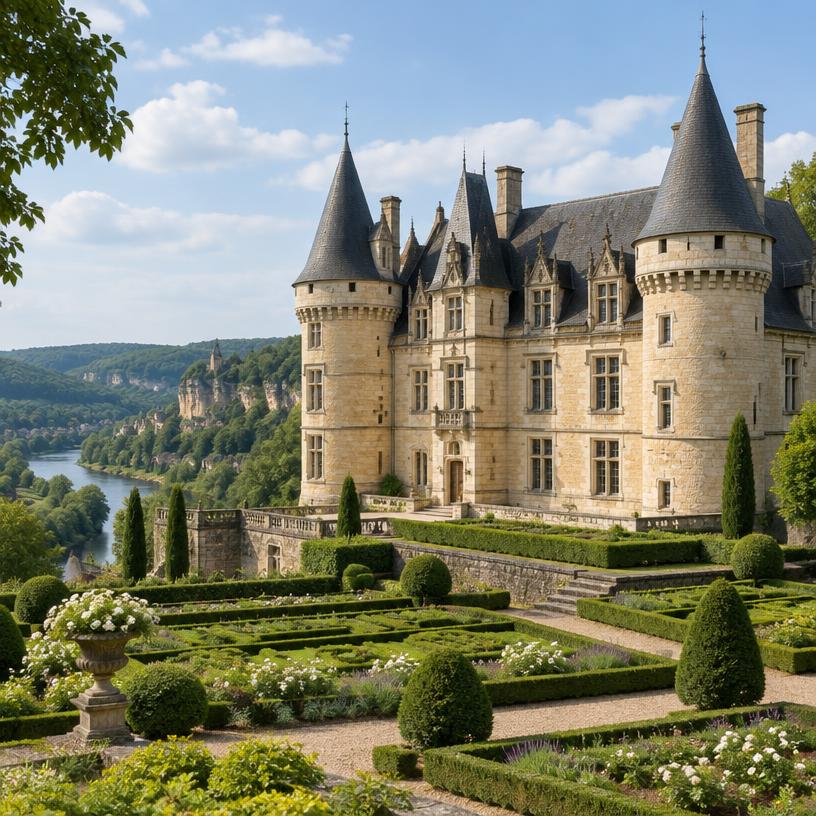
Château · Dordogne Valley
A Renaissance château that was home to Joséphine Baker, with gardens and a falconry display.
Yes. The museum of medieval warfare, the armour and the full-size siege engines make it one of the most popular castles in the valley for families.
Allow two to three hours for the castle, the museum and the ramparts.
Yes. The two castles face each other across the Dordogne and the ramparts at Castelnaud give one of the best views of Beynac.
Not easily. The approach is steep and the visit involves many stone stairs.
Yes. They are a few kilometres apart and visiting one in the morning and the other in the afternoon works well.
Opening times, prices and parking change. Check before you travel: Château de Castelnaud, Sarlat-Périgord Noir tourist office.