

Book direct
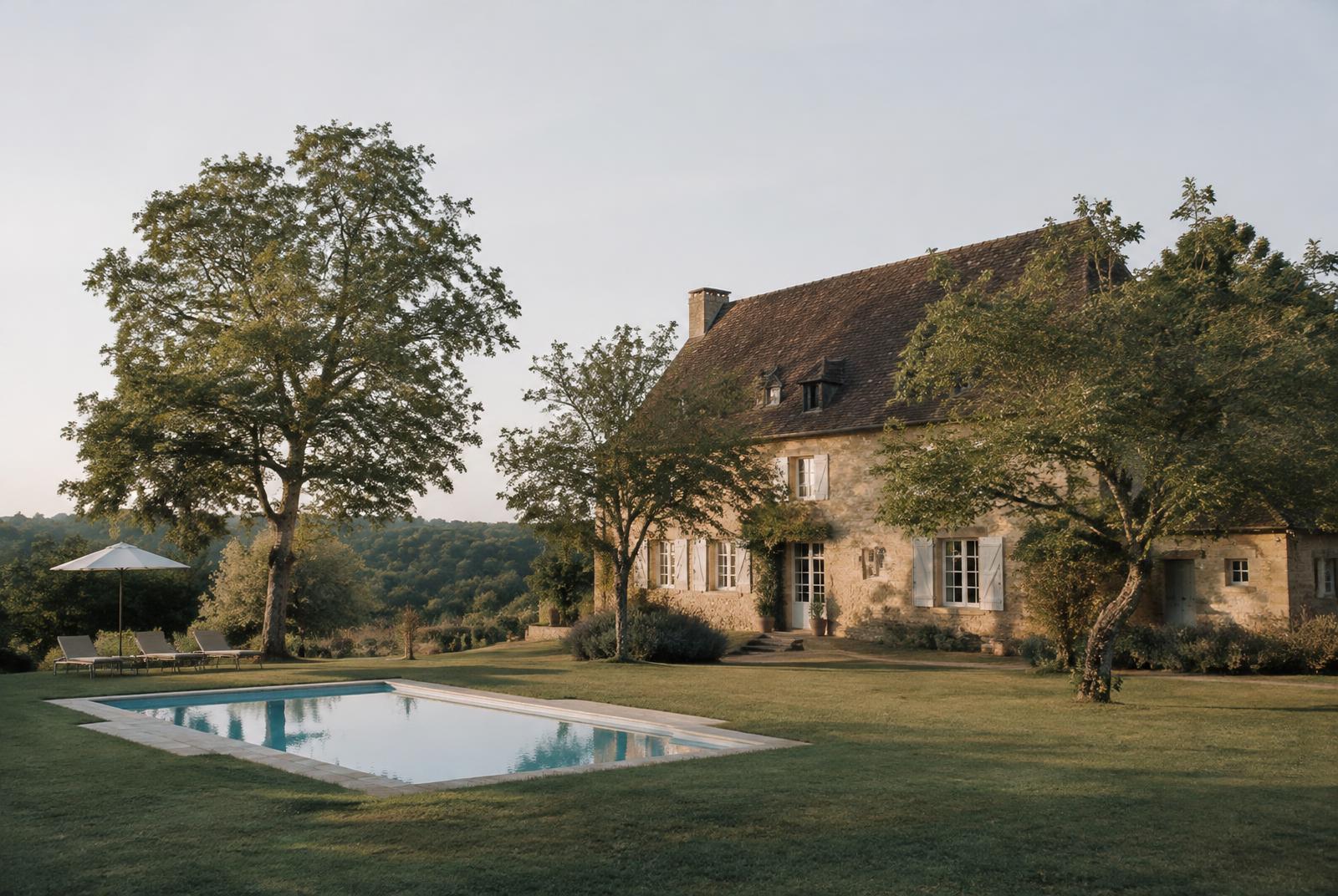
Villa Périgord
Saint-Vincent-de-Cosse · 2 km away
A great base for river days, castles and Sarlat.
View propertyCastle · Périgord Noir
A medieval fortress above Beynac-et-Cazenac, with a massive stone keep, furnished rooms and wide views over the Dordogne valley.
Château de Beynac rises directly above the Dordogne, its pale stone walls extending the line of the cliff. The position is the first thing to understand: this was a fortress controlling movement along the valley, not a country house built around a garden. Inside, the heavy medieval fabric sits alongside rooms adapted for more comfortable living.
Allow around an hour to an hour and a half for the castle, then add time for Beynac-et-Cazenac below. The climb from the river is a substantial part of the outing, with steep paved lanes rather than a gentle approach. If the castle is your priority, approaching by road towards the upper village avoids most of that climb.
Where to stayBook direct
Saint-Vincent-de-Cosse · 2 km away
A great base for river days, castles and Sarlat.
View property
Sarlat-la-Canéda · 8 km away
Watch the Sarlat market from your window.
View propertyOwners
List directly with Dordogne Direct and hear from guests yourself. No commission and no guest service fees.
List your propertyBeynac has two distinct levels. The lower village follows the Dordogne beside the D703, with the waterfront, places to eat and the starting point for the walk uphill. The château occupies the ridge above. Rue de la Balme is one of the named lanes on the ascent through the stone houses; the route is steep and paved, with steps on some approaches.
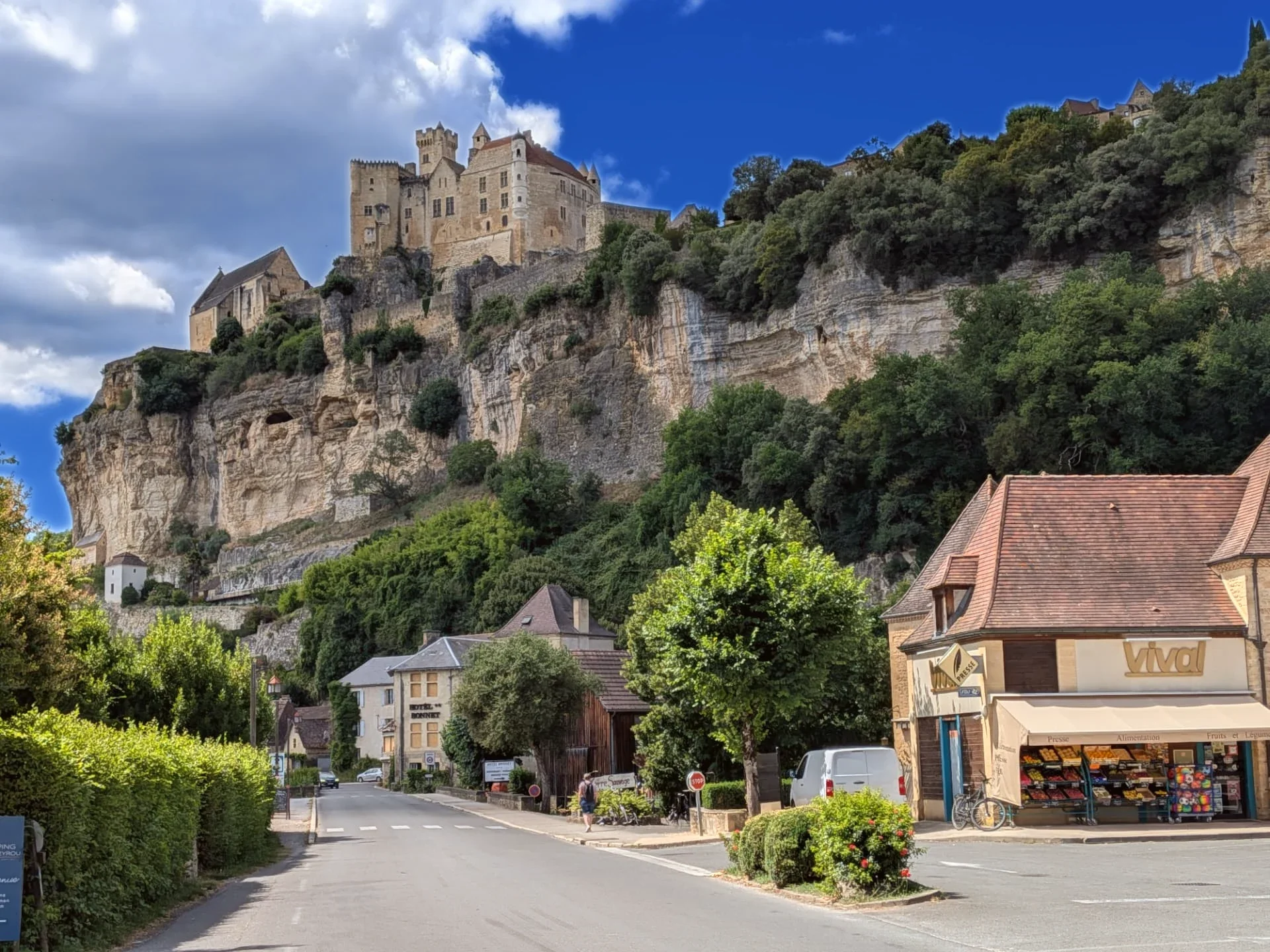
The upper village is more than a castle entrance. Around the château and Église Notre-Dame-de-l’Assomption, the lanes give you a different view of Beynac from the roadside frontage below. Visitors who drive straight to the upper approach can miss the village walk, while those who stop only beside the river miss the fortress entirely.
There is no river crossing directly beneath the castle. For Castelnaud and the opposite bank, the road route goes east towards the Pont de Fayrac. What looks close across the water is not a direct walk from one castle to the other.
The visit works best when you look at the building as a sequence of defences and later domestic additions. Thick walls and restricted approaches belong to the fortress; decorated and furnished rooms show how its occupants subsequently made it a residence.
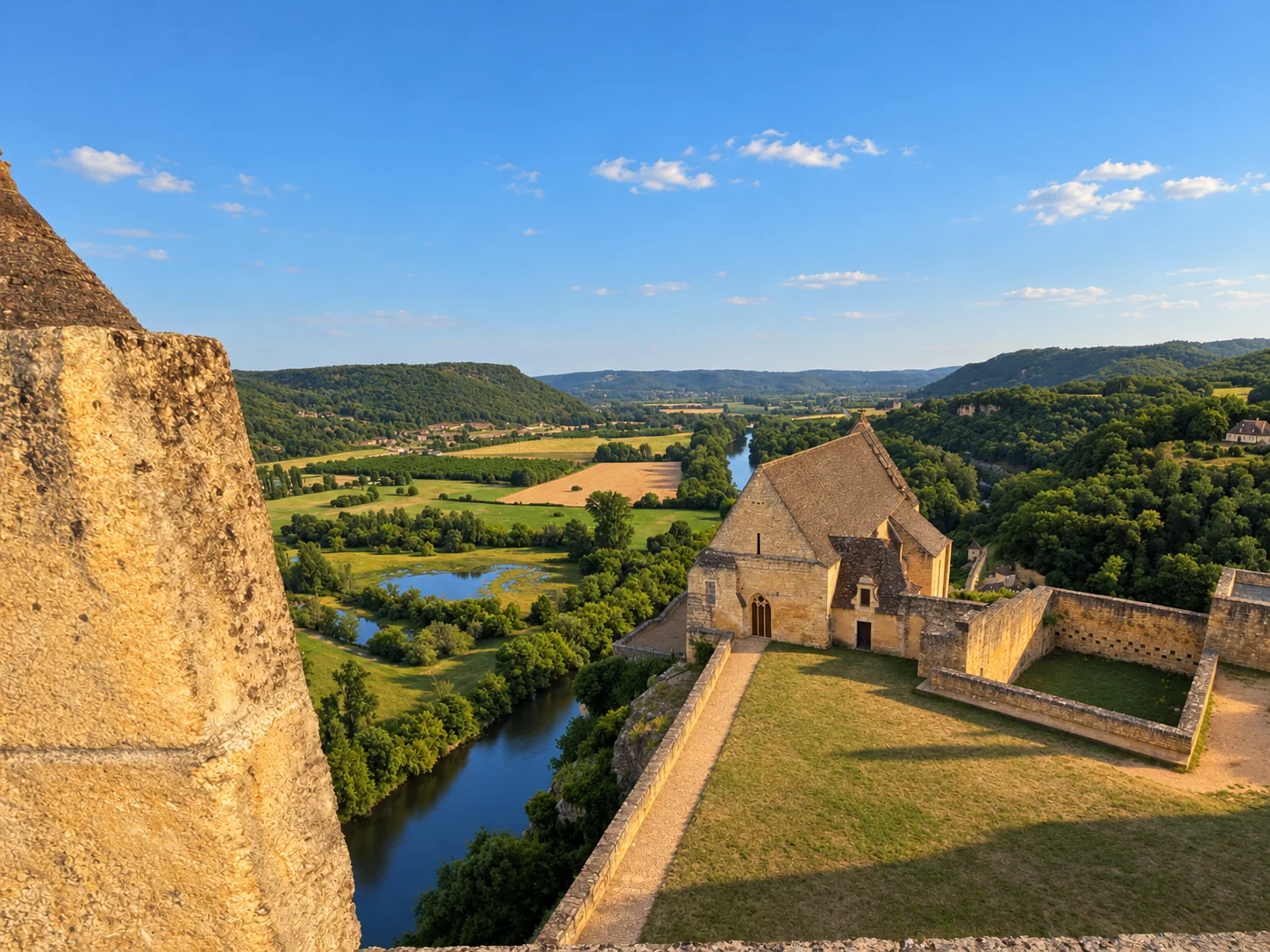
The surviving castle has its roots in the twelfth century. The cliff provided a formidable natural defence on the river side, leaving the landward approach as the obvious direction from which an attacker could advance. The keep and surrounding fortifications reflect that imbalance.
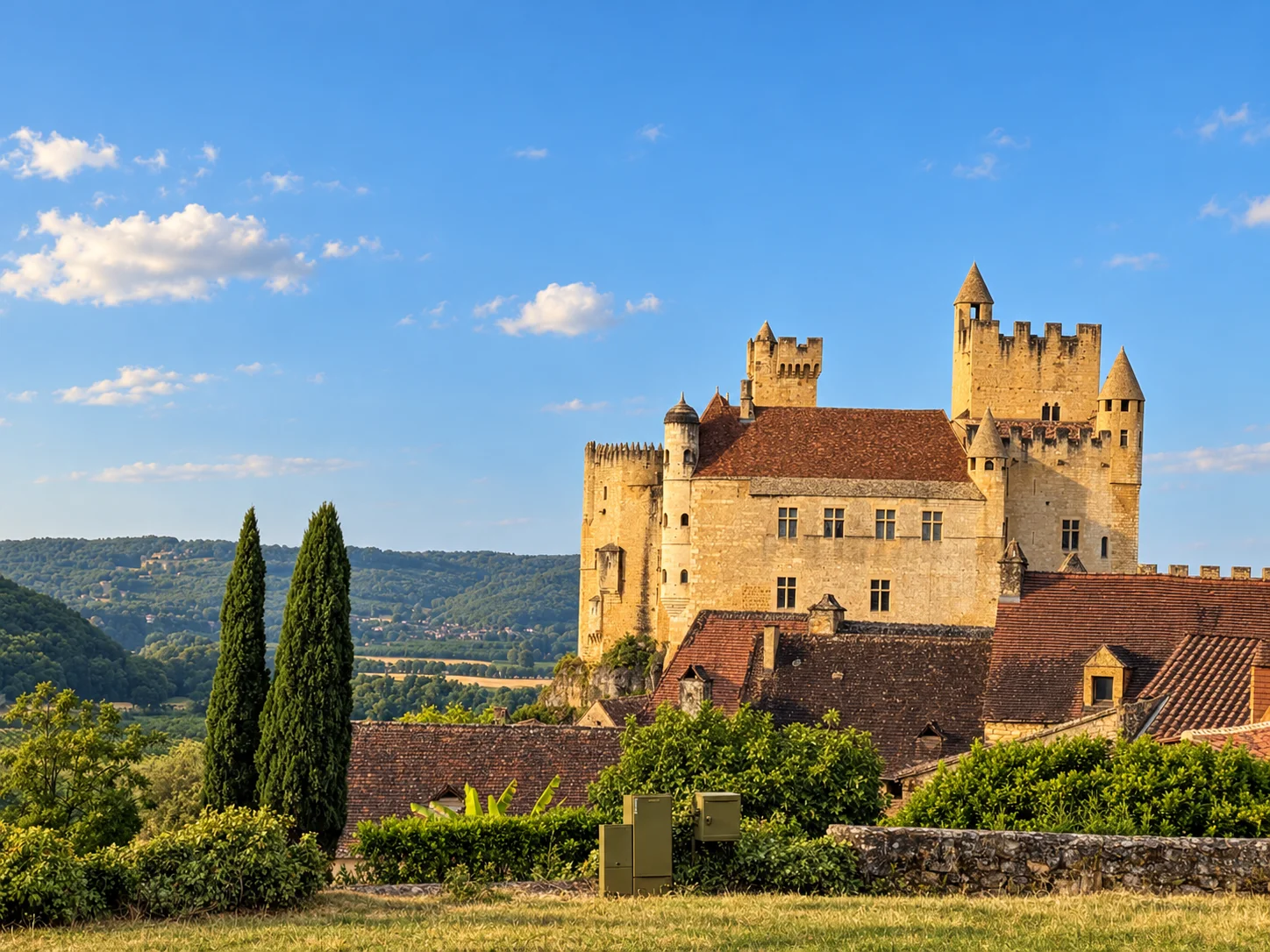
Richard the Lionheart took Beynac in 1197. During the Hundred Years War, Beynac was associated with the French cause, while Castelnaud across the valley was frequently held by supporters of the English. The two castles make a useful comparison, although the Dordogne was not a fixed frontier throughout the conflict.
Later owners altered the fortress for residential use, which explains the mixture of severe defensive masonry and more refined interiors. Restoration begun in the twentieth century helped bring the castle back into use as a visitor site. What you see today is a building shaped by several periods, rather than an untouched medieval interior.
The château is a sightseeing stop rather than somewhere to eat a full meal. Bring water for the climb, particularly in summer, and plan any lunch for before or after the visit.
For a proper choice of restaurants and cafés, walk down into Beynac-et-Cazenac, the village directly below the castle. Its riverside lower village has places to eat within a few minutes of the descent, with menus that draw on Périgord cooking: duck confit, magret and walnuts. The choice narrows outside the main season.
Beynac-et-Cazenac is also the nearest place for basics, with a bakery and small food shops. For a full supermarket shop, a pharmacy and fuel, Sarlat is about 10 km away and is the town to stock up in.
Wear shoes with a firm grip for the village paving and castle stairs. The upper road approach reduces the uphill walk, but it does not remove steps or uneven surfaces inside the monument. This is not a step-free visit, and a pushchair is awkward on much of the route.
In summer, an early visit makes the village climb more comfortable and usually leaves more space to pause in the rooms. The exposed viewpoints can feel quite different from the sheltered interiors, particularly in wind or rain.
Before setting out, check the château's official website for current opening times, visit arrangements and access information.
Castelnaud-la-Chapelle is the strongest pairing if you want to understand the valley's fortifications. Its castle focuses on medieval warfare and weaponry, while Beynac gives more emphasis to the fortress itself and its residential rooms. Two castles make a substantial day, particularly if you explore both villages.
For a change of pace, pair Beynac with the gardens of Marqueyssac. You exchange enclosed stone rooms for paths through clipped box and another high view over the Dordogne. La Roque-Gageac works well for a shorter second village stop beside the river.
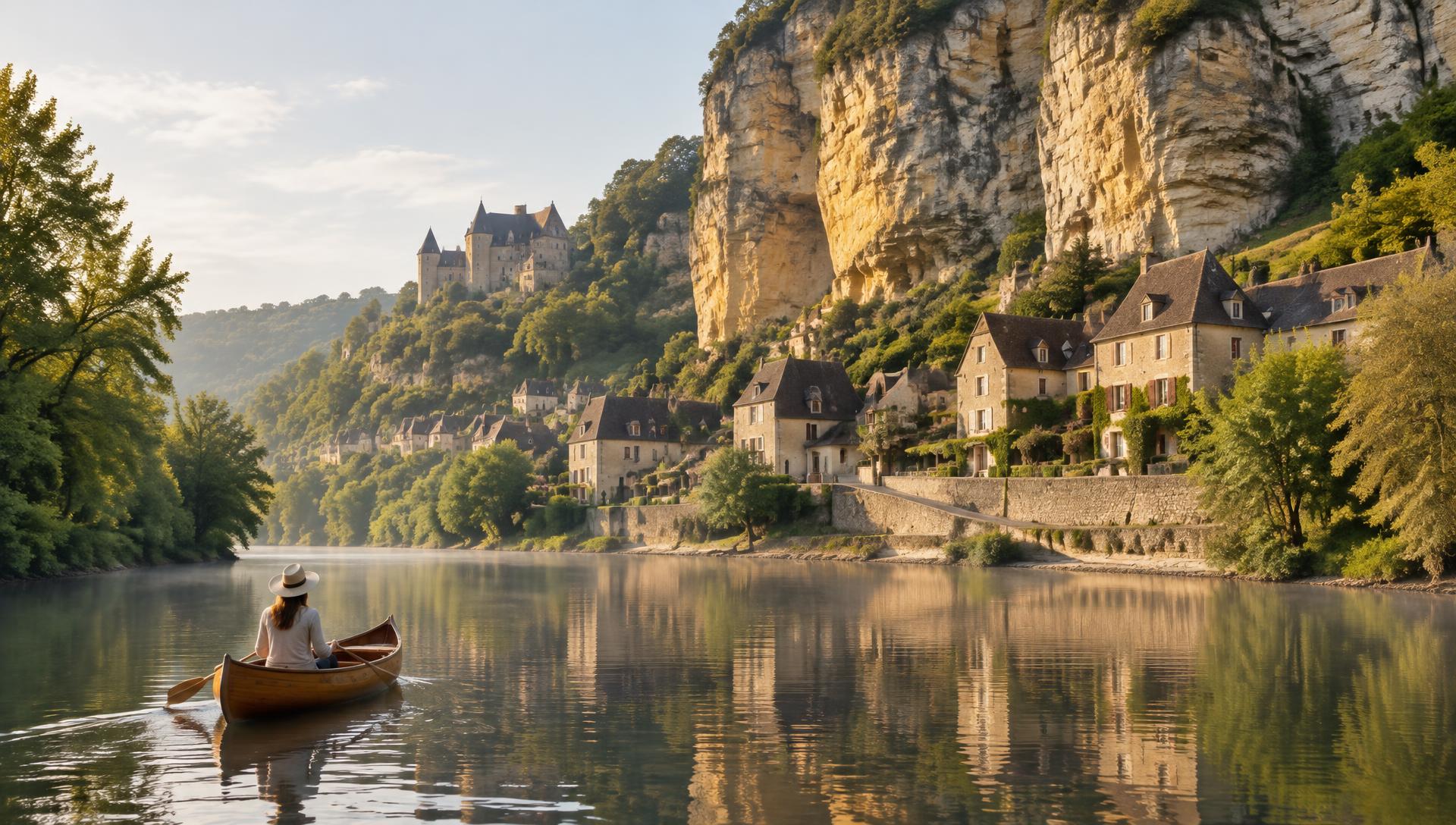
Village · Dordogne Valley
A riverside village climbing steeply to a castle on the cliff above the Dordogne.
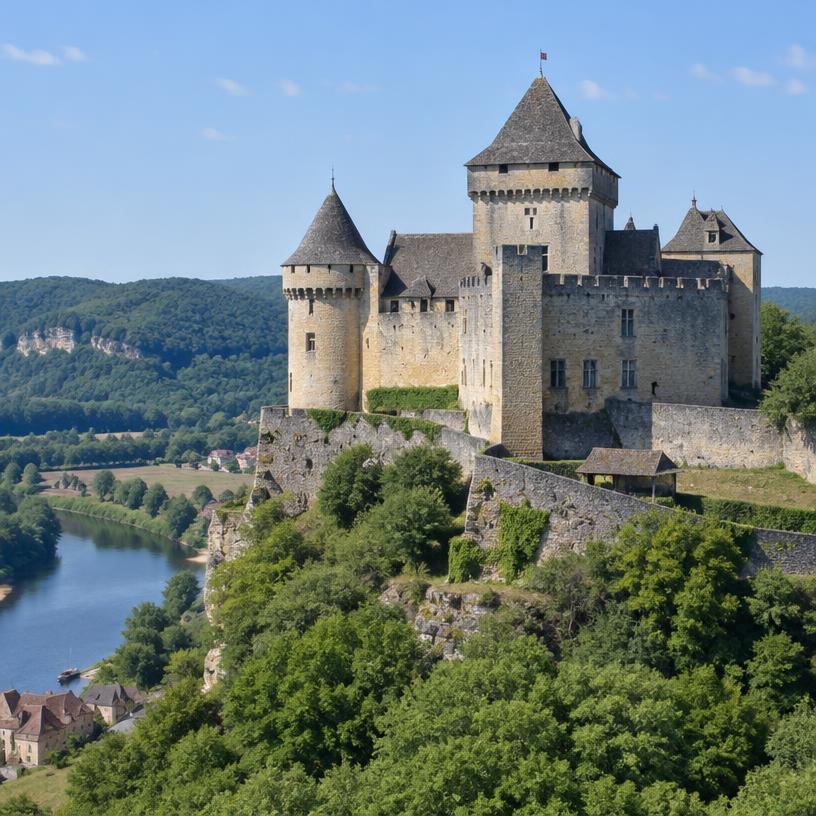
Château and museum · Dordogne Valley
A medieval fortress on the south bank of the Dordogne, home to a museum of medieval warfare.
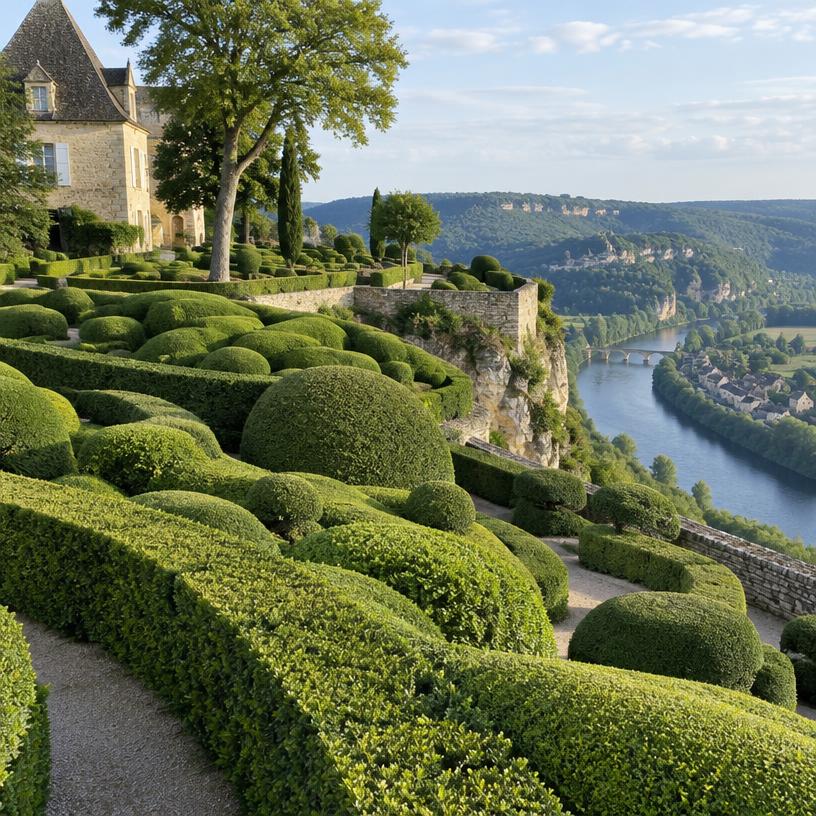
Gardens and viewpoint · Dordogne Valley
Hanging gardens of clipped box on a ridge high above the Dordogne, with paths out to a clifftop belvedere.
Yes. Both names refer to the medieval castle above Beynac-et-Cazenac in the Dordogne. Château de Beynac is the usual French name.
Allow around an hour to an hour and a half for the castle. Set aside half a day if you also want to walk through the village and have lunch.
No. There is a road approach towards the upper village. Walking from the river gives you more of Beynac-et-Cazenac, but the ascent is steep. The castle itself still involves stairs and uneven surfaces whichever approach you choose.
Choose Beynac for the imposing fortress, residential rooms and views from above the village. Choose Castelnaud for its emphasis on medieval warfare and weaponry. They complement each other if you have time for both.
Children who enjoy castles can get plenty from the keep, large rooms and valley views. Expect stairs and keep younger children close on the village climb and around elevated areas. A carrier is more practical than a pushchair for small children.
Opening times, prices and parking change. Check before you travel: Château de Beynac official website, Sarlat-Périgord Noir tourist office, Dordogne Périgord tourism.