
Book direct
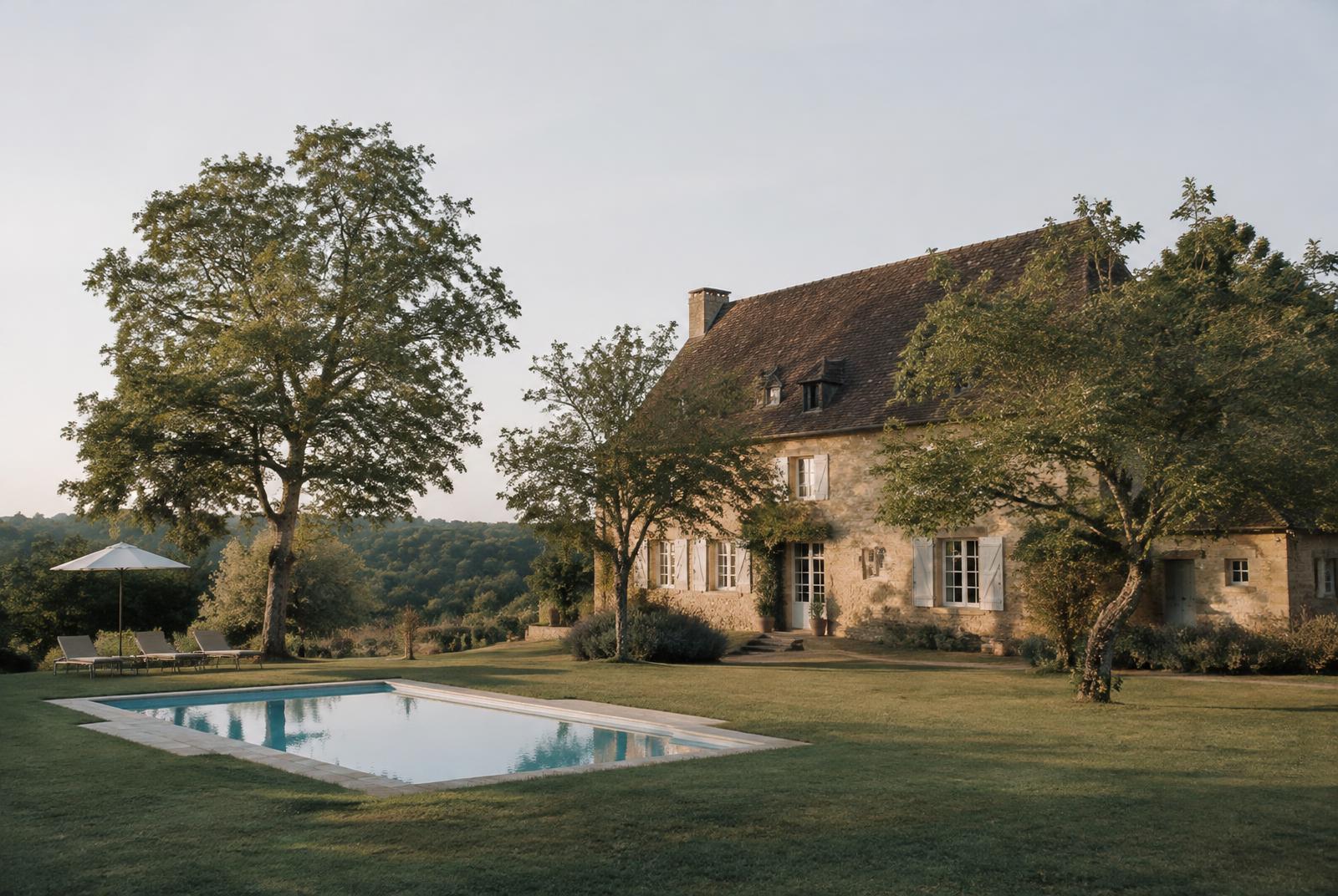
Villa Périgord
Saint-Vincent-de-Cosse · 25 km away
A great base for river days, castles and Sarlat.
View propertyPrehistory · Périgord Noir
The International Centre for Cave Art at Montignac, with a full-size replica of the Lascaux cave paintings.
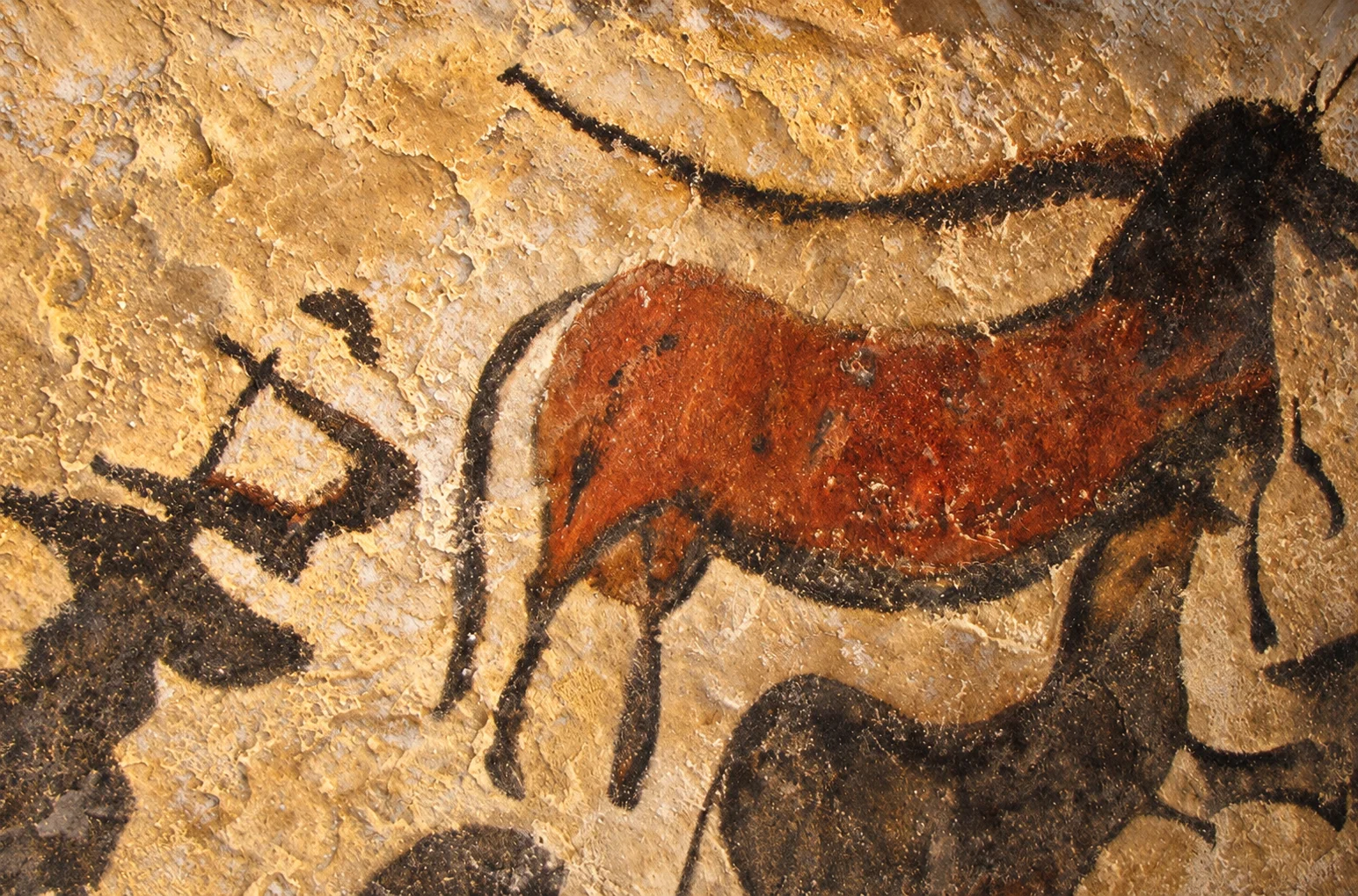
Lascaux IV, officially the Centre International de l'Art Pariétal, is the full-size replica of the Lascaux cave, the most famous decorated cave of the Upper Palaeolithic. It stands at the foot of the hill above Montignac in the Vézère valley, a short distance below the original cave.
The original has been closed to the public for decades to protect the paintings, so this is how almost everyone now sees Lascaux. It is far more than a model: the whole cave has been reproduced at full scale, and the visit continues into galleries that explain who made the art and how it was made.
Where to stayBook direct
Saint-Vincent-de-Cosse · 25 km away
A great base for river days, castles and Sarlat.
View property
Sarlat-la-Canéda · 19 km away
Watch the Sarlat market from your window.
View propertyOwners
List directly with Dordogne Direct and hear from guests yourself. No commission and no guest service fees.
List your propertyThe cave was found in September 1940 by four teenagers near Montignac. Its walls carry hundreds of painted and engraved animals, horses, aurochs, deer, bison and ibex among them, made roughly 17,000 to 20,000 years ago.
Lascaux opened to visitors in 1948 and became enormously popular. The breath and body heat of so many people changed the conditions inside, and algae and other growths began to threaten the paintings. The cave was closed to the public in 1963 and today only a very small number of specialists enter it.
The numbering confuses many visitors, and it is worth understanding before you go.
The guided route follows the cave as it is in reality, moving through its main chambers. The reproduction of the walls, the relief of the rock and the colour of the paint was made with great precision, and the lighting is kept low to recreate the experience of the cave.
After the replica, the visit continues through a series of spaces that put the art in context: the landscape and animals of the Ice Age, the techniques used to make the images and how the cave has been studied since its discovery. Interactive displays and close-up reproductions let you examine panels that are hard to take in during the guided route.
The building itself, designed by the architecture practice Snøhetta with Duncan Lewis, is set into the hillside below the original cave, with a long low profile that is part of the experience of arriving.
Montignac, the riverside town below, has cafés and restaurants for lunch and a pleasant old quarter along the Vézère. Downstream, Saint-Léon-sur-Vézère is one of the prettiest villages in the valley.
Further south, Les Eyzies holds the National Museum of Prehistory and is close to original decorated caves such as Font-de-Gaume, where visitor numbers are tightly limited. Seeing the replica at Lascaux and an original cave on the same trip gives the clearest sense of what makes the valley exceptional.
Visits to the replica run at set times in groups, so arriving on time matters. In July and August, and during French school holidays, slots can sell out, and booking online in advance is strongly advised. Tour formats, languages, prices and opening times change through the year; check the official site before you travel.
The cave replica is kept cool to reflect cave conditions, so bring a light layer even on a hot day. Allow around half a day for the full visit, including the galleries.
No. Lascaux IV is a full-size replica. The original cave, Lascaux I, has been closed to the public since 1963 to protect the paintings.
Booking in advance is strongly advised, especially in July, August and French school holidays, when visits can sell out. Check the official site for current arrangements.
Allow around half a day to see the cave replica and the exhibition galleries without rushing.
Lascaux II, opened in 1983, reproduces the two main sections of the cave. Lascaux IV, opened in 2016, reproduces almost the whole cave and adds extensive interpretation galleries.
The replica is kept cool to reflect cave conditions, so bring a light layer even in summer.
Montignac, Saint-Léon-sur-Vézère, Les Eyzies and the National Museum of Prehistory are all within easy reach in the Vézère valley.
Opening times, prices and parking change. Check before you travel: Lascaux IV official site.
Combine with
Village · Périgord Noir
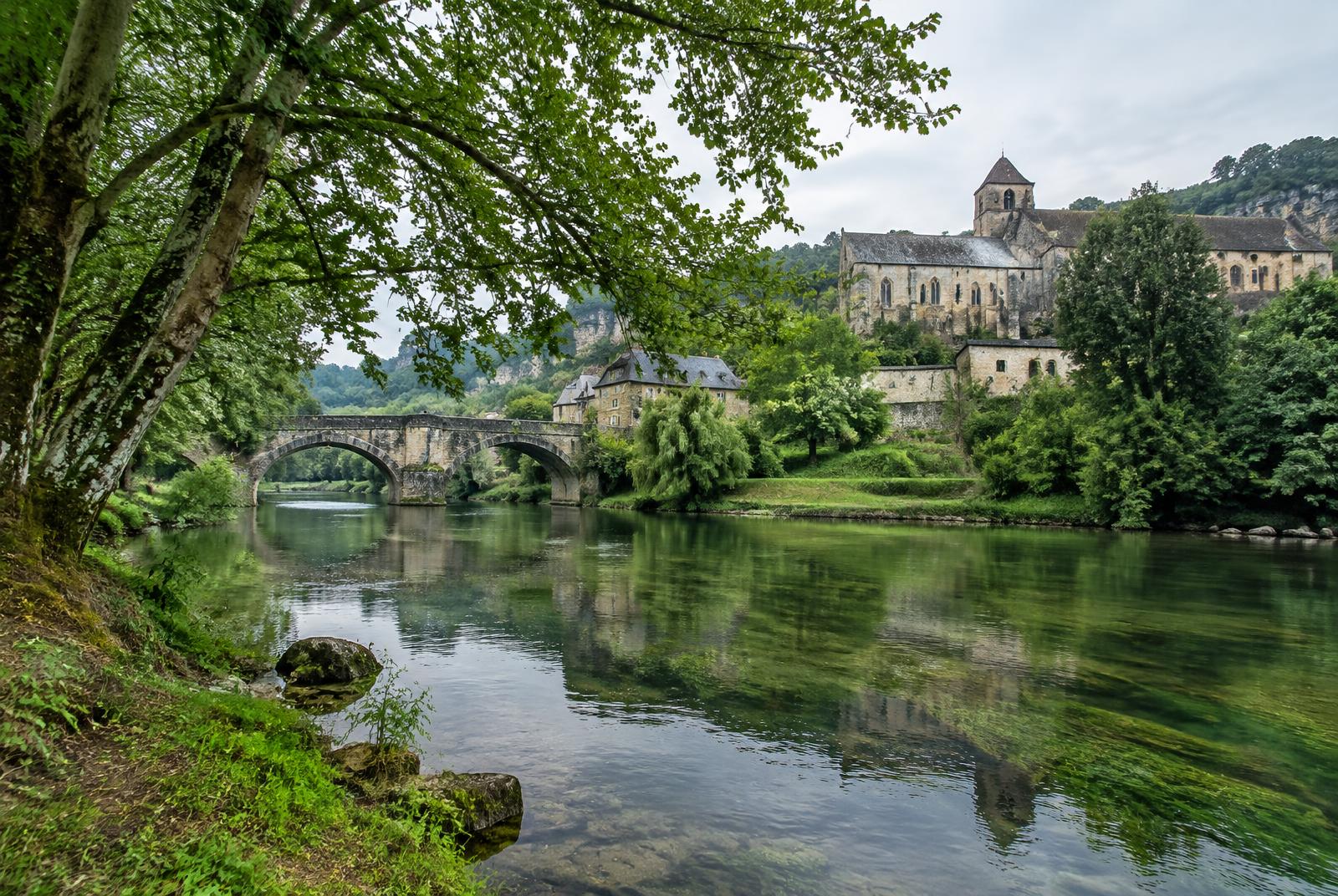
A quiet riverside village on a bend of the Vézère, with a Romanesque church and two châteaux.
Prehistory village · Périgord Noir
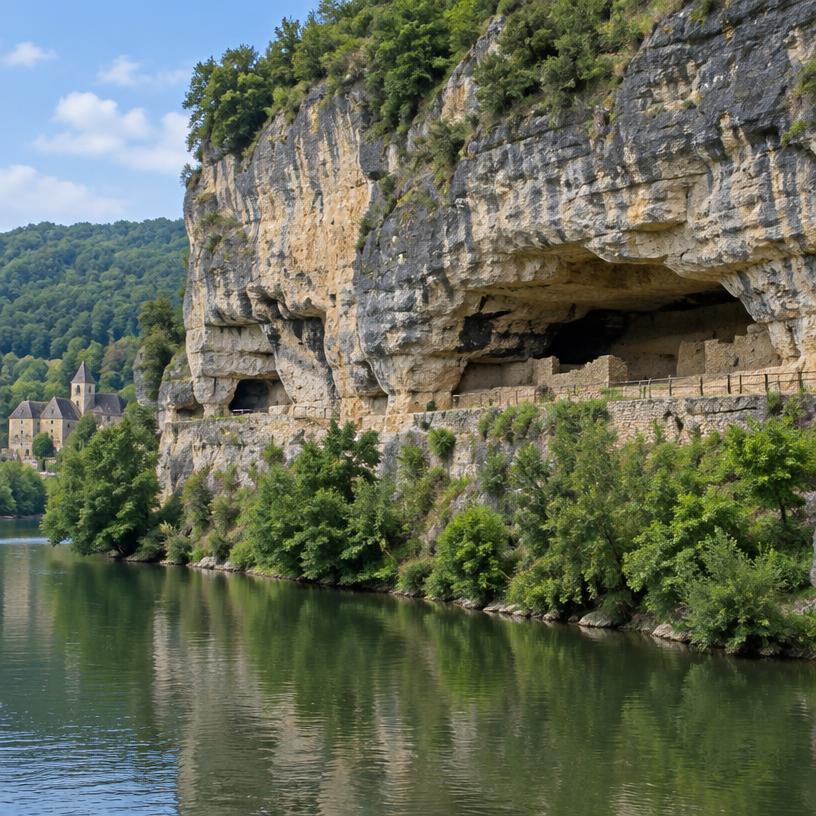
A village beneath limestone cliffs on the Vézère, home to the National Museum of Prehistory and many nearby sites.
Medieval market town · Périgord Noir
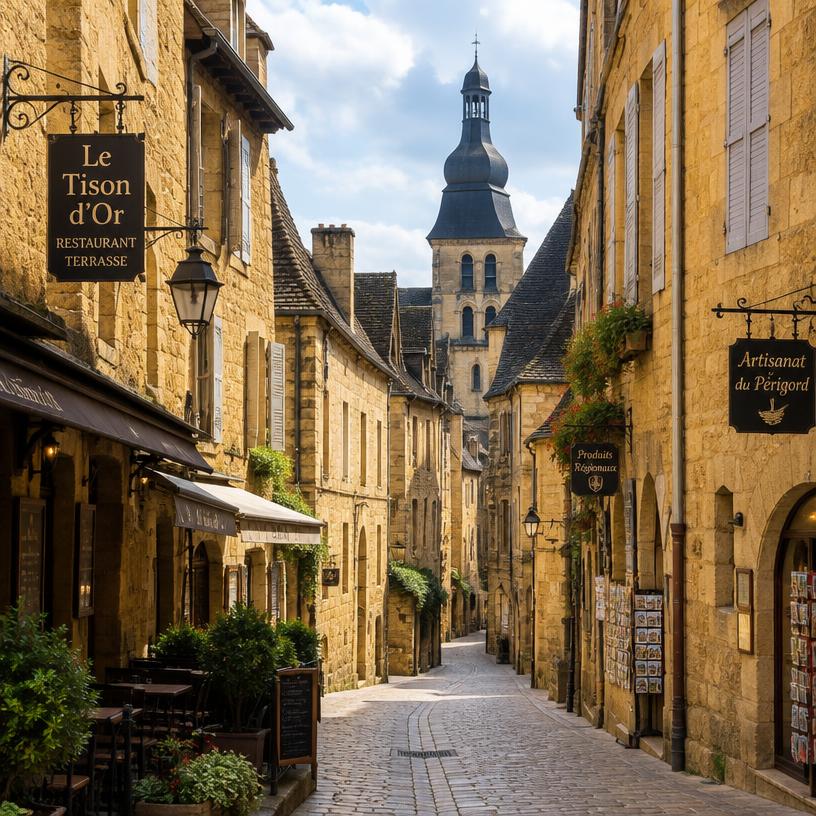
The medieval capital of the Périgord Noir, with honey-coloured stone lanes and one of the region's best-known markets.