

Book direct
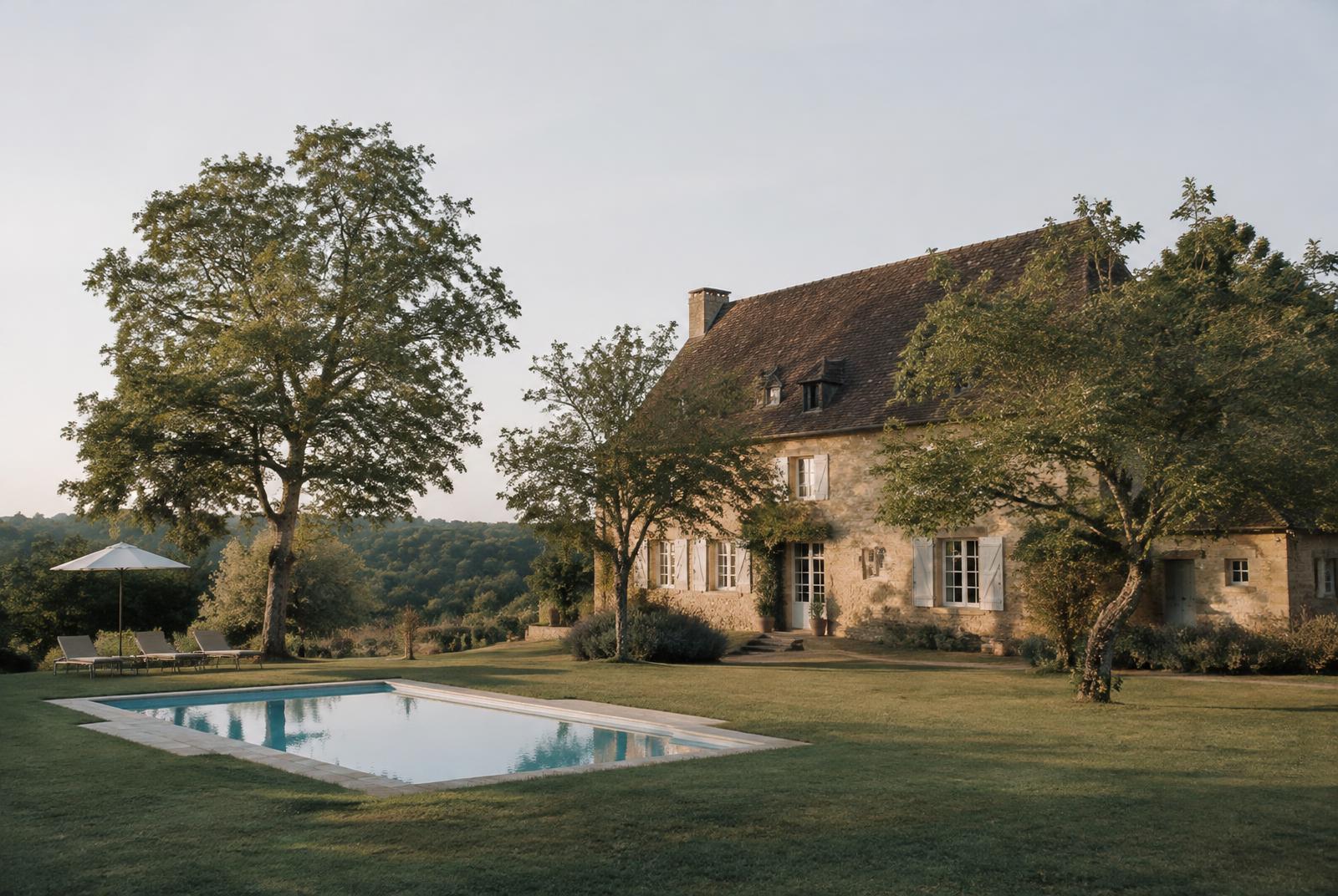
Villa Périgord
Saint-Vincent-de-Cosse · 7 km away
A great base for river days, castles and Sarlat.
View propertyTown · Périgord Noir
Saint-Cyprien is a working market town in the Périgord Noir, with a hillside old centre, a substantial abbey church and a Sunday market. It makes a practical base between the Dordogne valley castles and the prehistoric sites around Les Eyzies.
Saint-Cyprien is a small market town on the north side of the Dordogne valley, built up a slope beneath a former abbey church. Rue Gambetta supplies the everyday bustle, especially on Sunday mornings, while narrow streets climb towards the bell tower above. This is Saint-Cyprien in the Dordogne, not the Mediterranean seaside resort of the same name.
Its strength as a base is the balance between ordinary town life and access to the surrounding countryside. You can buy bread, walk to the market and spend an unhurried morning in the old centre, then head towards Beynac and the valley castles or north to Les Eyzies. The town is worth exploring in its own right, but you do not need to fill an entire day with sights.
Where to stayBook direct
Saint-Vincent-de-Cosse · 7 km away
A great base for river days, castles and Sarlat.
View property
Sarlat-la-Canéda · 14 km away
Watch the Sarlat market from your window.
View propertyOwners
List directly with Dordogne Direct and hear from guests yourself. No commission and no guest service fees.
List your propertyRue Gambetta is the useful starting point, running through the lower part of the old centre with shops and places to eat. Above it, short streets and passages climb towards the Église Saint-Cyprien. The church tower is your landmark: if you keep heading uphill towards it, you move from the commercial town into the older hillside settlement.
The Dordogne lies below the town, separated from the historic streets by the lower valley ground. Pont du Garrit crosses towards Berbiguières and belongs to a separate riverside walk rather than a quick circuit of the shops. The railway station is also below the old centre.
Visitors who stop only for the market often miss the upper lanes. Here the interest is in stone doorways, changes of level and the way houses fit tightly around the church, rather than a continuous line of shops. Expect some steep stretches and uneven surfaces.
Saint-Cyprien rewards a walk rather than a packed sightseeing schedule. Start with the church and its surrounding lanes, return through the shopping street and treat the river as an additional outing.
The contrast between the medieval upper town and the later bridge helps explain the place. One grew around a religious community, the other served movement and trade across the valley.
Local tradition traces Saint-Cyprien's origins to a hermit named Cyprien in the sixth century. A religious community developed around his memory, and the later abbey became the focus of the settlement. That relationship is still legible in the town: the church occupies the upper ground, with houses and lanes gathered beneath it.
The surviving church combines medieval fabric with later rebuilding and furnishings. The religious wars of the sixteenth century damaged the abbey, and subsequent restoration helped shape the interior you see today. The sturdy bell tower gives the exterior a more defensive appearance than you might expect from a small-town church.
Below this older religious centre, commerce and transport gave the town another axis. The shopping street, railway and river crossing reflect Saint-Cyprien's role in serving the surrounding villages and farms, not simply its ecclesiastical past.
For bread and breakfast, begin around Rue Gambetta and the central shopping streets. A boulangerie is useful for a picnic as well as a morning baguette: look for bread, viennoiseries and walnut-based baking where offered. If a daily walk for bread matters to you, use this part of town as your reference point rather than assuming every address in the commune is walkable.
Restaurant menus draw on the wider Périgord repertoire: duck confit, magret, foie gras and pommes de terre sarladaises, cooked with duck fat, garlic and parsley. Walnuts, cèpes and strawberries are regional produce to look for in season, while tourin is the local garlic soup.
For a simple lunch out of town, assemble bread, cheese, fruit and something from a market producer. Distinguish produce grown or made locally from goods merely sold at a local stall by reading labels and asking the seller.
Morning market: Sunday (year-round). This is the main weekly occasion in the centre, with stalls along Rue Gambetta and the adjoining market streets. It is a good time to see how the town serves its surrounding countryside, and to combine food shopping with a walk up to the church.
Summer night market (July and August): Thursday. This offers a different reason to spend an evening in town rather than treating Saint-Cyprien only as the starting point for day trips.
Sunday brings more people and more activity than an ordinary weekday. If you want both the market and a quiet look at the architecture, leave time to step away from the stalls into the uphill lanes.
Saint-Cyprien has a railway station on the line linking Bordeaux, Bergerac and Sarlat. That makes a visit by train possible, but the station is outside the historic core and the walk into the upper town involves a climb. A car is more practical for combining rural sights, castles and villages that are not directly served by rail.
With a car, use designated parking around the centre and explore the old streets on foot. The lower shopping area is the easier part of the visit for anyone avoiding steep gradients. The lanes around the church need more care with a pushchair or limited mobility, and a riverside walk adds distance beyond the town-centre circuit.
Spring and early autumn suit a mix of town walks and days out. Winter gives you a quieter centre while retaining the year-round Sunday market. Before setting out, check current train services, church access, parking arrangements and summer night-market details through official sources.
For a Dordogne valley day, head towards Beynac-et-Cazenac and its castle. Castelnaud-la-Chapelle offers another castle visit across the river, while the Château des Milandes gives you a different historical focus through its association with Joséphine Baker. Choose one substantial visit and one village rather than trying to cover every castle in a day.
North of Saint-Cyprien, Les Eyzies shifts the emphasis to prehistory, rock shelters and the Vézère valley. Saint-Léon-sur-Vézère works well as a village stop on a longer valley outing. Sarlat is better treated as a separate half-day or longer, particularly if you want to explore beyond its main squares.
Belvès is another useful pairing, especially if you enjoy hill towns and medieval street plans. These different directions are why Saint-Cyprien works as a base: you can vary your days without making every outing a repeat of the same stretch of river.
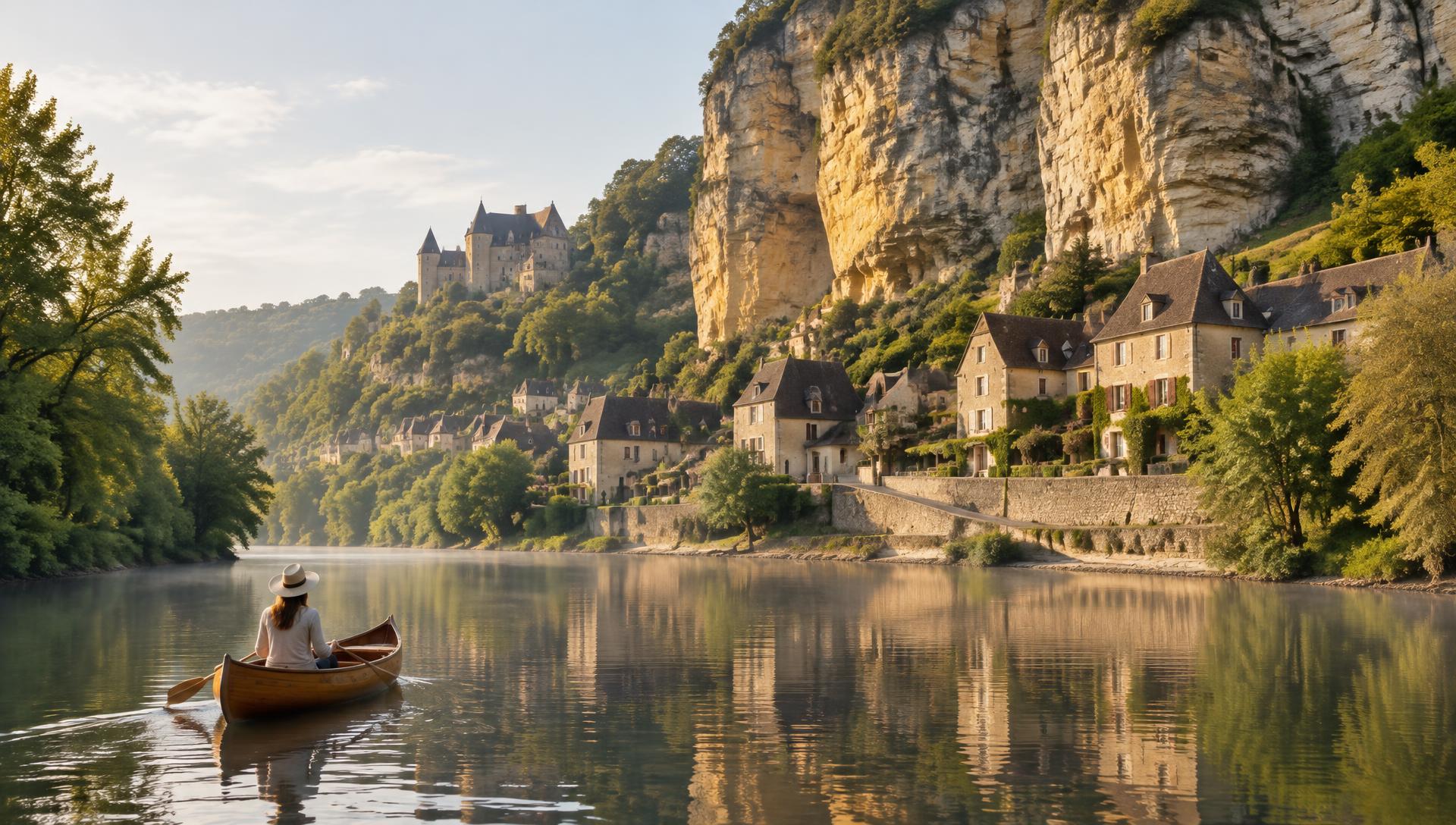
Village · Dordogne Valley
A riverside village climbing steeply to a castle on the cliff above the Dordogne.
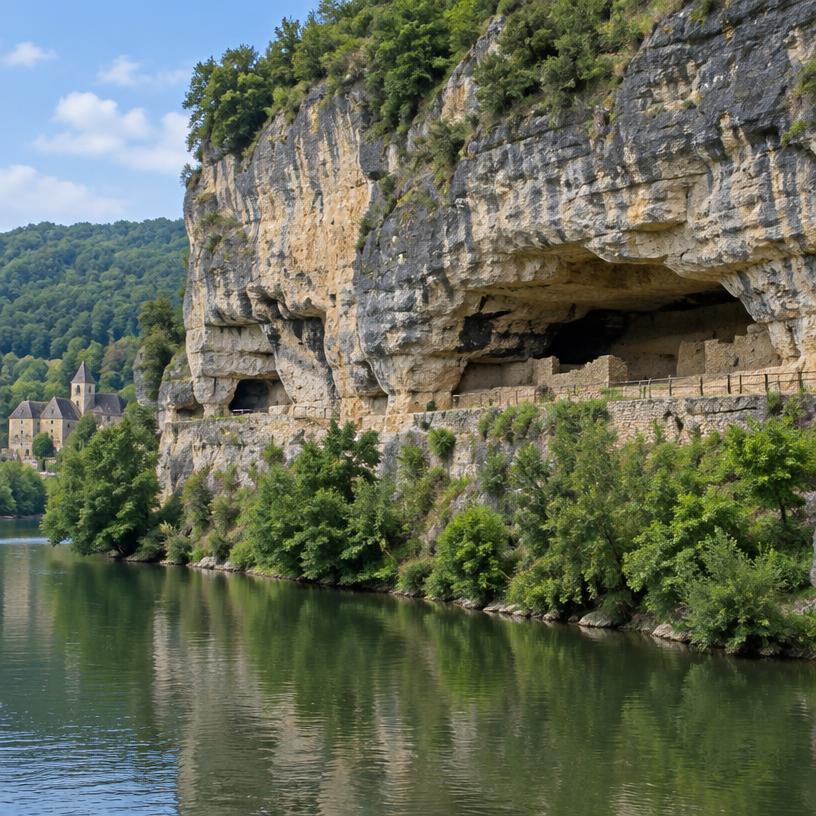
Prehistory village · Périgord Noir
A village beneath limestone cliffs on the Vézère, home to the National Museum of Prehistory and many nearby sites.
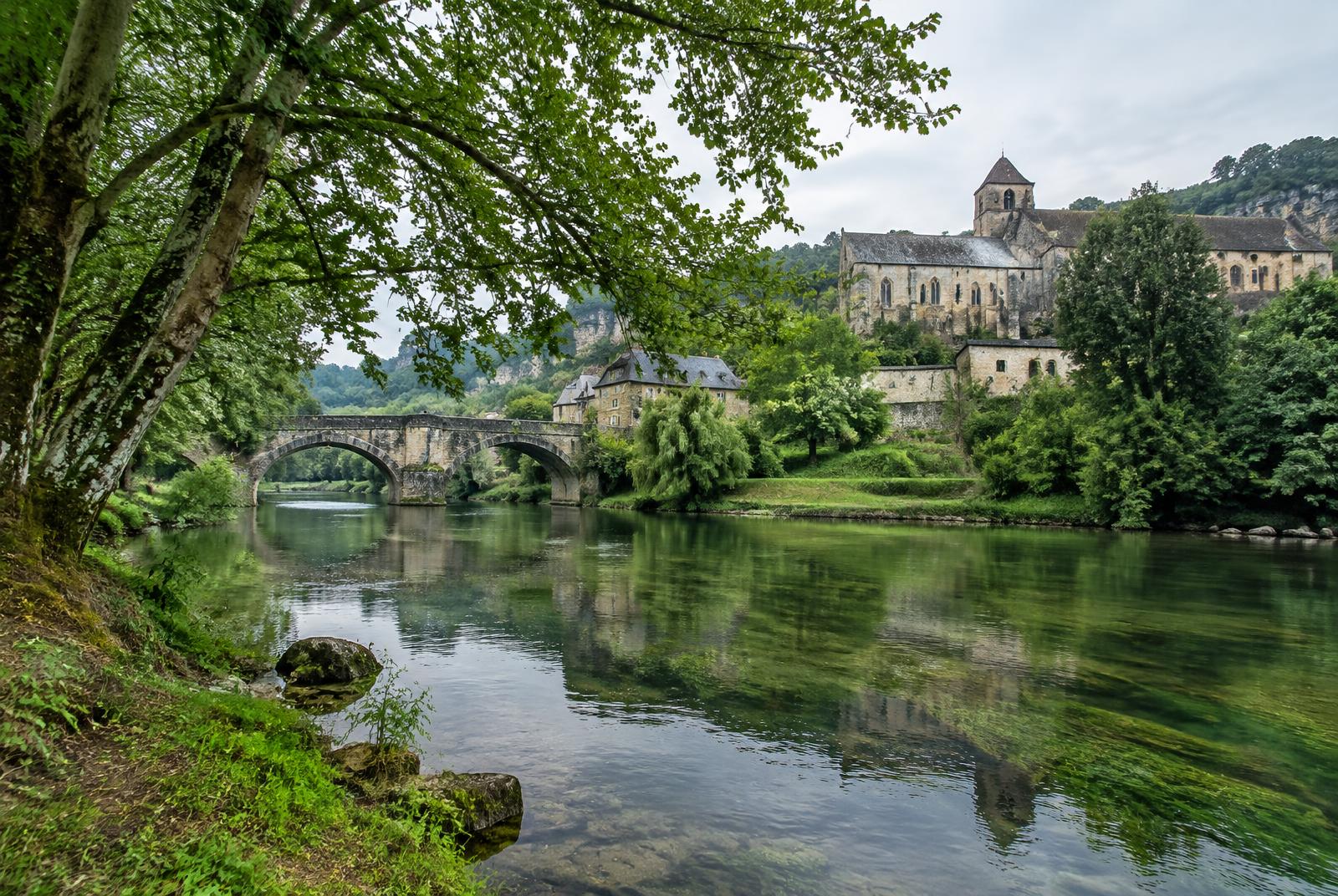
Village · Périgord Noir
A quiet riverside village on a bend of the Vézère, with a Romanesque church and two châteaux.
No. This Saint-Cyprien is in the Dordogne's Périgord Noir, near the Dordogne river and between the areas around Beynac and Les Eyzies. Use “Saint-Cyprien Dordogne” or postcode 24220 when searching a map.
Morning market: Sunday (year-round). Summer night market (July and August): Thursday.
Visit the former abbey church, walk the hillside lanes, explore Rue Gambetta and shop at the Sunday market. Add a separate walk to Pont du Garrit if you want to see the Dordogne. Half a day is a sensible allowance for the town centre.
Yes, particularly if you want access to both the Dordogne valley castles and Les Eyzies. Use the Where to stay block for direct-from-owner properties in and around town. Choose the centre for walking to shops, or the surrounding countryside if outdoor space matters more. A car is useful for most rural outings.
Start with Rue Gambetta and the surrounding central shopping streets. This is the practical area for buying bread and breakfast before a day out, or adding a baguette to food bought at the Sunday market.
Opening times, prices and parking change. Check before you travel: Dordogne Périgord tourism, TER Nouvelle-Aquitaine.