Book direct
Villa Périgord
Saint-Vincent-de-Cosse · 26 km away
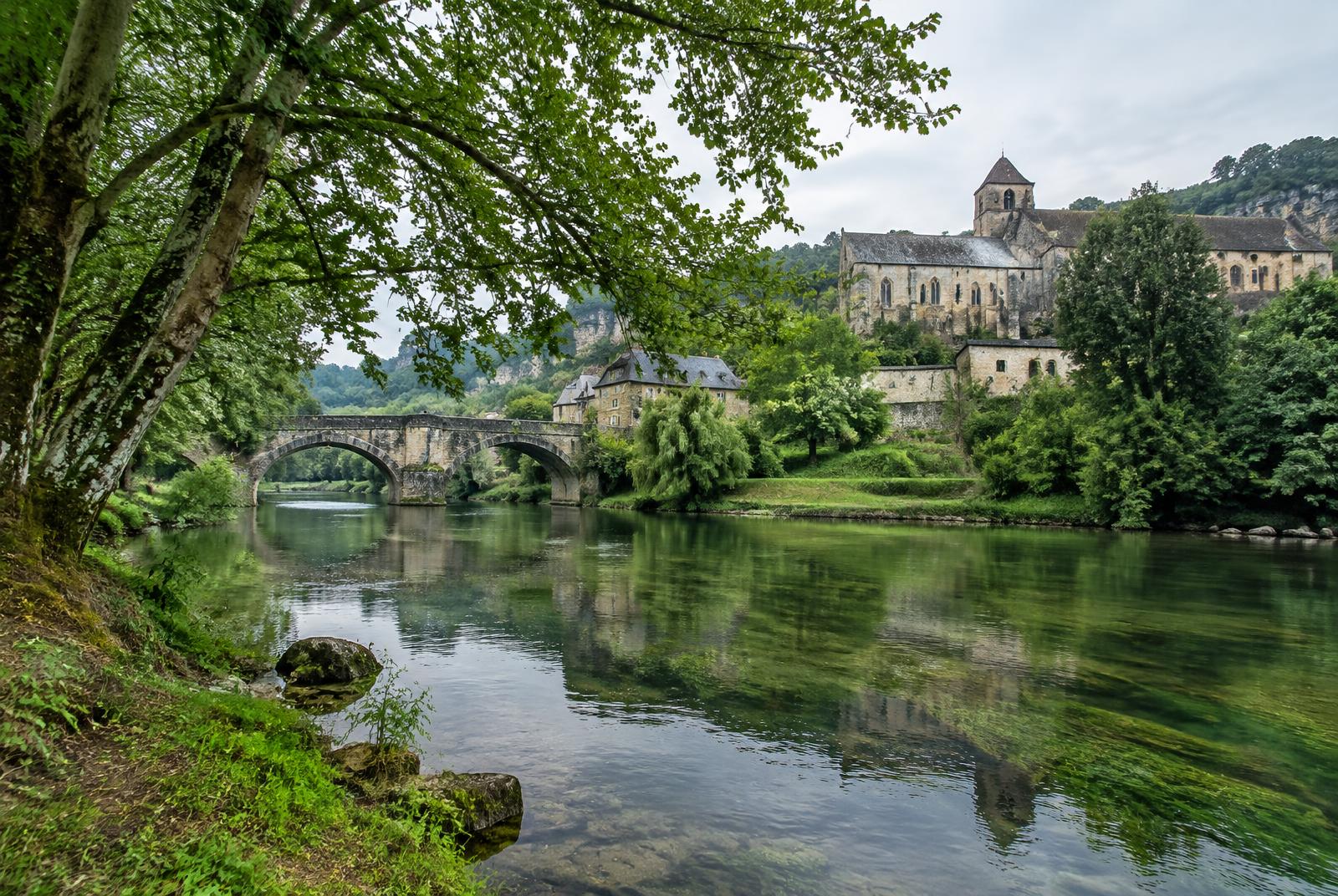
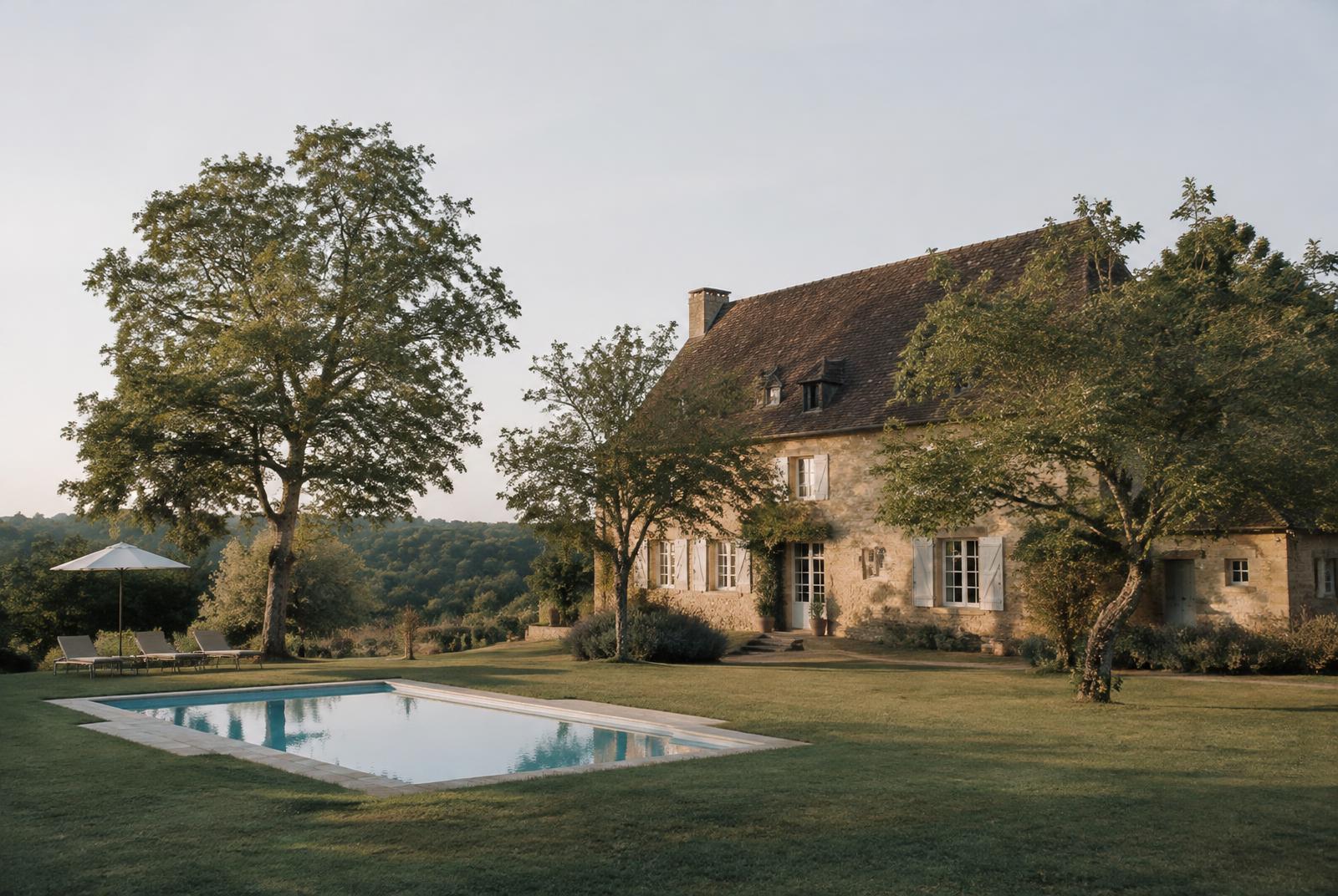
A great base for river days, castles and Sarlat.
View propertyTown · Périgord Noir
Montignac-Lascaux is a riverside town in the Périgord Noir, best known for Lascaux and useful as a base for exploring the Vézère valley.
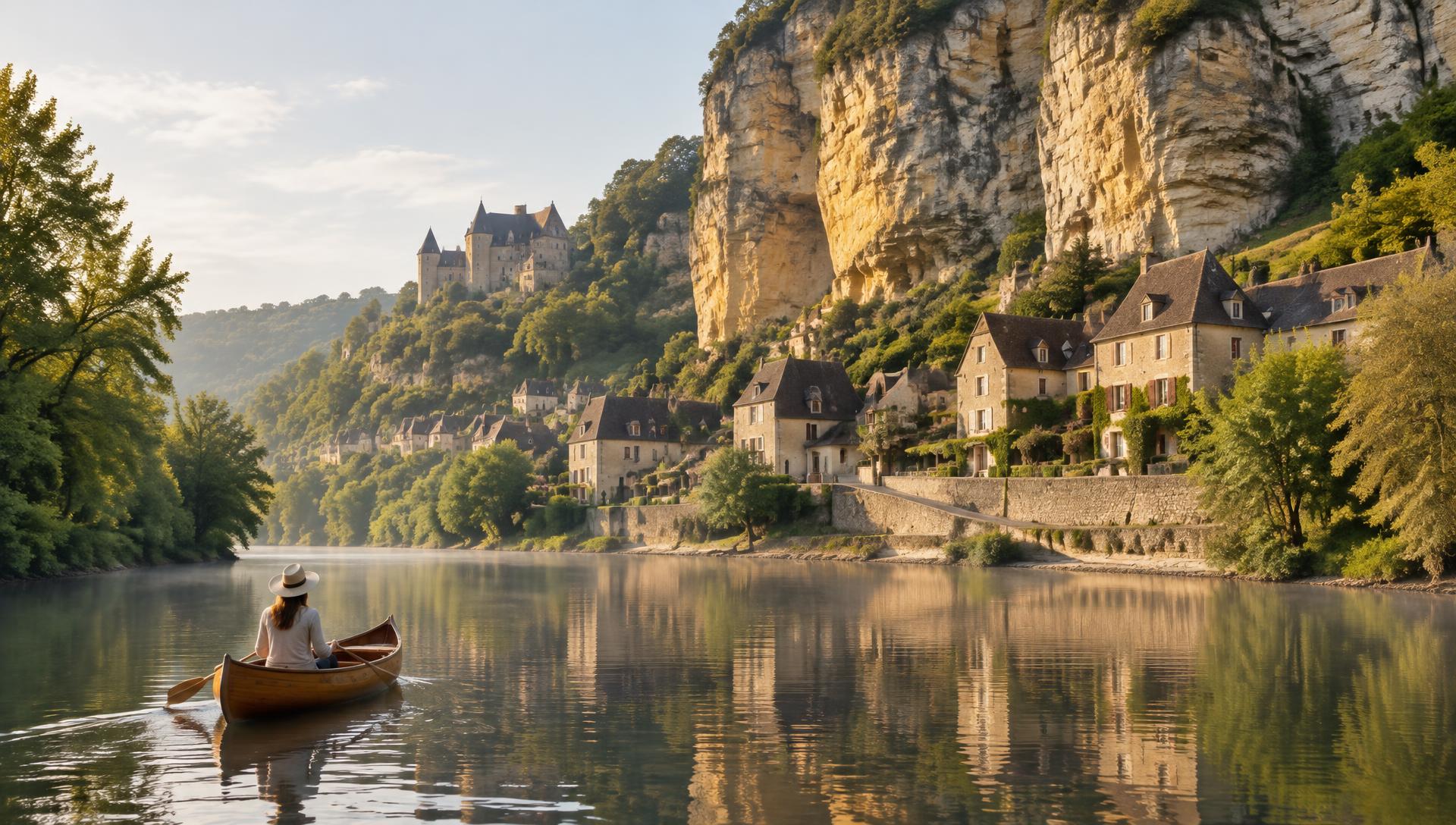
Montignac-Lascaux is a small market town on the Vézère in the Périgord Noir, built on both banks of the river around an old bridge. On the hill above it, in September 1940, four teenagers found the painted cave of Lascaux, and the town has been tied to that discovery ever since.
It is more than the approach road to Lascaux IV. Stone houses with wooden balconies hang over the water, a medieval street climbs towards what remains of the castle and the town keeps its own weekly market. It makes a practical base if the Vézère valley, with Saint-Léon-sur-Vézère and Les Eyzies, is the centre of your trip.
Where to stayBook direct
Saint-Vincent-de-Cosse · 26 km away
A great base for river days, castles and Sarlat.
View property
Sarlat-la-Canéda · 20 km away
Watch the Sarlat market from your window.
View propertyOwners
List directly with Dordogne Direct and hear from guests yourself. No commission and no guest service fees.
List your propertyThe Vézère divides the town in two, joined by the old stone bridge. The left bank holds the medieval core: narrow streets, the old houses along the quay and the climb up towards the castle hill. The right bank is quieter and gives the best view back across the water.
Lascaux IV sits at the foot of the Lascaux hill on the edge of town, not in the centre. Many visitors drive straight to it and leave, so the old streets are rarely busy even in summer.
Lascaux is the reason most people come, but the town itself rewards an hour or two on foot.
Montignac grew as a river crossing and a fortified seat of the Counts of Périgord, and later as a small trading port on the Vézère. The houses along the water date from the centuries when the river carried goods downstream.
On 12 September 1940 four teenagers exploring the hill above the town found the cave of Lascaux, its walls covered with paintings made around 17,000 years ago. It opened to visitors in 1948 but was closed in 1963 when their breath and the lighting began to damage the paintings. Replicas followed: Lascaux II in 1983 and Lascaux IV, the most complete, in 2016.
Montignac shares the Périgord Noir table: duck in every form, including confit and magret, foie gras, walnuts, cèpes in autumn and, in winter, black truffles.
Walnut oil, walnut cake and walnut liqueur are typical things to take home. Restaurants and cafés gather near the bridge and along the quays; opening days shorten outside the summer months, so check before relying on one for dinner.
The main weekly market is on Wednesday morning, when food stalls fill the centre of the old town. A smaller market is also held on Saturday morning. In summer there are evening markets, where you buy food from the stalls and eat at shared tables.
Days and evening market dates can change from year to year, so check current details with the tourist office before you plan around them.
Lascaux IV is visited on guided tours with timed entry, and summer slots fill early. Check times, languages and accessibility on the official Lascaux website before you travel.
The old town is small and easy on foot, though some streets are steep and cobbled. Car park locations and charges change, so check current information locally rather than relying on older guides.
Montignac sits at the top of the Vézère valley, the richest stretch of prehistoric sites in Europe. Saint-Léon-sur-Vézère, a small village in a loop of the river, makes a natural second stop on the same day.
Les Eyzies, further downstream, is the centre for prehistory, with the National Museum of Prehistory. Sarlat-la-Canéda is a separate outing with a very different character, a larger medieval and Renaissance town.
Yes. The town's official name is Montignac-Lascaux, but most people still call it Montignac.
No. The original cave has been closed to the public since 1963 to protect the paintings. Lascaux IV, on the edge of Montignac, has a full-scale replica of the whole decorated cave.
The main market is on Wednesday morning, with a smaller one on Saturday morning and evening markets in summer. Check current details with the tourist office.
It is a good base for the Vézère valley, with Lascaux IV, Saint-Léon-sur-Vézère and Les Eyzies close by. For the castles of the Dordogne valley itself, a base further south such as Sarlat is more central.
Allow half a day for Lascaux IV and a full day if you also want to walk the old town and eat by the river.
Opening times, prices and parking change. Check before you travel: Dordogne Périgord tourism, Lascaux official visitor information.