
Book direct
Villa Périgord
Saint-Vincent-de-Cosse · 69 km drive
A great base for river days, castles and Sarlat.
View propertyChâteau · Périgord Blanc
A seventeenth-century château above Hautefort, with formal gardens, an English-style park and a remarkable story of restoration after fire.
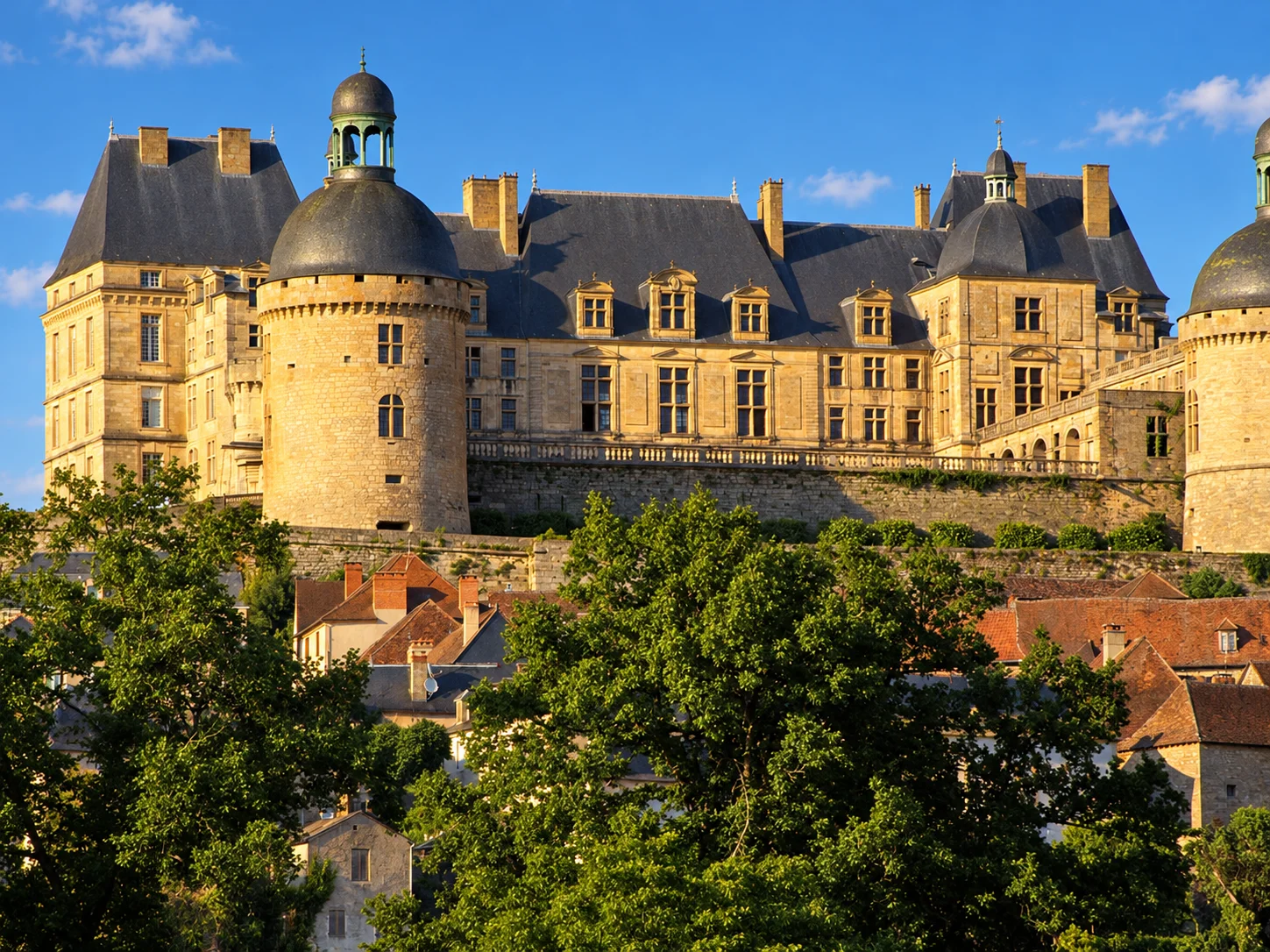
Château de Hautefort stands above its village on a broad hilltop, its pale stone façades and domed towers visible across the surrounding countryside. Although it began as a fortress, the building you see today is principally a seventeenth-century country residence. Its balance, spacious courtyard and formal gardens set it apart from the more defensive castles along the Dordogne.
Allow time for both the house and its grounds. The interiors tell a story of aristocratic ambition, decline and determined restoration, while the gardens alternate between precise clipped patterns and a looser English-style park. Hautefort village sits immediately below, so you can turn the château visit into a half-day outing without adding another long drive.
Where to stayBook direct
Saint-Vincent-de-Cosse · 69 km drive
A great base for river days, castles and Sarlat.
View property
Sarlat-la-Canéda · 54 km drive
Watch the Sarlat market from your window.
View propertyOwners
List directly with Dordogne Direct and hear from guests yourself. No commission and no guest service fees.
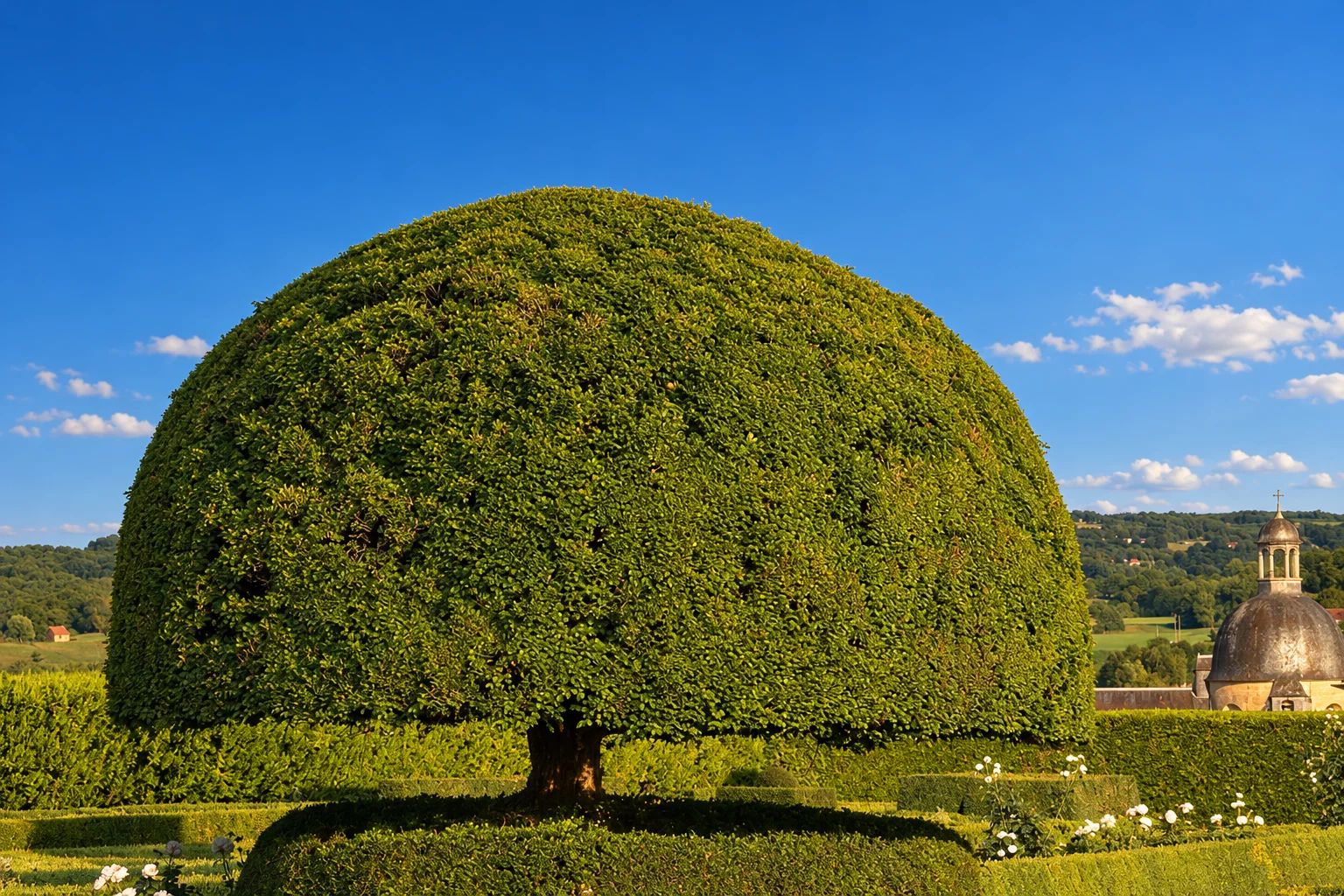
List your propertyThe château is the highest point of the visit. Its approach leads into the hilltop estate, with the main building and courtyard forming the centre of the route. The formal gardens occupy the spaces around the château, while the English-style park spreads farther across the hillside.
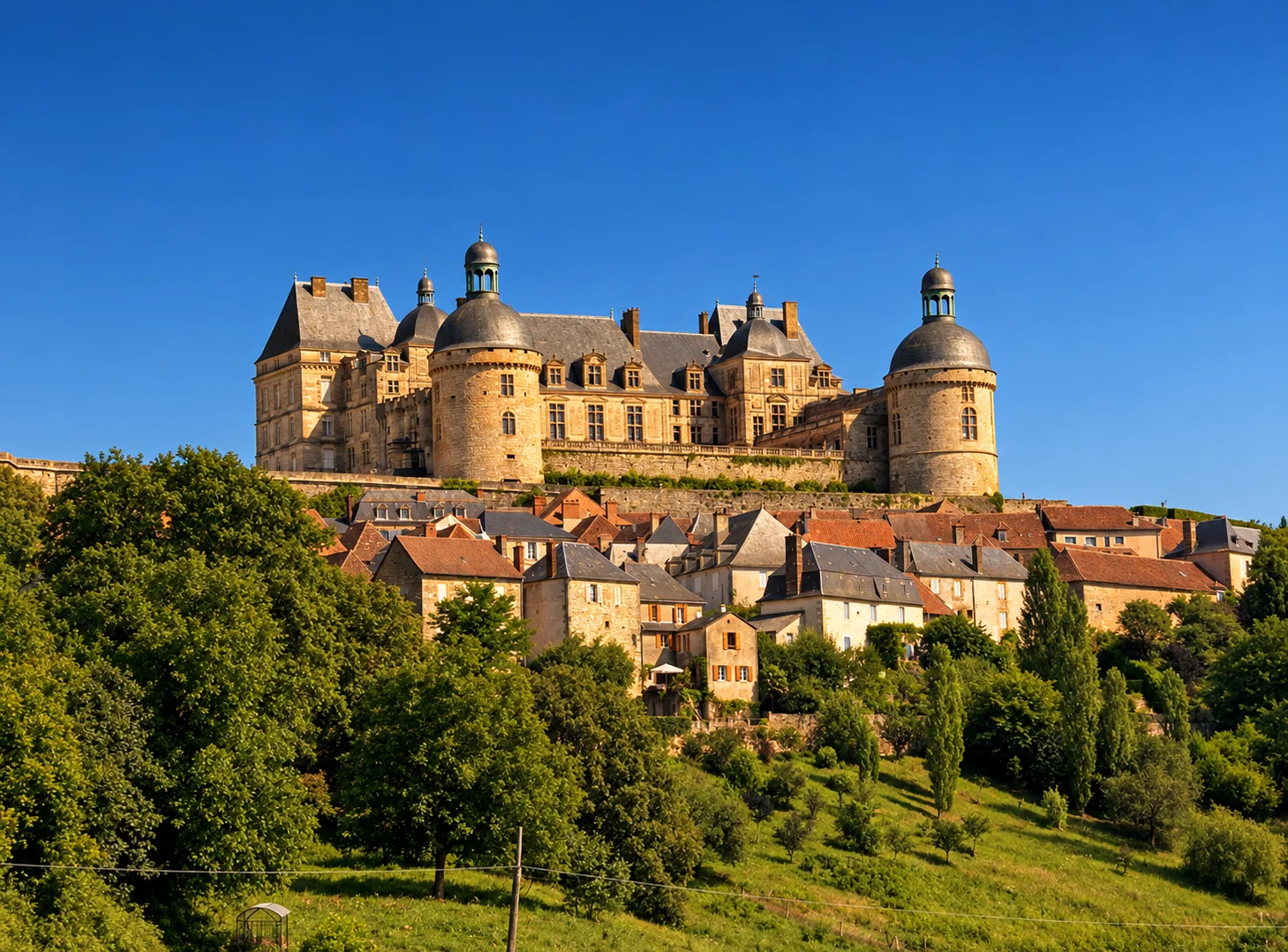
Hautefort village lies below the entrance rather than within the château grounds. The former Hôtel-Dieu, now the Musée d'Histoire de la Médecine, is a useful second landmark when you walk down into the village. This is a hilltop visit, not a riverside one, and there is no river crossing on the route between the château and village.
Visitors who concentrate on the furnished rooms and patterned gardens often leave out the wider park. It offers a different view of the estate, with mature trees and more open views back towards the building. Keep some walking time for it rather than treating the grounds as an entrance corridor.
The château is best understood as a whole composition: a grand house, a ceremonial approach and gardens designed to show off its position. Look at the exterior before going inside, then return to the terraces once you have seen the rooms.
Hautefort occupies the site of a medieval stronghold associated with the troubadour Bertran de Born. Its commanding position and surviving towers recall that earlier role, but the principal transformation came in the seventeenth century under the Hautefort family.
Jacques-François de Hautefort developed the château into a residence whose architecture expressed rank and wealth rather than military necessity. He also founded the village's Hôtel-Dieu. The formal gardens and English-style park took much of their present character during nineteenth-century landscaping.
Baron and Baroness de Bastard acquired the neglected estate in 1929 and began a major restoration. A devastating fire in 1968 destroyed much of the main residential block, just as that work had reached fruition. The baroness undertook its reconstruction. What you see is therefore not an untouched set of ancient interiors, but the result of an unusually determined rescue of the building.
On-site café and picnic provision: To be confirmed. Bring drinking water for the grounds rather than relying on finding refreshments within the estate.
At the foot of the château, Hautefort has a small choice of places to eat, suitable for lunch or a drink before continuing your walk. Regional menus commonly feature duck confit, magret, walnuts and potatoes cooked in duck fat, though the actual choice depends on the establishment.
Hautefort, immediately below the château and within roughly 1 km of the entrance, is the first stop for restaurants and everyday essentials. The wider village and Saint-Agnan area provide food shopping, bakery, pharmacy and cash services. For a broader supermarket and shopping stop, Excideuil is roughly 15 km away.
Hautefort's morning market takes place on Wednesday, year-round. It is the simplest market to combine with the château because you can spend the morning in the village and leave the house and gardens for later.
If you are exploring the surrounding area on another day, the verified alternatives are Excideuil on Thursday, Cubjac on Friday and Thenon on Tuesday. Choose one that fits your direction of travel rather than crossing the area solely to add a market.
Two to three hours is a reasonable allowance for the château and gardens without rushing. Add more time if you enjoy walking in a landscape park, and allow half a day if you also want lunch and a look around Hautefort.
A car is the most practical way to reach the estate and continue through this part of the Dordogne. Follow the château's signed visitor approach rather than assuming the narrow village streets are the best route to the entrance.
Expect a mixture of interior stairs, gravel paths and sloping ground. The house, formal gardens and wider park do not present the same level of accessibility, so visitors with limited mobility should ask about the appropriate route before setting out.
Check the château's official website before travelling for current opening times, accessible routes, refreshment arrangements and any temporary changes to the visit.
Hautefort itself is the most useful pairing. Walk down to the former Hôtel-Dieu, which houses the Musée d'Histoire de la Médecine. Its connection with the same patron who transformed the château makes it more than an unrelated extra stop.
Tourtoirac or Excideuil makes a manageable continuation if you want to stay in the surrounding countryside. There is little need to add a second major attraction to make the day worthwhile.
For a more substantial day, you can combine Hautefort with Lascaux IV at Montignac-Lascaux, but these are two separate visits with a drive between them. Keep enough time for the château grounds rather than reducing Hautefort to a quick circuit of the rooms.
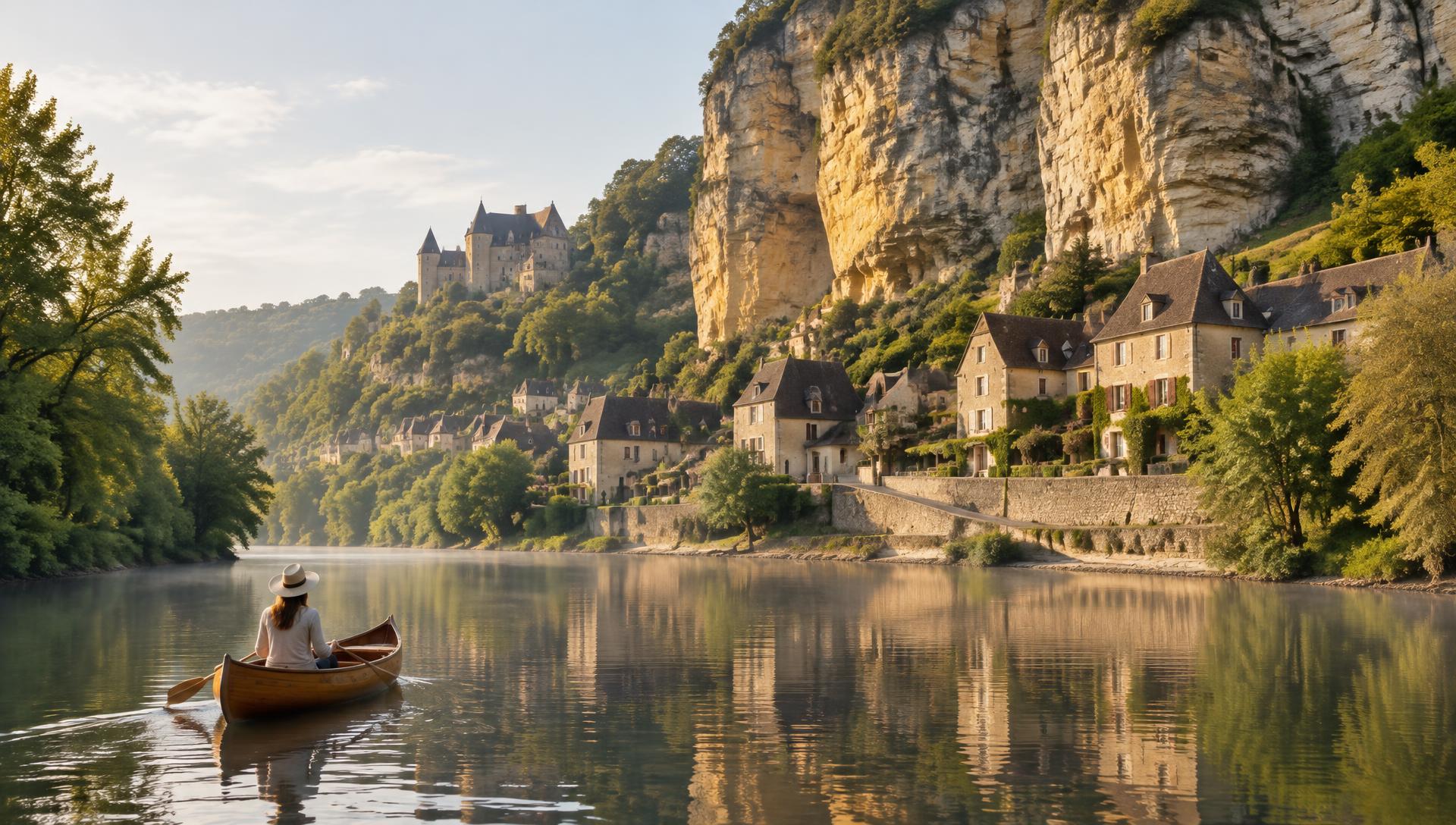
Town · Périgord Noir
Montignac-Lascaux is a riverside town in the Périgord Noir, best known for Lascaux and useful as a base for exploring the Vézère valley.
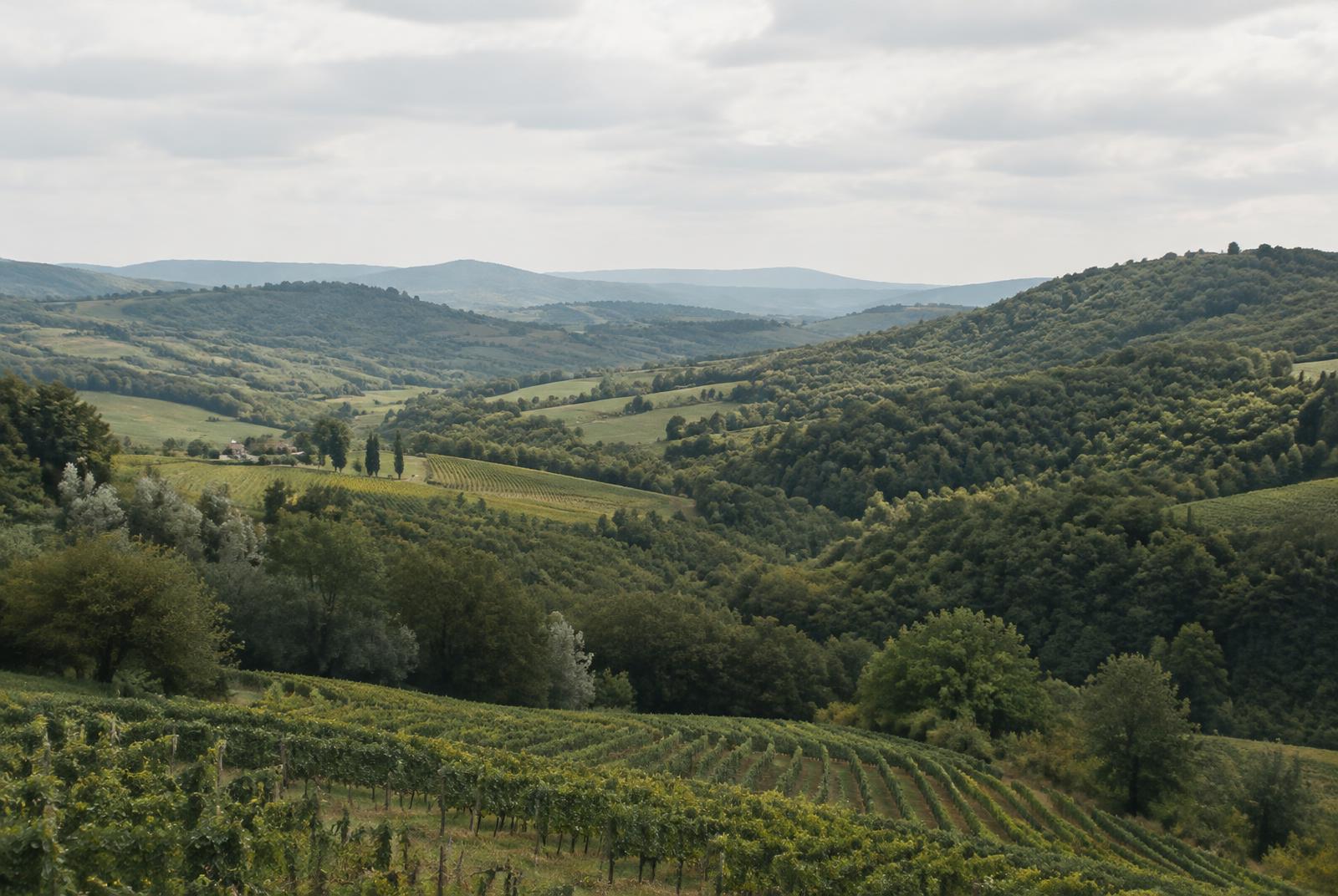
Prehistory · Périgord Noir
The International Centre for Cave Art at Montignac, with a full-size replica of the Lascaux cave paintings.
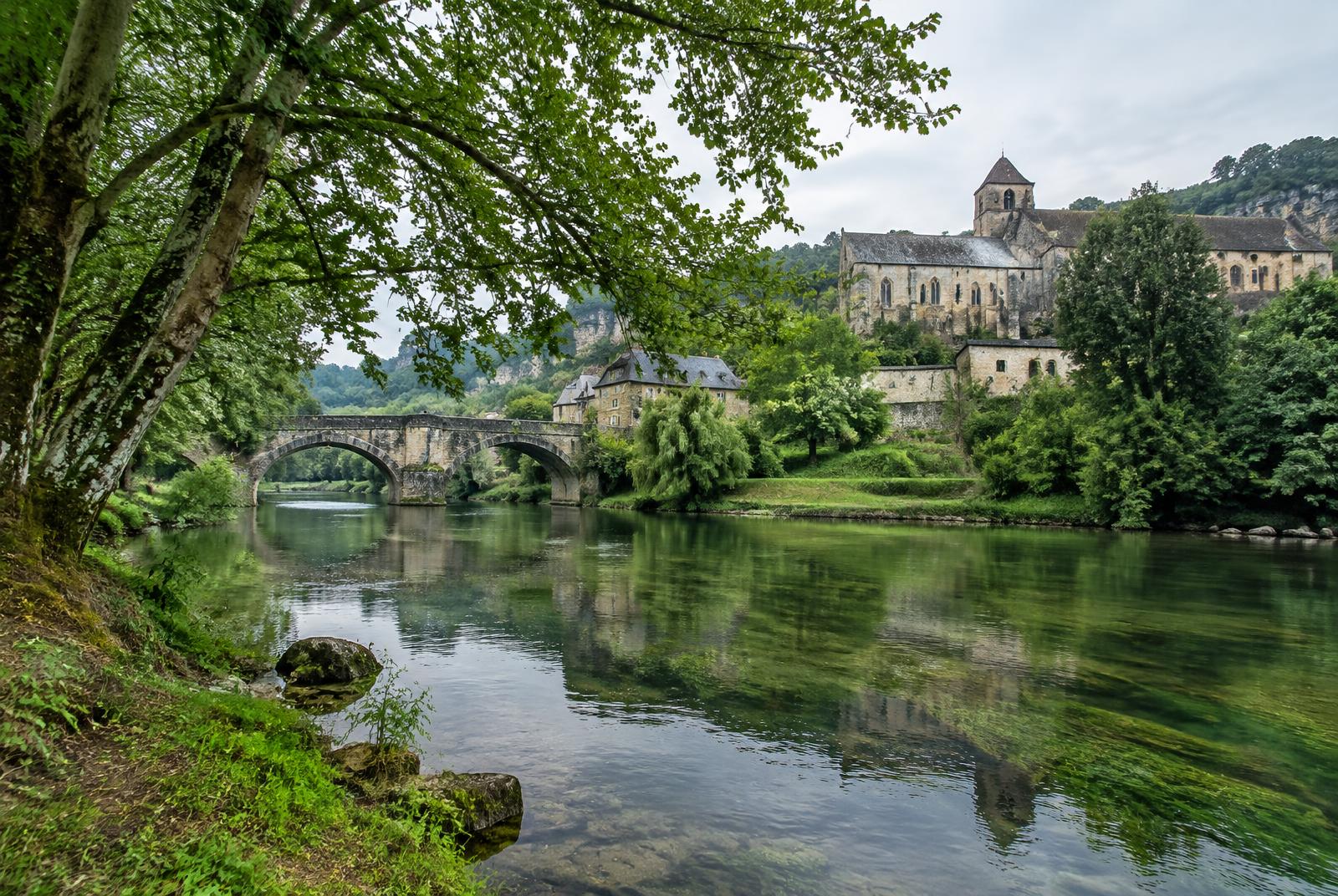
Village · Périgord Noir
A quiet riverside village on a bend of the Vézère, with a Romanesque church and two châteaux.
It is known for its seventeenth-century classical architecture, formal gardens and English-style park. Its reconstruction after a major fire in 1968 is also central to the visit.
Allow two to three hours for the house and grounds. Half a day gives you time to include Hautefort village and lunch without rushing.
Below the château, you can walk through the hilltop village and visit the Musée d'Histoire de la Médecine in the former Hôtel-Dieu. The village also has a Wednesday morning market, held year-round.
Access varies between the interiors, terraces and park. There are stairs, gravel surfaces and slopes, so ask the château about a suitable route for your needs rather than assuming the entire estate is step-free.
Hautefort is in the north-east Dordogne, away from the main river-valley cluster around Beynac and Castelnaud. It works better as an outing in its own right or with nearby Hautefort, Tourtoirac and Excideuil.
Opening times, prices and parking change. Check before you travel: Château de Hautefort official website, Dordogne Périgord tourism.