
Book direct
Villa Périgord
Saint-Vincent-de-Cosse · 25 km drive
A great base for river days, castles and Sarlat.
View propertyTroglodytic historic site · Périgord Noir
A vast limestone cliff above the Vézère, with rock-cut terraces, the remains of a medieval settlement and reconstructions of the lifting machinery used to supply it.
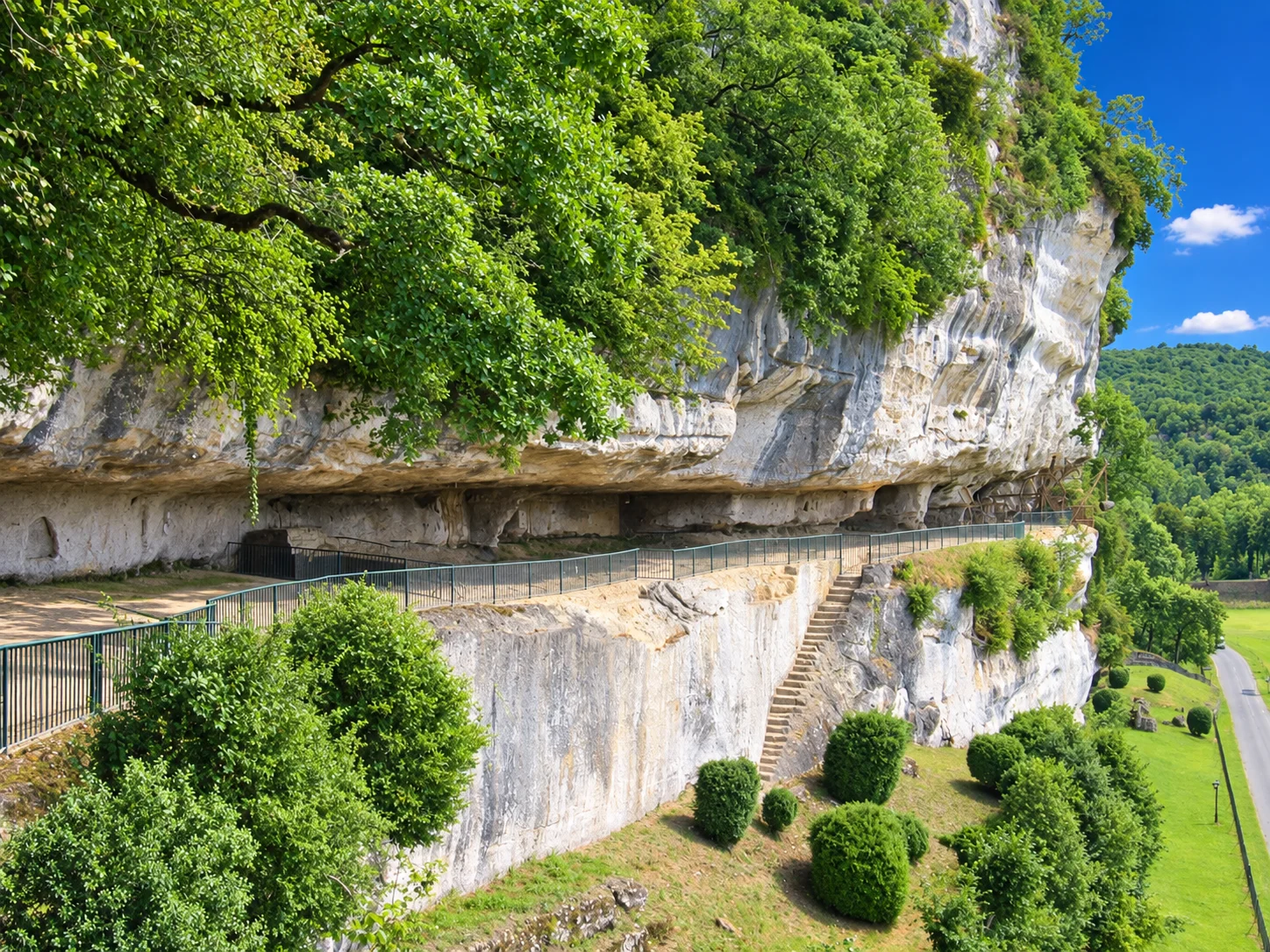
La Roque Saint-Christophe is a limestone cliff whose natural shelves became living space, workshops and a fortified settlement. The rock face stretches for roughly a kilometre and rises about 80 metres above the Vézère valley. You visit part of that cliff on foot, following terraces beneath a deep overhang, with daylight and valley views beside you.
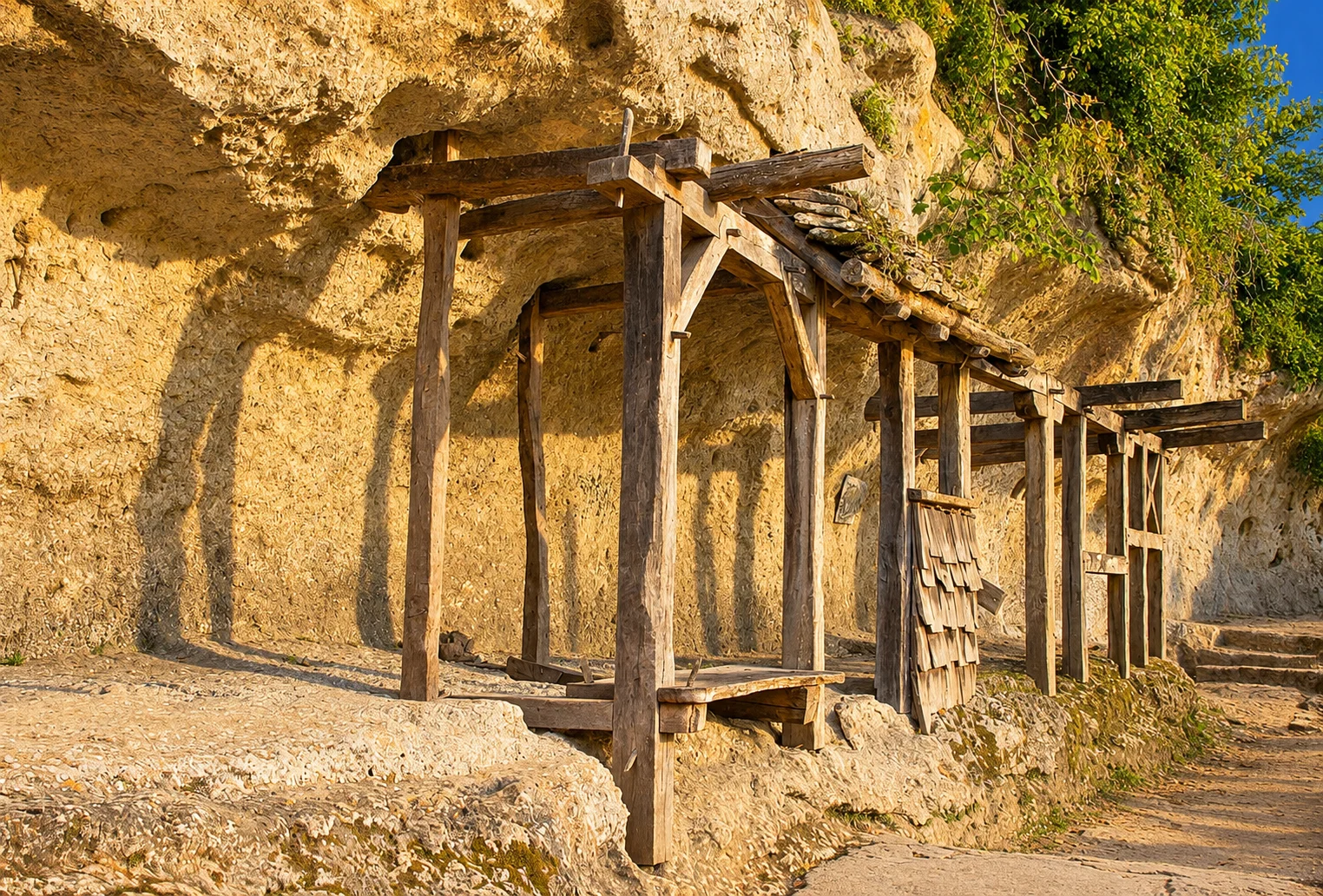
The site has a prehistoric past, but much of what you can identify on the visitor route concerns medieval life. Beam sockets, cut steps and working spaces reveal how people built against the rock. Reconstructed machinery makes the practical questions easier to grasp: how do you bring up timber, water and supplies when your settlement is above the valley floor?
Where to stayBook direct
Saint-Vincent-de-Cosse · 25 km drive
A great base for river days, castles and Sarlat.
View property
Sarlat-la-Canéda · 27 km drive
Watch the Sarlat market from your window.
View propertyOwners
List directly with Dordogne Direct and hear from guests yourself. No commission and no guest service fees.
List your propertyThe site is in Peyzac-le-Moustier, on the D706 corridor between Les Eyzies and Montignac-Lascaux. Follow signs for La Roque Saint-Christophe rather than expecting a village-centre entrance. The car park and reception sit below the occupied terraces, so the visit begins with an ascent.
Le Moustier and its bridge over the Vézère are useful local landmarks. The river crossing belongs to your approach through the valley, not to the visitor route: once inside, you explore the cliff on foot.
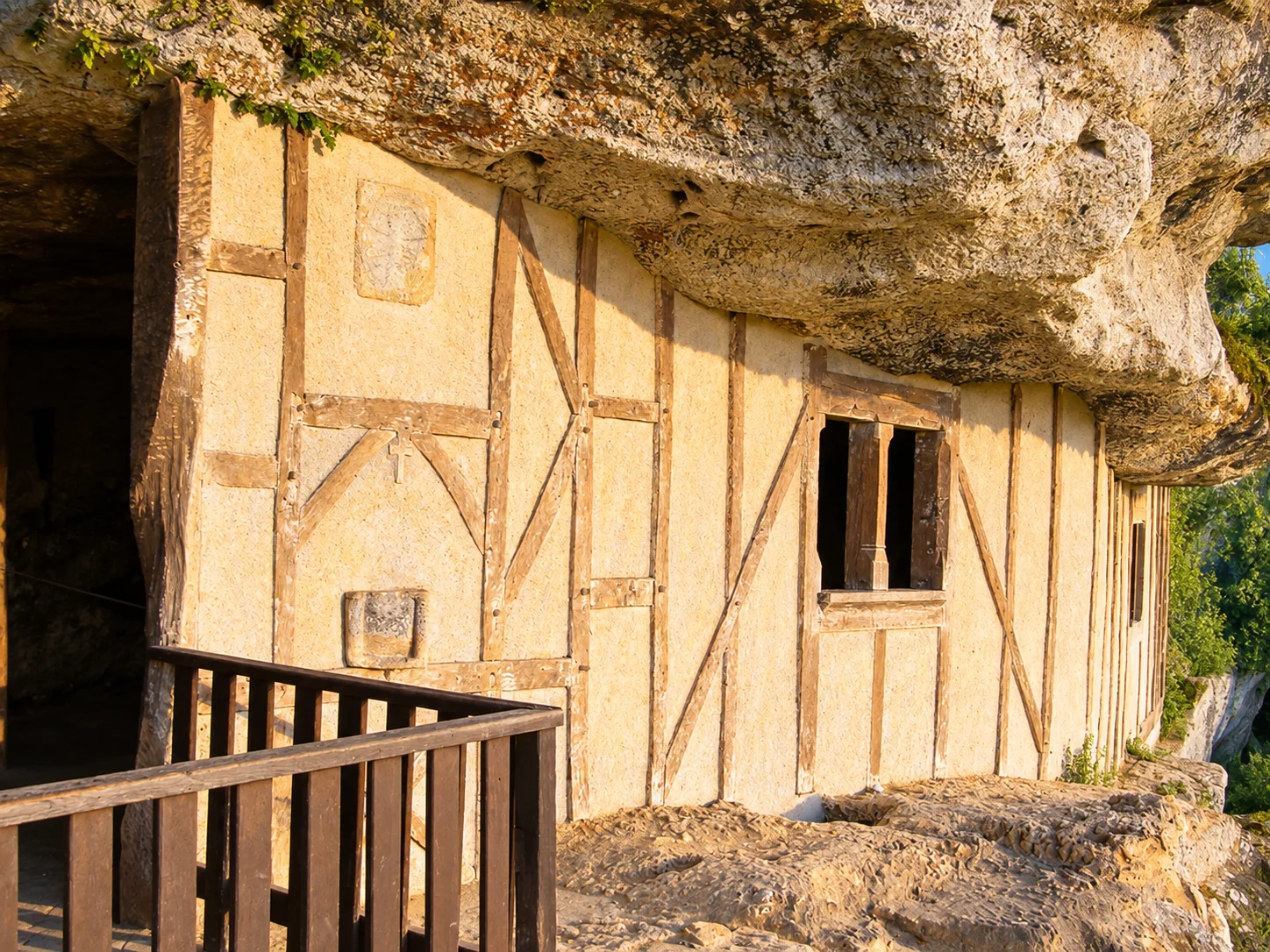
The Grande Terrasse is the main line through the site. It is easy to concentrate on the valley view and overlook the wall behind you, where rows of holes, ledges and cut recesses mark vanished timber structures. Those small traces explain the settlement better than the panorama alone.
Think of this as the remains of a settlement rather than a furnished cave dwelling. The rock is original, while reconstructions and interpretation help you imagine the buildings and equipment that have disappeared.
Natural erosion created the long horizontal shelters before people occupied them. Archaeological evidence places human activity here in prehistory, but the cliff was reused over a very long period. It is not a single prehistoric home preserved unchanged.
In the Middle Ages, the sheltered ledges supported a fortified community. Timber buildings fitted against the limestone, using sockets cut into the rock to hold their beams. Storage, worship and craft work occupied different parts of the terraces, while the elevated position helped with defence and surveillance of the valley.
The settlement was destroyed in 1588 during the Wars of Religion. The loss of its timber structures left the stone framework you read today: holes, channels, stairs and hollowed-out spaces. That is why the site looks open and largely empty despite once supporting a much denser built environment.
There is a picnic area at the foot of the site, with seasonal snack provision for a simple stop. Bring water for the terrace walk rather than treating refreshments below the cliff as part of the route.
Le Moustier is the closest village stop for a meal, but the choice is limited. For a fuller choice of restaurants and shops and essentials, including groceries, a bakery, a pharmacy and cash facilities, head to Les Eyzies, roughly 10 km away. It is the more practical place to combine lunch with a food shop.
On local menus, look for duck confit, magret, walnut-based desserts and pommes de terre sarladaises. If you are assembling a picnic, bread, cheese, fruit and walnuts are easier to manage than a full meal on the move.
Allow about 1 to 1½ hours for the main route. This leaves time to stop at the interpretation rather than simply walking the length of the terrace. Guided visits or machinery demonstrations can add to the visit when they are scheduled.
Expect steps, uneven stone and an elevated route. The main terraces are open to the valley, not enclosed like a deep cave, and the overhang does not make the whole visit weatherproof. Wear shoes with a firm grip. The stepped route is not suitable for a wheelchair, and a baby carrier is more practical than a pushchair.
For provisions before your visit, the nearest verified weekly market is Les Eyzies on Monday. Montignac-Lascaux has markets on Wednesday and Saturday if you are approaching from the north.
Check the official site before travelling for current opening times, demonstration schedules, snack service and any access restrictions.
Saint-Léon-sur-Vézère makes an easy second stop for a village walk and lunch without turning the day into a sequence of ticketed sights. It also gives you a useful contrast: after looking down from the cliff, you can spend time at river level.
For a history-led day, combine the site with the Musée national de Préhistoire in Les Eyzies. Its collections give archaeological context to the valley, while La Roque Saint-Christophe shows how people used one particular landscape over time.
Lascaux IV in Montignac-Lascaux is another possible pairing, but it tells a different story through reproduced Palaeolithic cave art. Allow a substantial part of the day for that visit rather than treating it as a brief stop after the cliff.
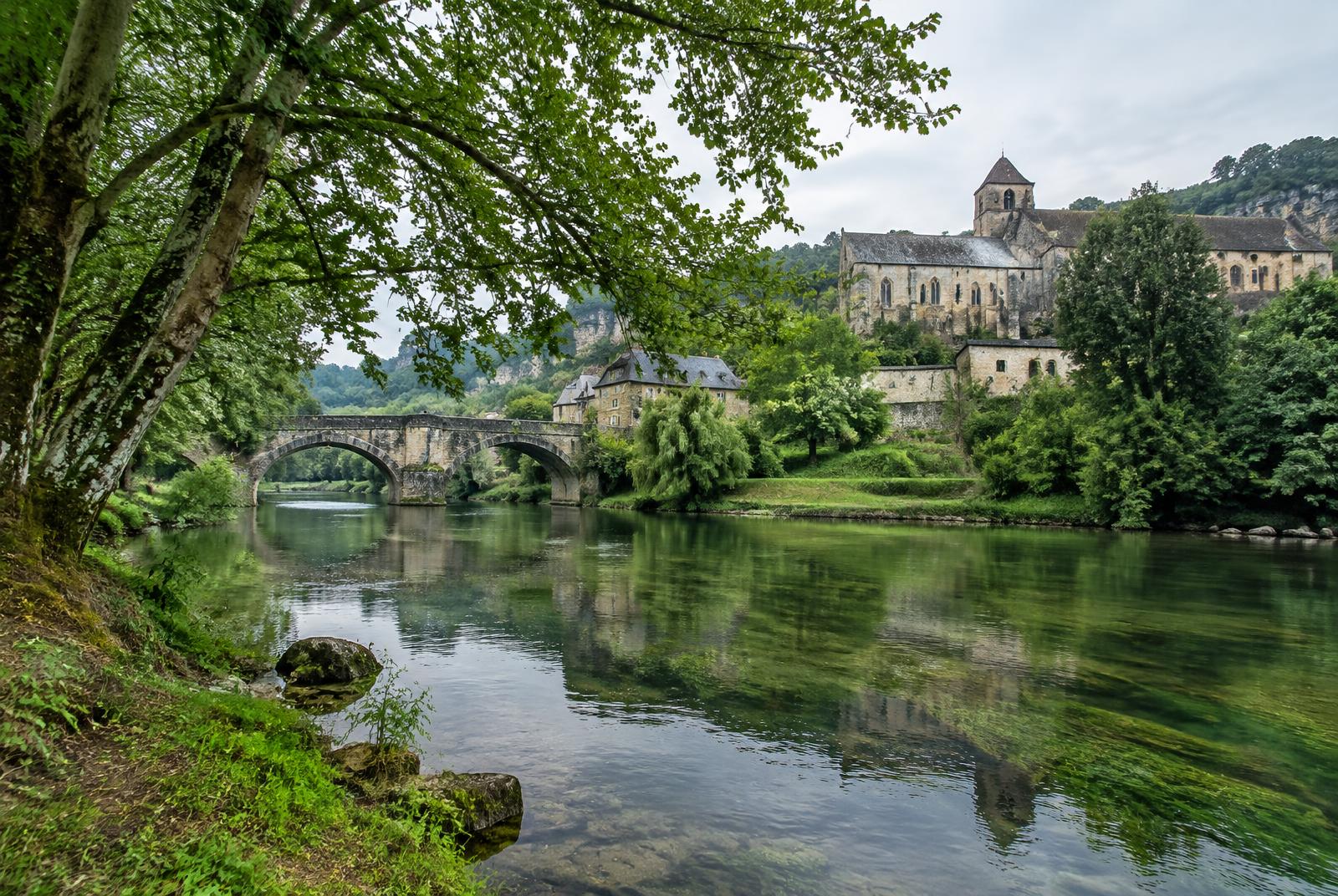
Village · Périgord Noir
A quiet riverside village on a bend of the Vézère, with a Romanesque church and two châteaux.
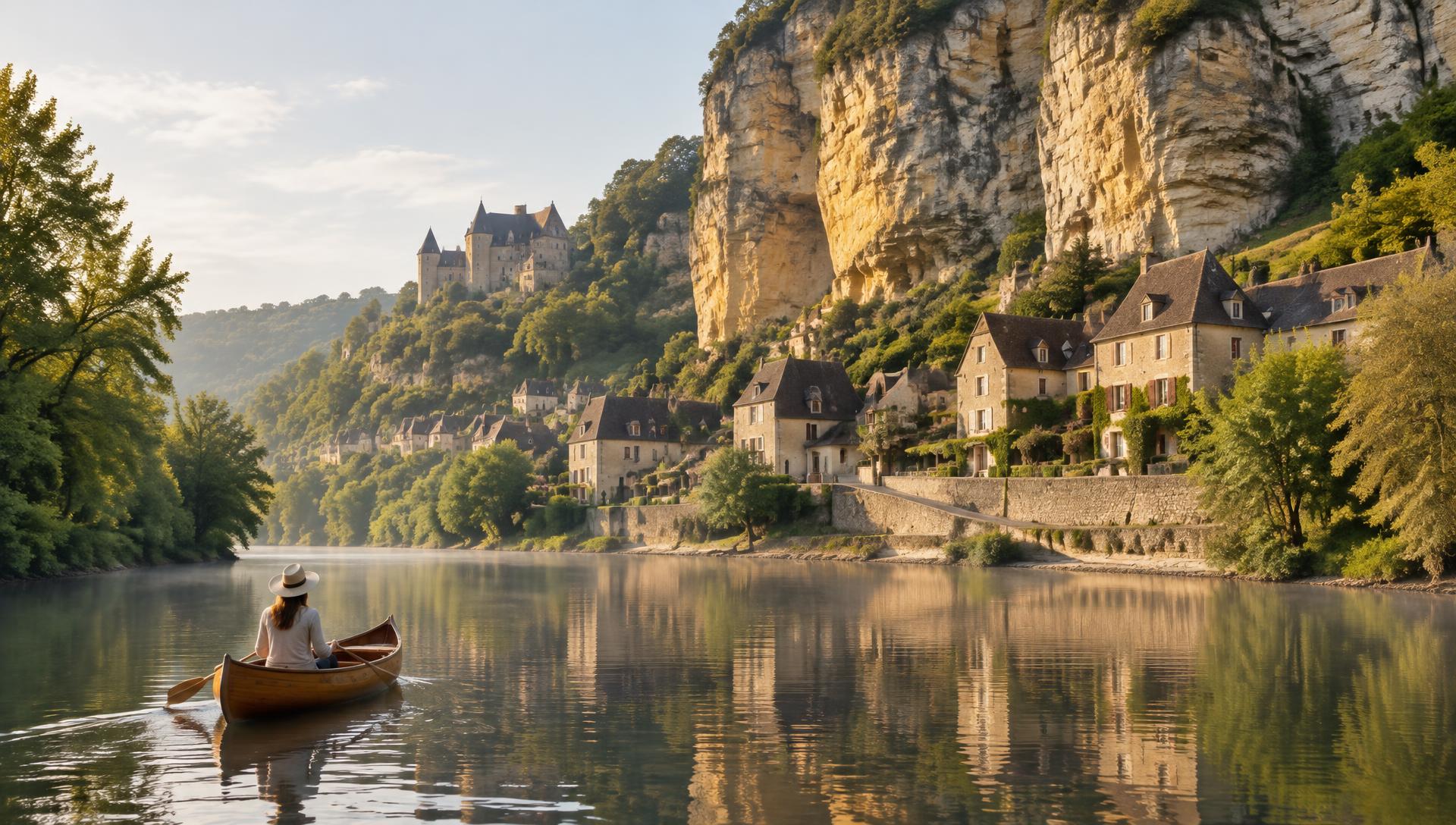
Prehistoric decorated cave · Périgord Noir
Font-de-Gaume is an original decorated cave in Les Eyzies, where prehistoric bison, horses and reindeer survive on the limestone walls. Visits are guided and tightly controlled to protect the paintings.
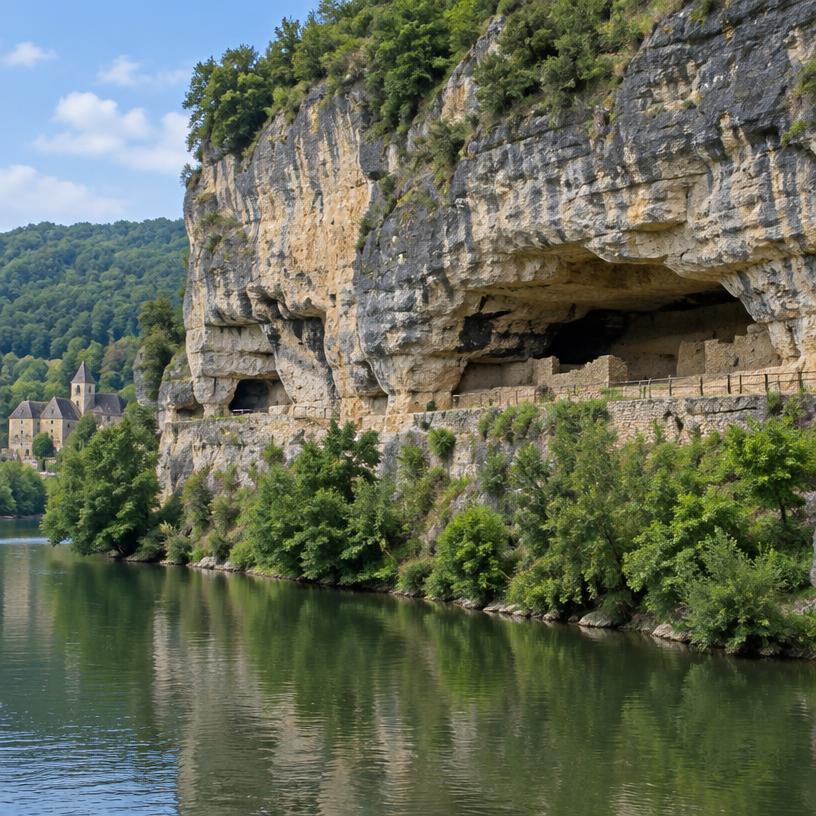
Prehistory village · Périgord Noir
A village beneath limestone cliffs on the Vézère, home to the National Museum of Prehistory and many nearby sites.
Yes. Roque St Christophe is a shortened spelling of La Roque Saint-Christophe, the cliff settlement in Peyzac-le-Moustier beside the Vézère. It is not La Roque-Gageac, which is a village on the Dordogne.
Allow about 1 to 1½ hours for the main route and interpretation. Leave longer if you want to include a guided visit or a scheduled machinery demonstration.
It is a series of natural rock shelters and terraces in a limestone cliff, not a deep underground cave. Much of the visitor route is open to daylight, with views over the Vézère valley.
Children can follow the rock-cut spaces and reconstructed machinery, but need close supervision on steps and elevated sections. Uneven surfaces and stairs make this unsuitable for wheelchairs. A baby carrier is more practical than a pushchair.
Both periods belong to its history. People used the cliff in prehistory, but many of the identifiable spaces and the reconstructed equipment explain the later medieval settlement, which was destroyed in 1588.
Opening times, prices and parking change. Check before you travel: La Roque Saint-Christophe official site, Dordogne Périgord tourism.